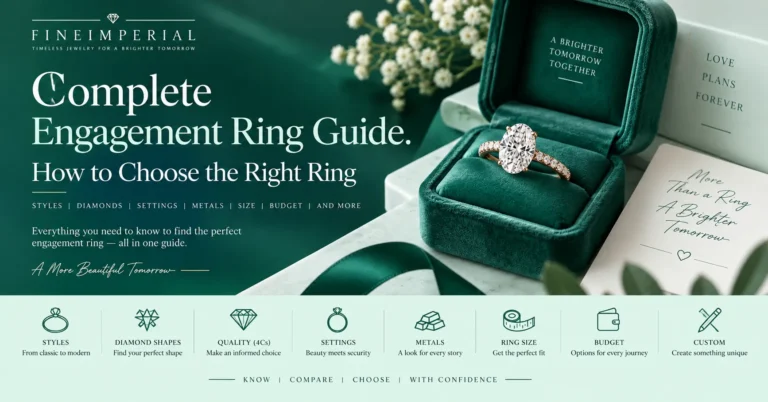
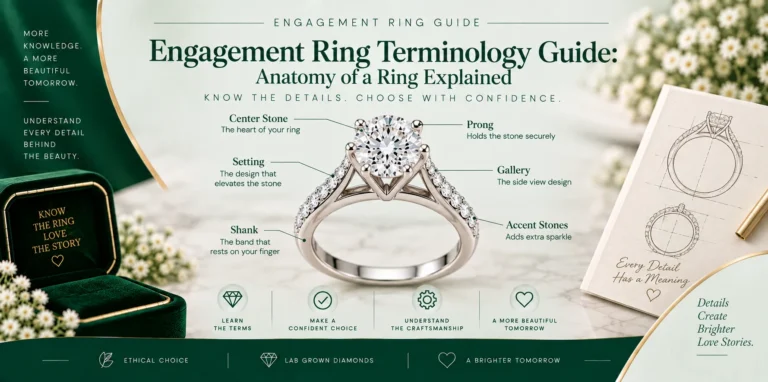
Buying an engagement ring is one of the most exciting and significant milestones in your life. However, walking into a jewelry store or browsing online can quickly become overwhelming when you are greeted with a flurry of unfamiliar industry jargon words like prongs, gallery, shank, and bridge.
What do all these terms actually mean? Understanding the basic anatomy of an engagement ring empowers you to speak the jeweler’s language, ask the right questions, and ensure your investment is both beautiful and durable.
In this comprehensive guide, we will break down every single component of an engagement ring from top to bottom so you can shop with absolute confidence.
The Two Main Components of an Ring
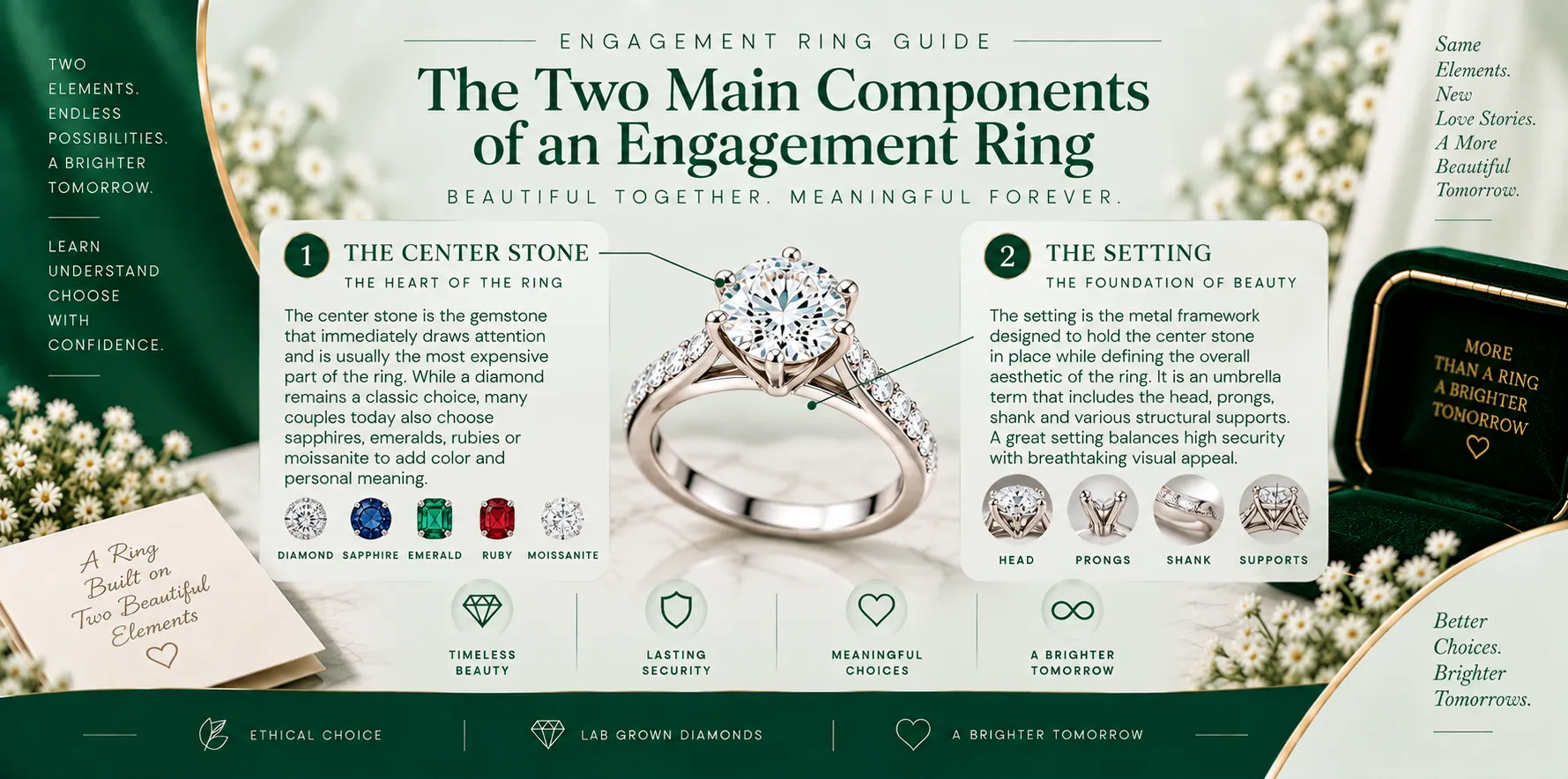
Every engagement ring is fundamentally built upon two primary pillars:
- The Center Stone: This is the gemstone of the ring the part that immediately draws attention and usually the most expensive thing you will buy. A regular diamond is still the option but more and more new couples are choosing different valuable gemstones, like sapphires, emeralds, rubies or moissanite to bring in color and special significance.
- The Setting: The setting is the metal framework designed to hold the center stone in place while defining the overall aesthetic of the ring. It is an umbrella term encompassing the head, prongs, shank, and various structural supports. A great setting balances high security with breathtaking visual appeal.
The Functional Parts of a Ring (Top to Bottom)
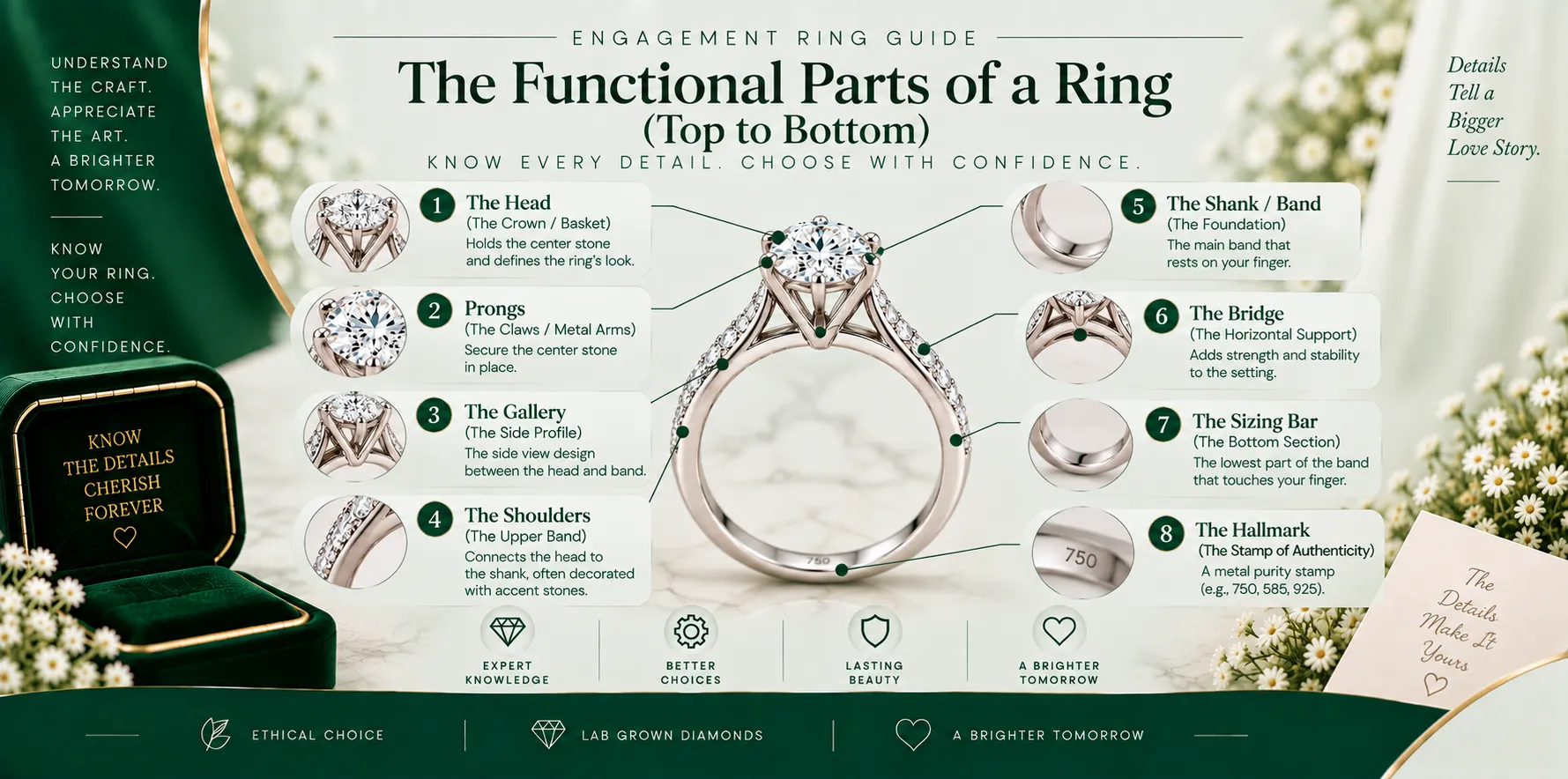
Let’s walk through every single anatomical part of an engagement ring, moving sequentially from the top of the stone down to the bottom of the band.
The Head (The Crown / Basket)
The head is the uppermost part of the ring that directly secures the center stone. It sits directly on top of the band and dictates how high or low the stone rests on your finger.
- High-Set Heads: These create a dramatic, prominent look, elevating the stone so that maximum light enters from all angles to maximize sparkle and brilliance. However, they are more prone to catching on clothing or everyday items.
- Low-Set Heads: These hold the stone closer to the finger, offering a sleek, modern, and streamlined profile. They are ideal for active lifestyles, healthcare professionals, or anyone who works frequently with their hands.
Buy Engagement Ring
-
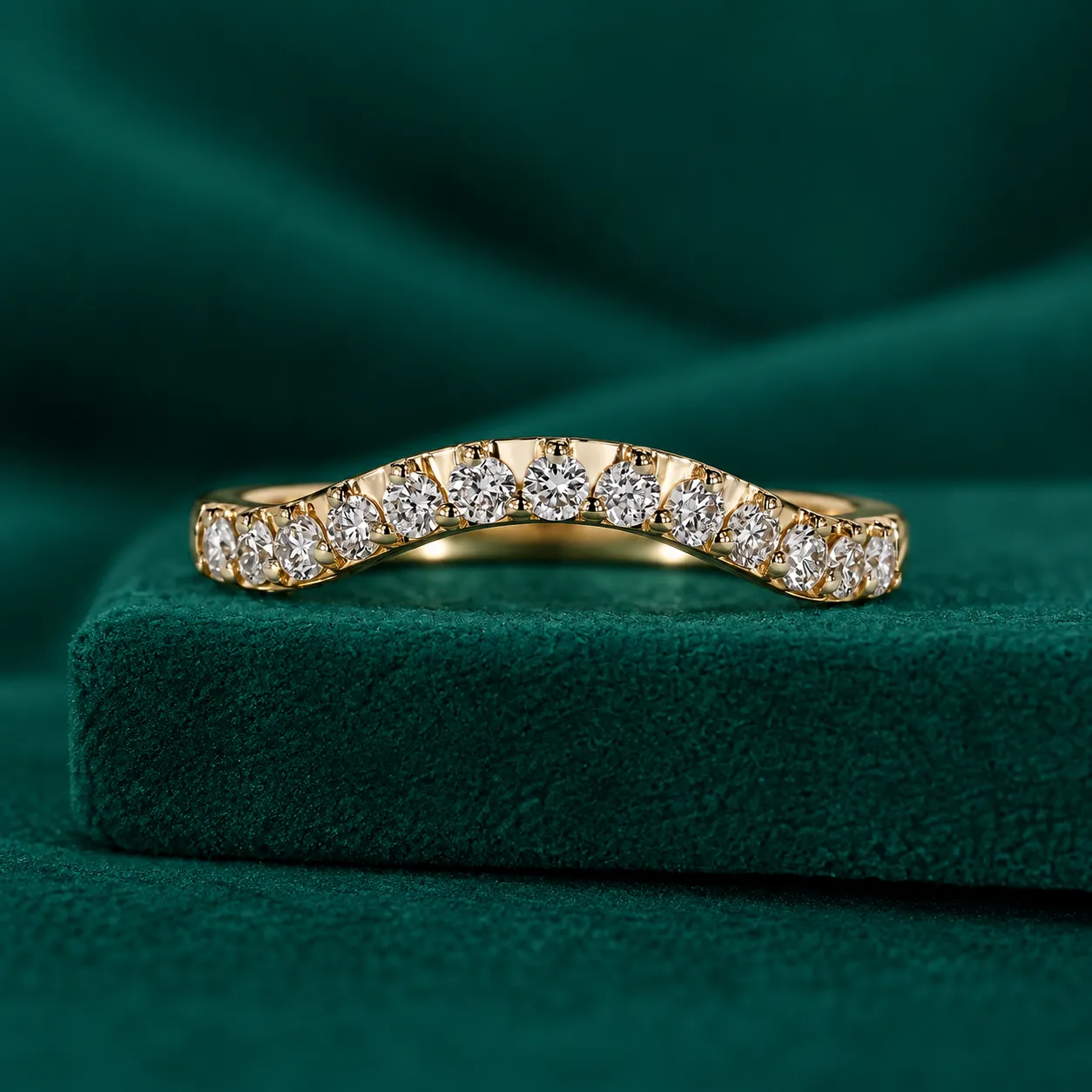
Custom Curved Gold Wedding Band Real Lab Grown Diamond Stacking Ring Chevron Ring in 10k 14k 18k Gold Birthday & Anniversary Gift for Wife
Price range: $304.00 through $967.00 Select options This product has multiple variants. The options may be chosen on the product page -
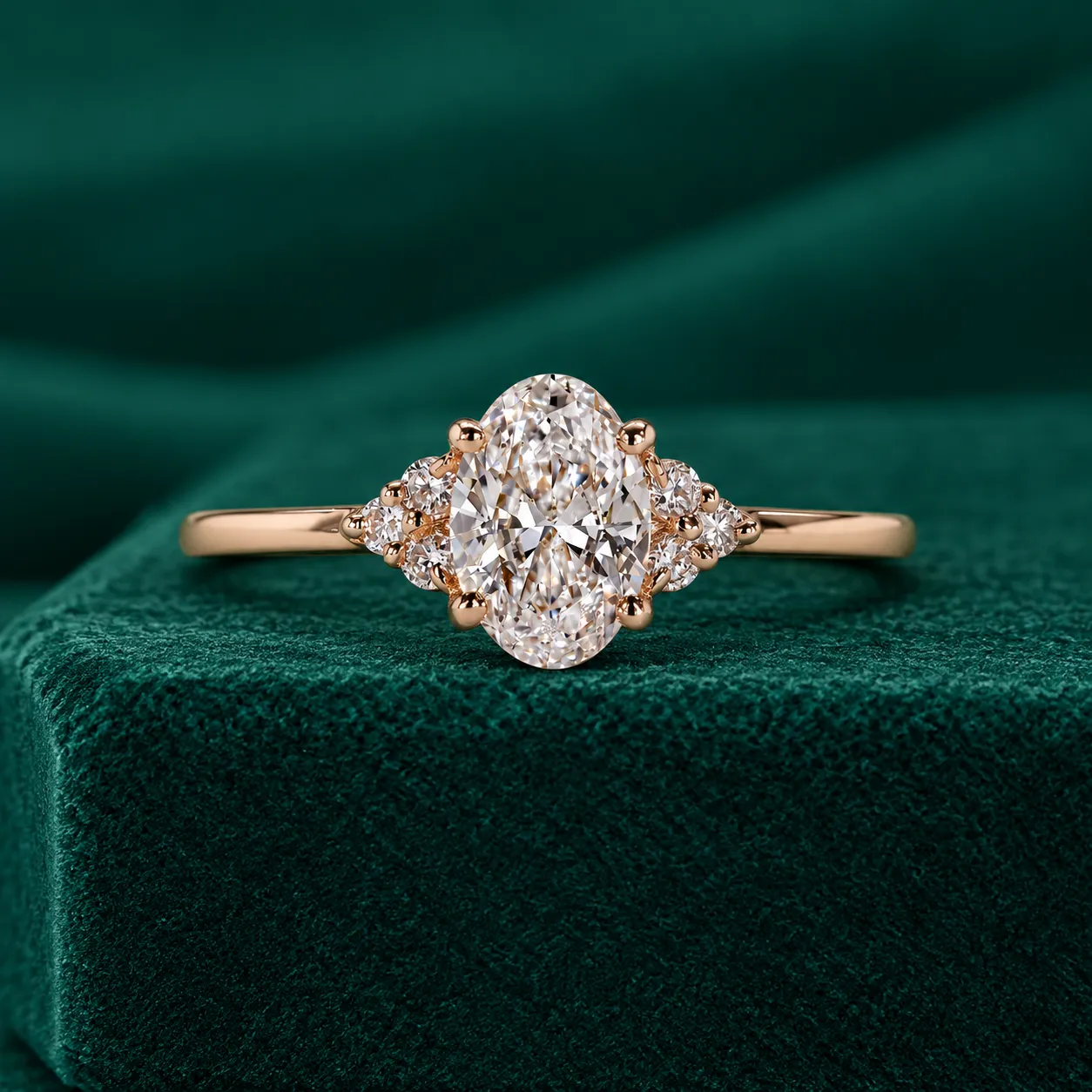
Oval Lab Grown Diamond Engagement Ring Oval Diamond Ring Solid Gold Ring for Her 3 Stone Diamond Anniversary Ring Gift Unique Promise Ring
Price range: $345.00 through $2,795.00 Select options This product has multiple variants. The options may be chosen on the product page -
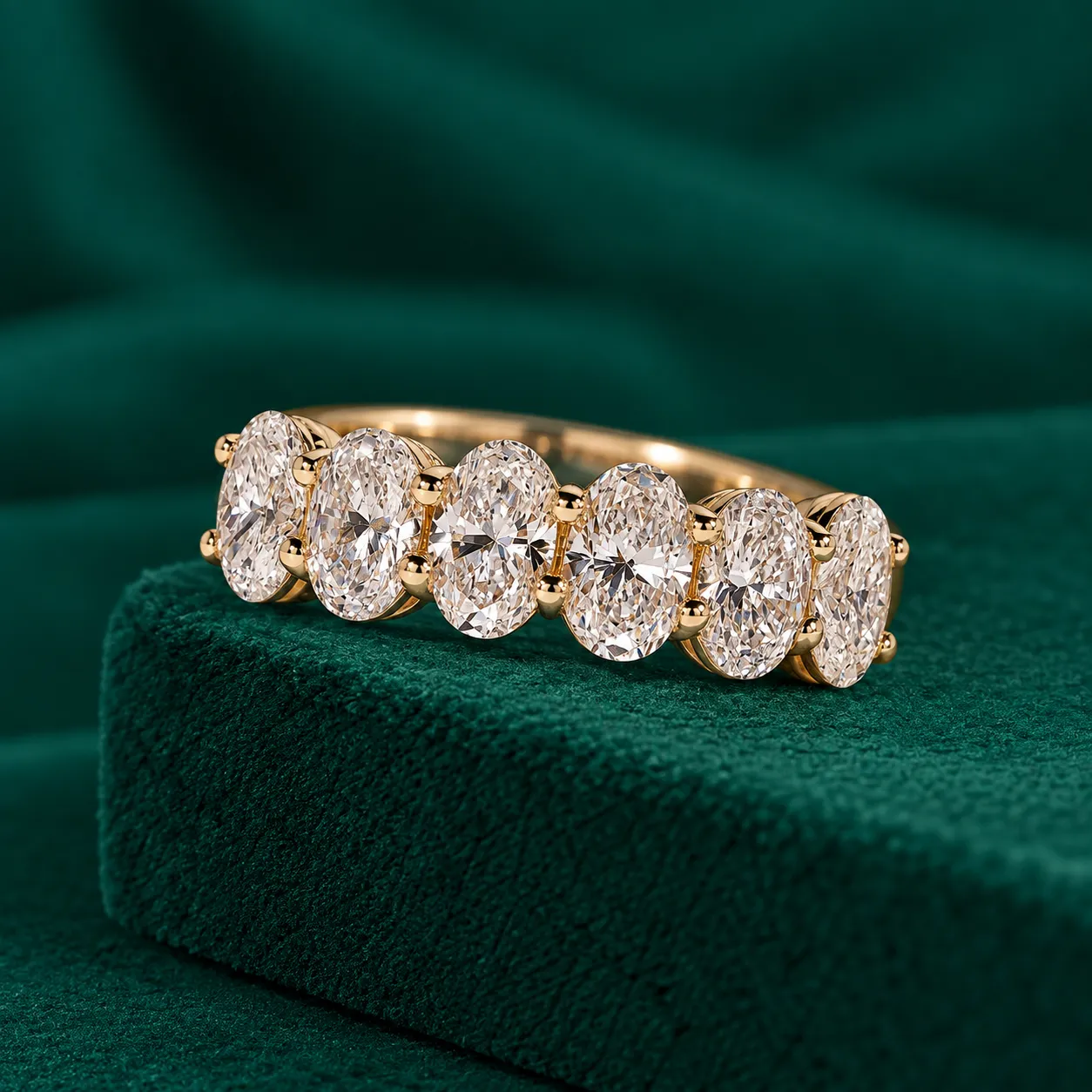
Oval Lab Grown Diamond Wedding Band 6 Stone Ring for Her Brilliant Diamond Anniversary Ring Women Handmade Stacking Ring Bridal Ring Gift
Price range: $737.00 through $1,509.00 Select options This product has multiple variants. The options may be chosen on the product page -
Round Lab Grown Diamond Ring Set Genuine Lab Diamond Engagement Ring for Her Diamond Stacked Wedding Ring Set Best Anniversary Gift for Wife
Price range: $515.00 through $3,610.00 Select options This product has multiple variants. The options may be chosen on the product page
Prongs (The Claws / Metal Arms)
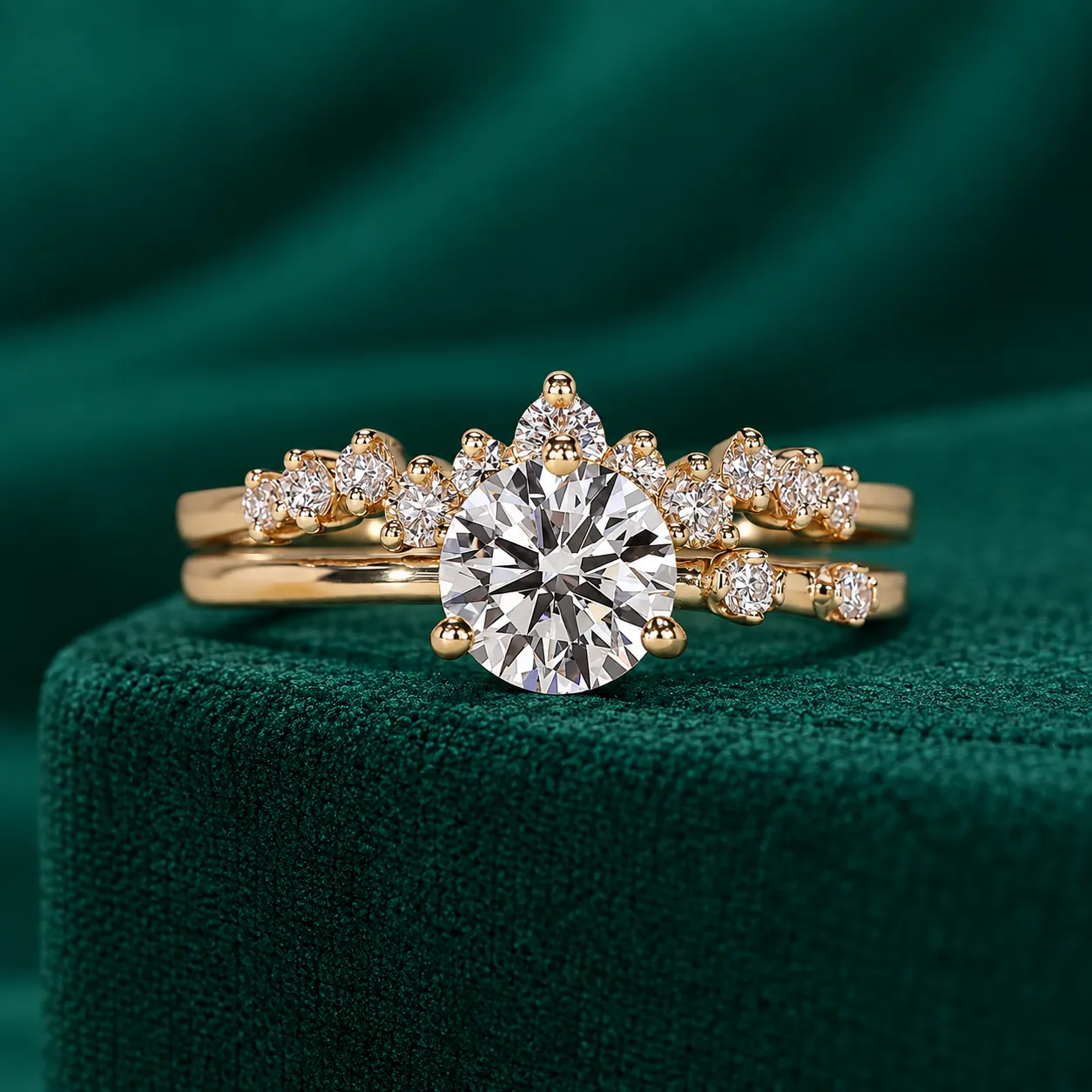
Prongs are the tiny metal tips or claws extending from the head that physically clamp down on the center stone to hold it securely. Most rings feature either four or six prongs, though alternative counts exist.
- Fewer prongs (like 4) expose more of the diamond to light, enhancing its visibility.
- More prongs (like 6) offer superior structural security and peace of mind.
💡 Expert Maintenance Tip: Prongs undergo daily micro-stress. Jewelers strongly recommend having your prongs professionally inspected under a microscope once or twice a year to prevent loose stones or potential loss.
The Gallery (The Side Profile)
The gallery refers to the open architectural space located directly underneath the center stone. It serves two critical functions:
- It acts as an artistic canvas, often incorporating intricate metal scrollwork, hidden halos, or vintage milgrain detailing that gives the ring its unique side profile personality.
- Functionally, it allows light to flood upward through the bottom of the stone, optimizing its fire and brilliance.
The Shoulders (The Upper Band)
The shoulders are the parts of the band where the metal rises up to meet the head. They serve as the link between the shank and the center stone. Shoulders can be made in widths and styles like straight, tapered or split-shank and even small changes, in these details can make a ring look either delicate and dainty or strong and architectural.
The Shank / Band (The Foundation)
The shank is the structural ring body that wraps entirely around your finger. It dictates the long-term durability and day-to-day comfort of the jewelry.
- Profiles & Shapes: Shanks can be designed as flat, rounded (comfort fit), or knife-edge (tapering to a sharp point at the outer edge).
- Thickness: A thin shank offers a dainty, minimalist aesthetic, while a thicker shank provides heavy-duty strength and prevents warping over time.
The Bridge (The Horizontal Support)
The bridge is the horizontal metal support part that’s right below the head. It gives strength to the connection between the head and the shank making sure that the heavy weight of the center stone is spread out across the band. This helps stop the ring from breaking or bending when it’s, under pressure.
The Sizing Bar (The Bottom Section)
The sizing bar is the solid, plain metal segment located at the very bottom of the shank (opposite the center stone).
- This specific area is left intentionally unadorned so that a jeweler can easily cut, stretch, or shrink the ring to resize it as your finger changes over time.
- Important Note: Rings featuring diamonds or continuous patterns all the way around the band (known as Eternity Rings) lack a sizing bar, making them notoriously difficult and sometimes impossible to resize later.
The Hallmark (The Stamp of Authenticity)
Hidden on the inner circumference of the band is the hallmark. This microscopic stamp verifies the metal’s purity (such as 14K, 18K, or Platinum) and often identifies the manufacturer or designer. It is your ultimate guarantee of material authenticity and quality.
Advanced Considerations Matching the Anatomy to Your Lifestyle
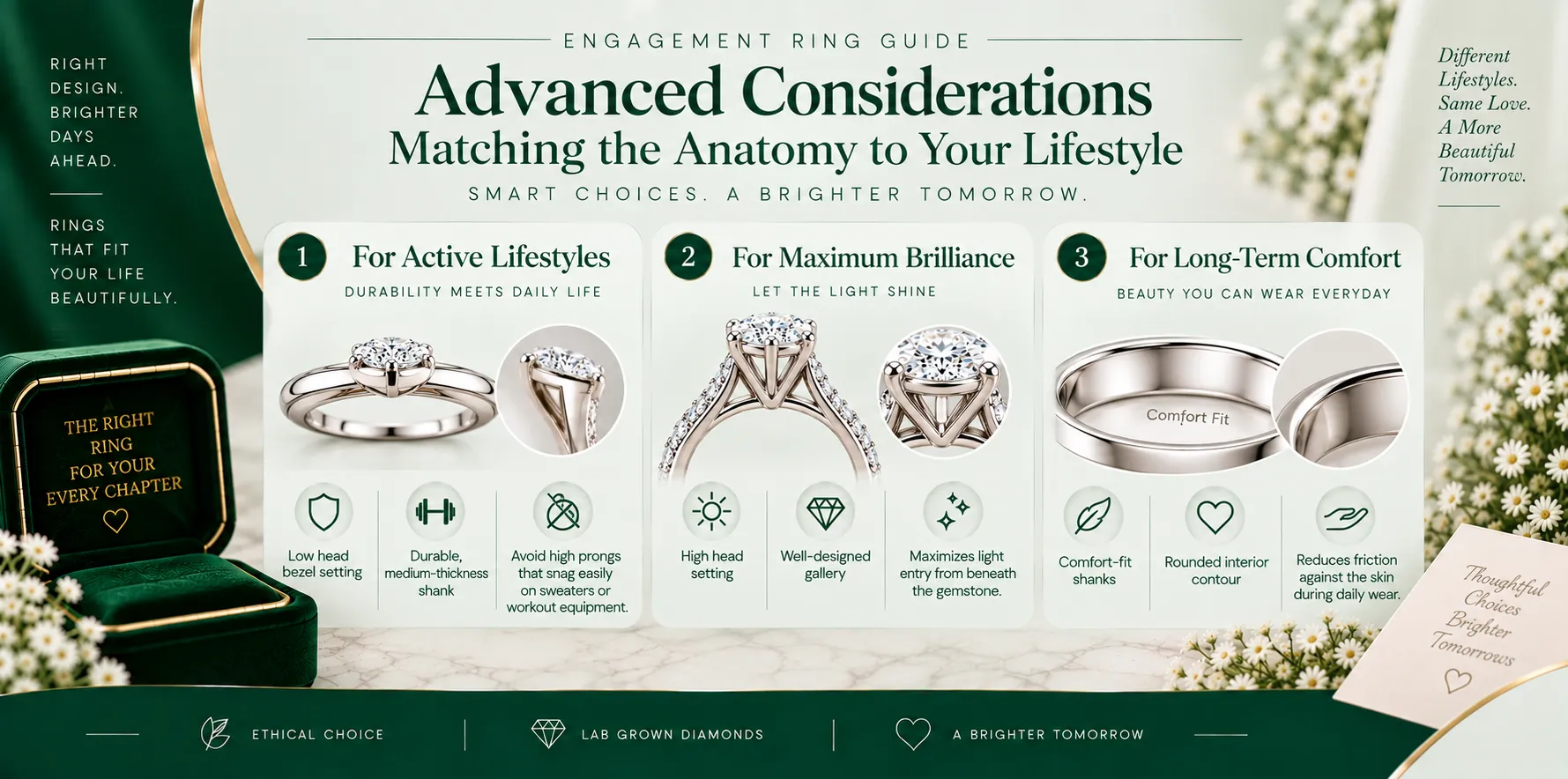
Understanding ring anatomy isn’t just about vocabulary; it’s about making smart practical choices:
- For Active Lifestyles: Prioritize a low head/bezel setting paired with a durable, medium-thickness shank. Avoid high prongs that snag easily on sweaters or workout equipment.
- For Maximum Brilliance: Choose a high head with a well-designed gallery that maximizes light entry from beneath the gemstone.
- For Long-Term Comfort: Look for comfort-fit shanks, which feature a slightly rounded interior contour that reduces friction against the skin during daily wear.
The Bottom Line
Understanding the language of engagement rings turns a shopping trip into a confident and informed experience. When you know what the head, prongs, gallery and shank mean you can speak clearly about your style check how strong the ring will be and pick a ring that looks amazing and lasts. It’s not about how it looks it’s about how it fits into your life.
What are your thoughts on these engagement ring components? Do you have any questions about choosing a specific setting style? Let me know in the comments below!