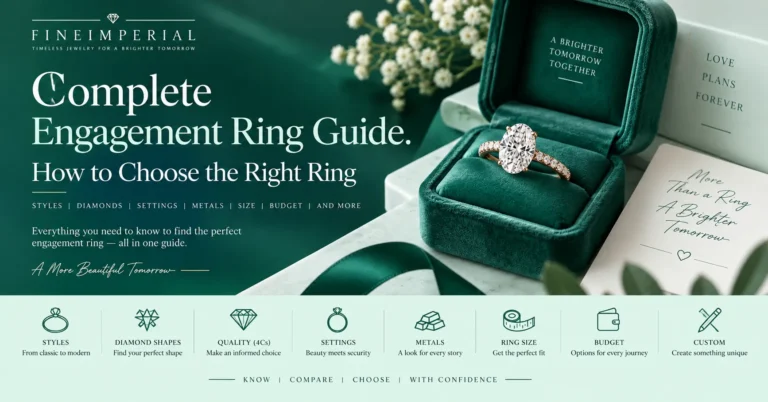
Buying an engagement ring is one of the exciting moments in life. For people who are buying for the time it can also feel very hard to handle. There are types of engagement rings like a simple and traditional solitaire engagement ring or a fancy and shining halo engagement ring.
There are also options like a three stone engagement ring, a pretty pave engagement ring or a special vintage engagement ring. There are many choices to make. Whether someone prefers a round engagement ring or a modern oval engagement ring this detailed step, by-step guide will help explain everything that needs to be known before picking the right one.
At FineImperial, we believe buying an engagement ring should be an enjoyable and memorable experience. This guide will walk you through everything you need to know before choosing the perfect ring.
How Much Should You Spend On An Engagement Ring?
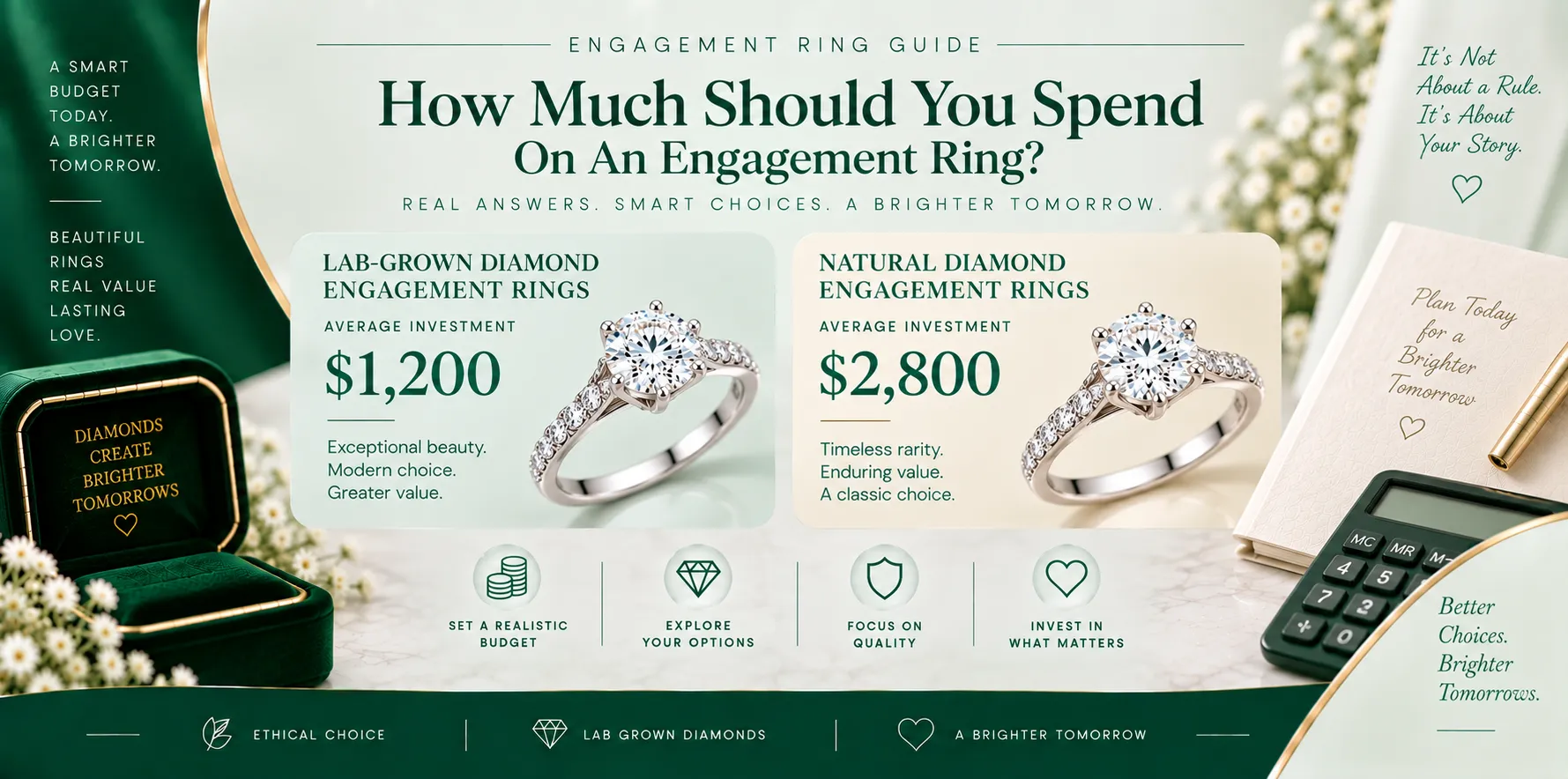
One of the most common questions we hear is, “How much should I spend on an engagement ring?”
The truth is, there’s no set rule. The old idea of spending three months’ salary is outdated. Instead, choose a budget that feels comfortable for your financial situation and future plans.
To give you a clear idea of investment levels:
- At FineImperial, the average investment for an engagement ring featuring a lab-grown diamond is approximately $1,200.
- Engagement rings set with natural diamonds average around $2,800.
Remember, an engagement ring is an investment in craftsmanship, quality, and sentiment. Establishing a budget early on will help narrow down your options without compromising on what matters most.
Lab-Grown Diamonds vs Natural Diamonds?
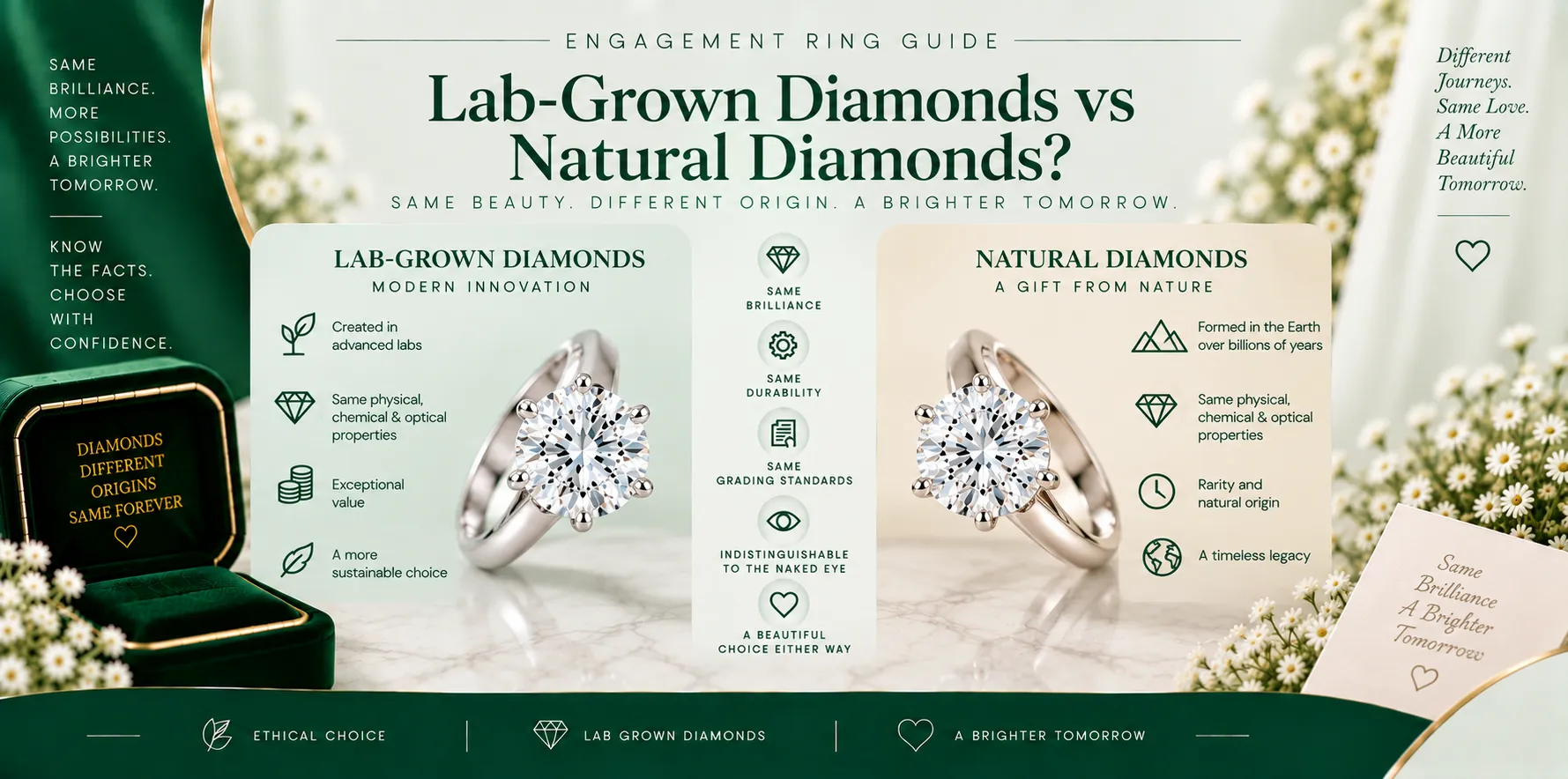
What is the difference between diamonds and natural diamonds? The main difference lies in origin. Natural diamonds are formed inside the Earth over billions of years. Lab‑grown diamonds on the hand are made in very controlled laboratory settings, with advanced technology that imitates the natural process of diamond formation.
Both types contain carbon and have identical physical, chemical and optical characteristics.
- Are lab-grown diamonds real diamonds? Yes. Lab-grown diamonds are real diamonds, not diamond simulants like cubic zirconia or moissanite. They have the same hardness, brilliance, fire and durability as natural diamonds and are graded using the same standards for cut, colour, clarity and carat weight.
- Are lab-grown diamonds worth buying? For many buyers, lab-grown diamonds offer exceptional value because they allow you to purchase a larger or higher-quality diamond for the same budget.
- Can you tell the difference? To the naked eye, no. Even experienced jewellers cannot reliably distinguish a lab-grown diamond from a natural diamond without specialised gemological equipment.
- How long do lab-grown diamonds last? Lab-grown diamonds are just as durable as natural diamonds and will last a lifetime with proper care, ranking 10 on the Mohs hardness scale.
Simple To Modern Ring
-
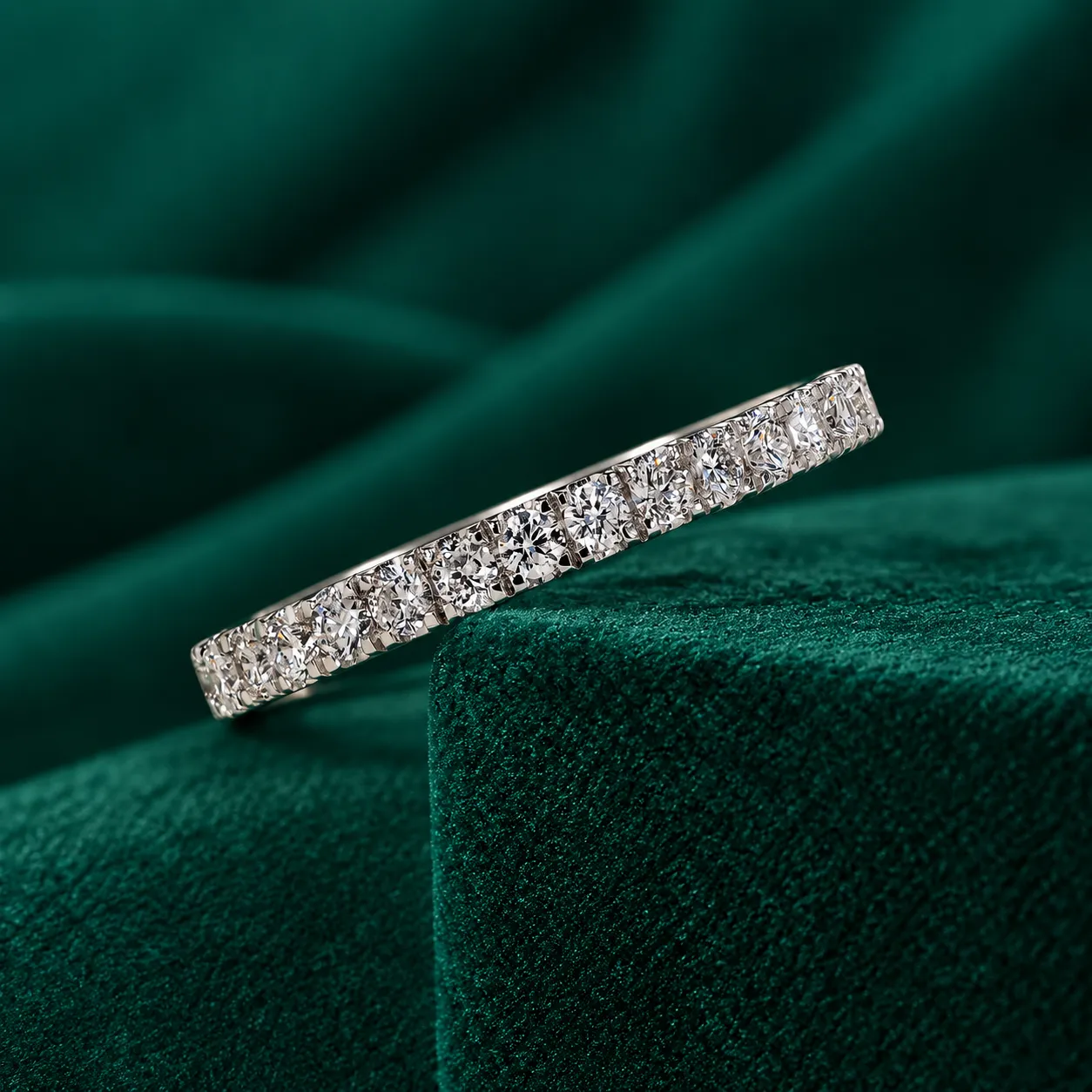
Diamond Wedding Ring Simple & Solitaire Stacking Ring Minimalist Round Diamond Ring for Engagement Best Anniversary – Birthday Gift for Wife
Price range: $338.00 through $970.00 Select options This product has multiple variants. The options may be chosen on the product page -
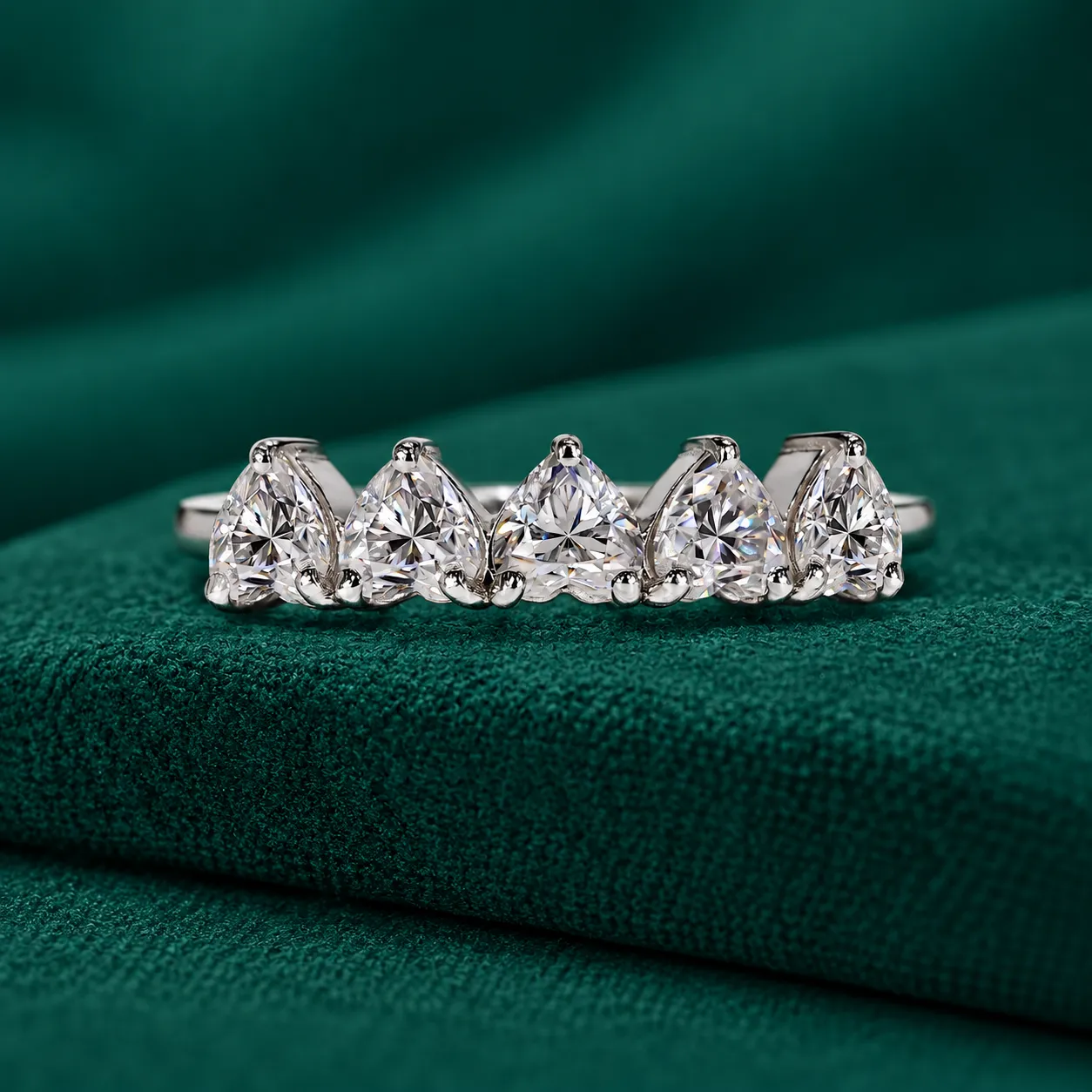
Heart Diamond Wedding Band Lab Grown Diamond Band 5 Stone Diamond Ring Solid Yellow Rose Gold Ring Anniversary Gifts for Wife Ring for Her
Price range: $619.00 through $1,159.00 Select options This product has multiple variants. The options may be chosen on the product page -
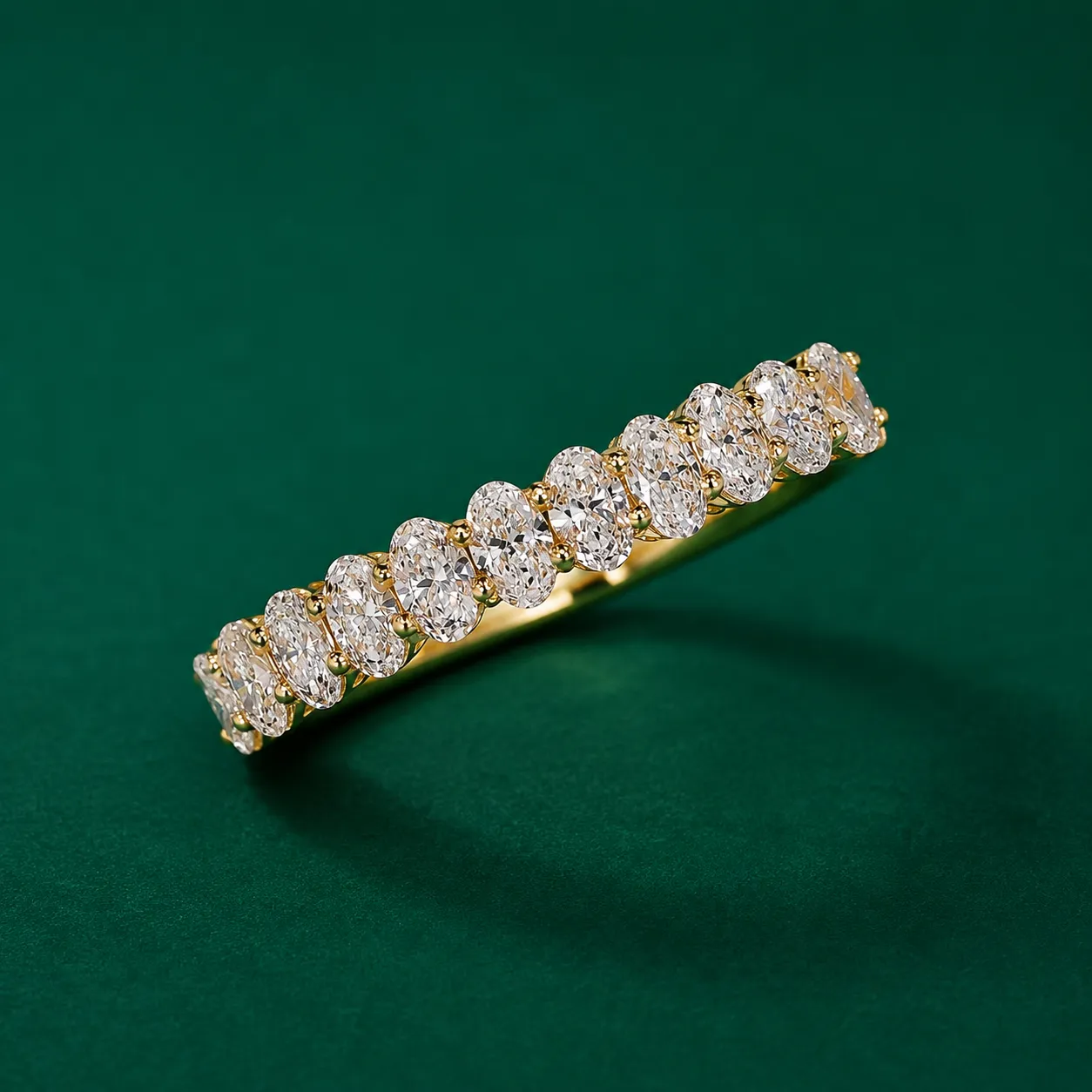
Oval Diamond Wedding Band Genuine Lab Grown Diamond Matching Band Oval Women’s Band Bridal Stackable Anniversary Gift Wedding Band For Her
Price range: $355.00 through $799.00 Select options This product has multiple variants. The options may be chosen on the product page -
Pear Engagement Ring Lab Diamond Anniversary Ring 10K 14K 18K Solid Gold Rings for Women Teardrop Diamond Ring Real 1 CT Pear Diamond Ring
Price range: $395.00 through $3,078.00 Select options This product has multiple variants. The options may be chosen on the product page
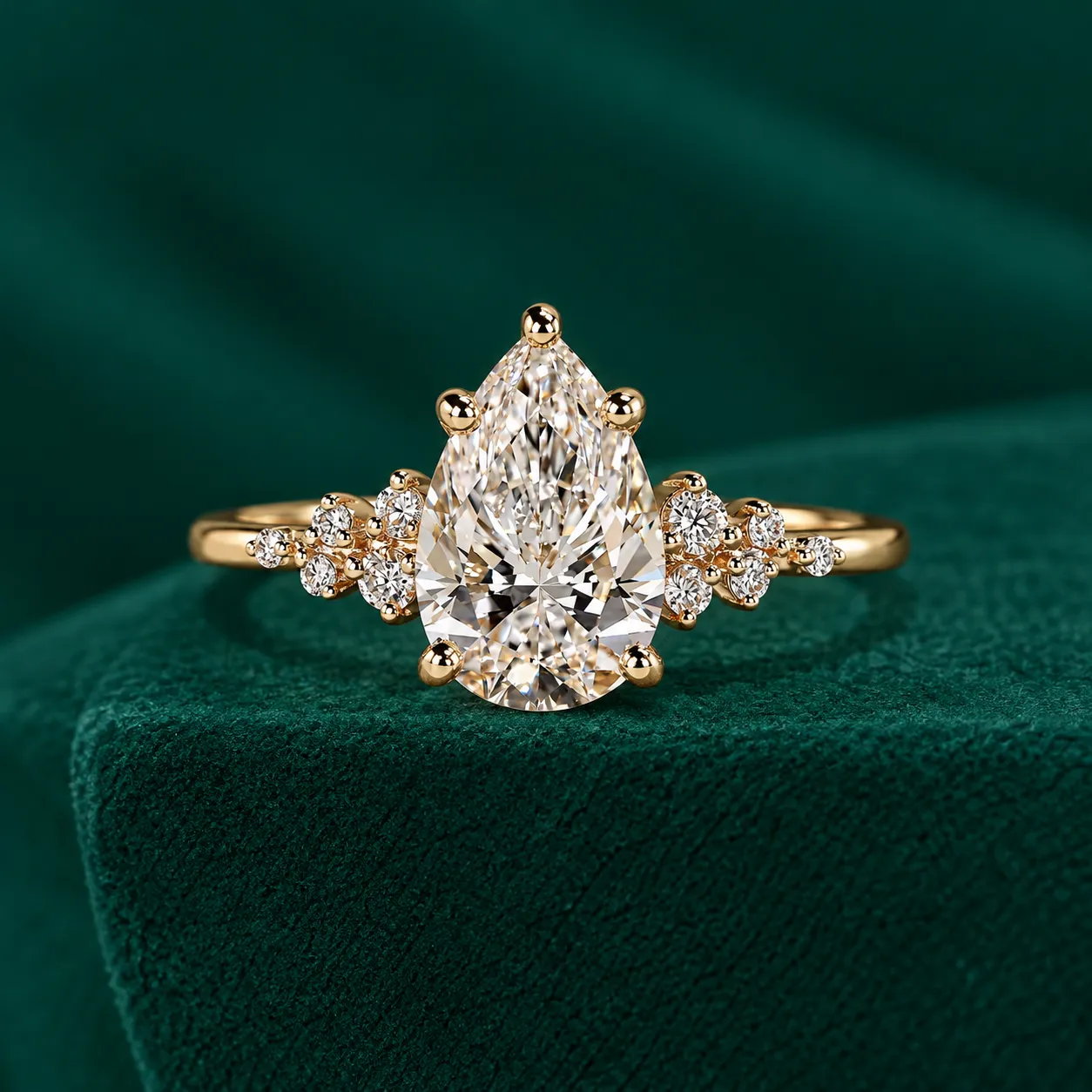
What Are The 4 Cs Of Diamonds?
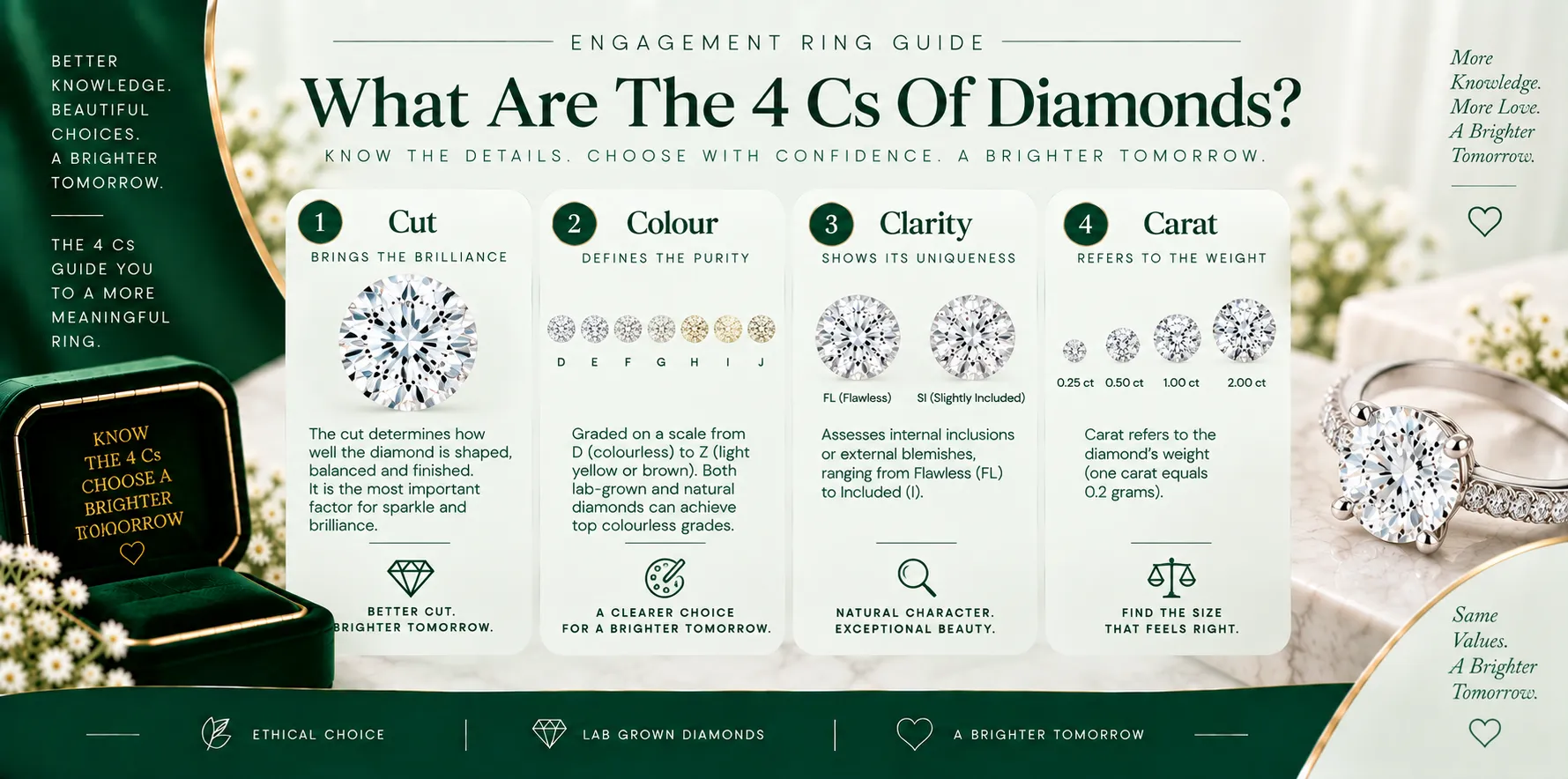
The four Cs of diamonds are the accepted standards used to check how good a diamond is and how much it is worth. Created by the Gemological Institute of America (GIA) the four Cs include Cut, Colour, Clarity and Carat Weight.
- Diamond Cut: The cut of a diamond looks at how the stone’s shaped how balanced it is and how well it is finished. Among all the 4Cs cut is the powerful factor that makes a diamond shine and look beautiful whether you pick a bright princess ring or a smooth pear ring.
- Diamond Colour: Graded on a scale from D (colourless) to Z (light yellow or brown). Both lab-grown and natural diamonds can achieve top colourless grades.
- Diamond Clarity: Assesses internal inclusions or external blemishes, ranging from Flawless (FL) to Included (I).
- Diamond Carat: Refers simply to the diamond’s weight (one carat equals 0.2 grams).
How Many Diamond Shapes Are There?
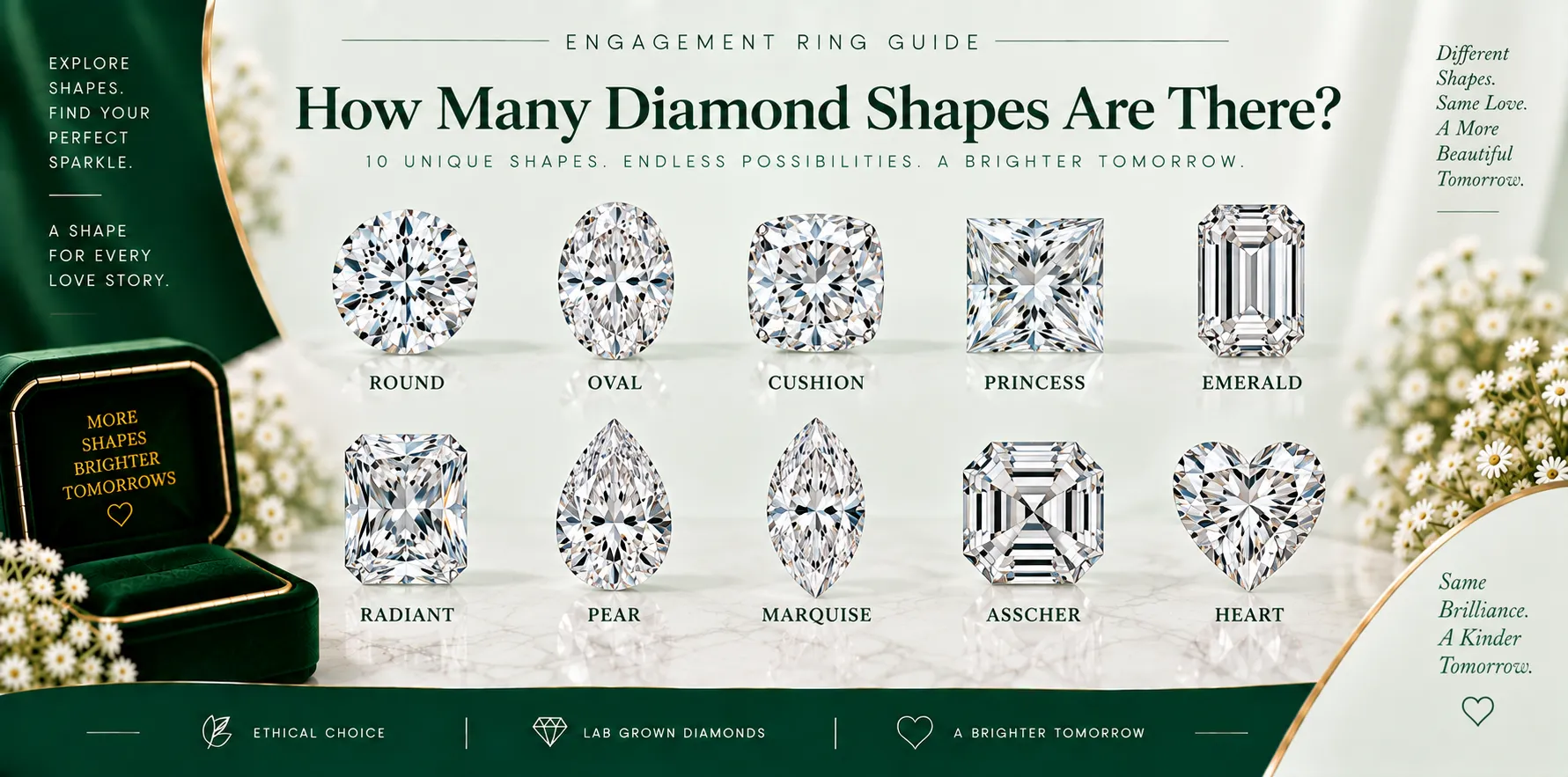
There are 10 popular diamond shapes commonly used in engagement rings and fine jewellery. Each shape has its own unique appearance and personality:
- Round: The most popular and sparkliest diamond shape (ideal for a classic round engagement ring).
- Oval: Elegant, often appearing larger than a round diamond of the same carat weight (perfect for an oval engagement ring).
- Cushion: Soft, rounded corners with a romantic and timeless look.
- Princess: A modern square shape known for its brilliance.
- Emerald: A sophisticated rectangular shape featuring large, open facets (great for an emerald engagement ring).
- Radiant: Combines the brilliance of a round diamond with the shape of an emerald cut.
- Pear: A unique teardrop shape that elongates the finger.
- Marquise: An elongated shape with pointed ends that maximises visual size.
- Asscher: Similar to an emerald cut but square, with a distinctive vintage appearance.
- Heart: A romantic shape symbolising love and commitment.
What Are The Different Ring Settings?
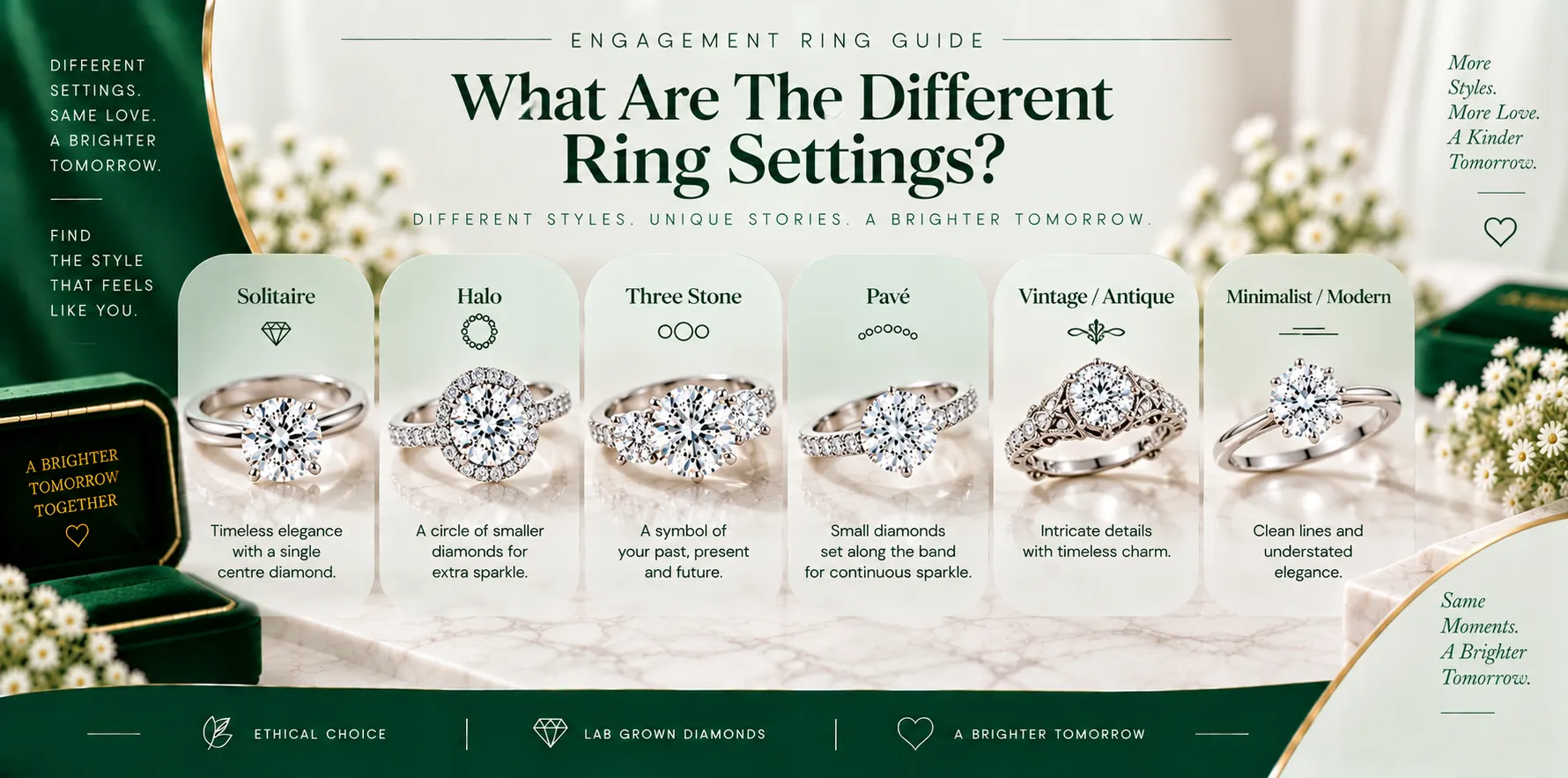
An engagement ring setting is the way a diamond or gemstone is secured and displayed within a ring. It plays a major role in the ring’s overall appearance and style:
- Solitaire Engagement Ring: The most classic and timeless style. A solitaire engagement ring features a single centre diamond with no additional stones, allowing the diamond to take centre stage with ultimate simplicity.
- Halo Engagement Ring: A halo engagement ring surrounds the centre diamond with a ring of smaller diamonds, enhancing sparkle and creating the illusion of a larger centre stone.
- Three Stone Engagement Ring: A three stone engagement ring features a centre diamond flanked by two side stones, symbolising a couple’s past, present, and future.
- Pave Engagement Ring: In a pave engagement ring, small diamonds are set closely together along the band, creating a continuous sparkle effect without overpowering the centre.
- Vintage / Antique Engagement Ring: Perfect for those who love intricate details, milgrain, and historical charm.
- Minimalist / Modern Engagement Ring: Clean lines, sleek profiles, and understated elegance for contemporary tastes.
What Is The Best Metal For An Engagement Ring?
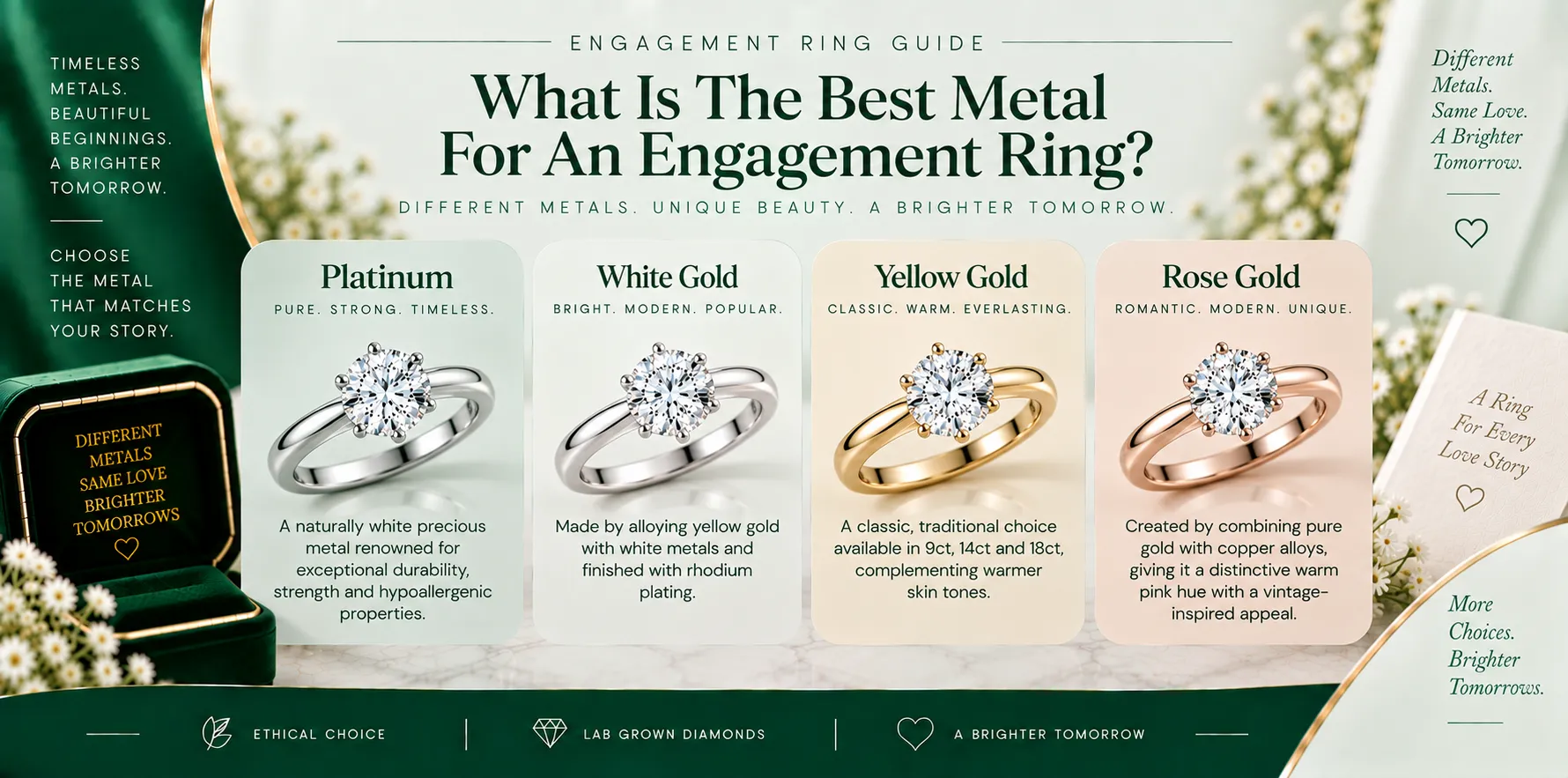
- Platinum: A naturally white precious metal renowned for exceptional durability, strength and hypoallergenic properties.
- White Gold: Bright, modern, and popular. Made by alloying yellow gold with white metals and finished with rhodium plating.
- Yellow Gold: A classic, traditional choice available in 9ct, 14ct and 18ct, complementing warmer skin tones.
- Rose Gold: Created by combining pure gold with copper alloys, giving it a distinctive warm pink hue with a vintage-inspired appeal.
Ring Sizing & Finding the Right Fit
The women’s engagement ring size is usually between M and N. If you’re not sure, about your partners ring size you can try borrowing a ring they already wear.. You can ask a close friend for help. At FineImperial most engagement rings can be resized by a jeweller after the proposal. This is helpful if the ring isn’t a perfect fit away.
How Do I Choose The Right Jeweller?
Choosing the jeweller means finding a jeweller you can trust. Seek a jeweller with experience clear pricing that shows a breakdown for lab‑grown, versus natural options and a jeweller who is dedicated to high quality craftsmanship. At FineImperial the jeweller takes time to explain everything and helps you make a well‑informed decision, no pressure all.
Begin Your Journey with FineImperial
Whether you are just beginning your search or already have a dream design, in mind the FineImperial team is ready to guide you through every step of the process.
Explore our collections and discover how we can help you create an engagement ring that will be cherished for generations to come!