Choosing an engagement ring can feel exciting, emotional, and sometimes surprisingly complicated. There are diamonds to compare, different shapes and settings to understand, metals to choose from, and countless designs to consider. But with so many options available, one important question remains: what actually matters most when choosing an engagement ring?
The answer is not simply the biggest diamond, the highest carat weight, or the most expensive design. The right engagement ring brings together several factors personal style, diamond quality, comfort, durability, setting, metal, budget, and meaning.
After all, an engagement ring is not just something beautiful to wear. It represents a promise, a relationship, and a future you are choosing together. That is why the best choice is one that feels right for the person wearing it and continues to feel meaningful for years to come.
What Matters Most in an Engagement Ring?
Before choosing a specific design, it helps to understand the factors that deserve the most attention.
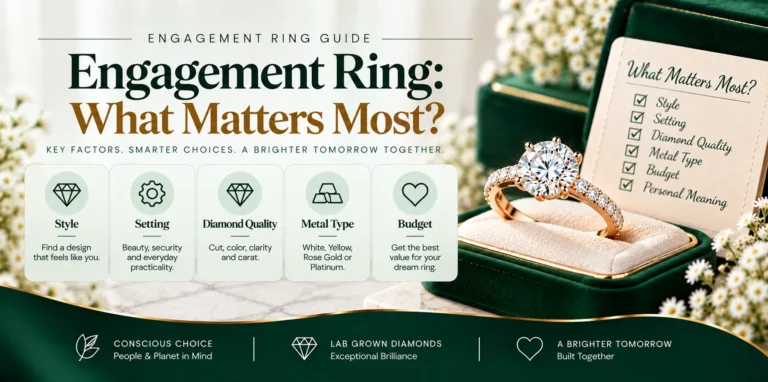
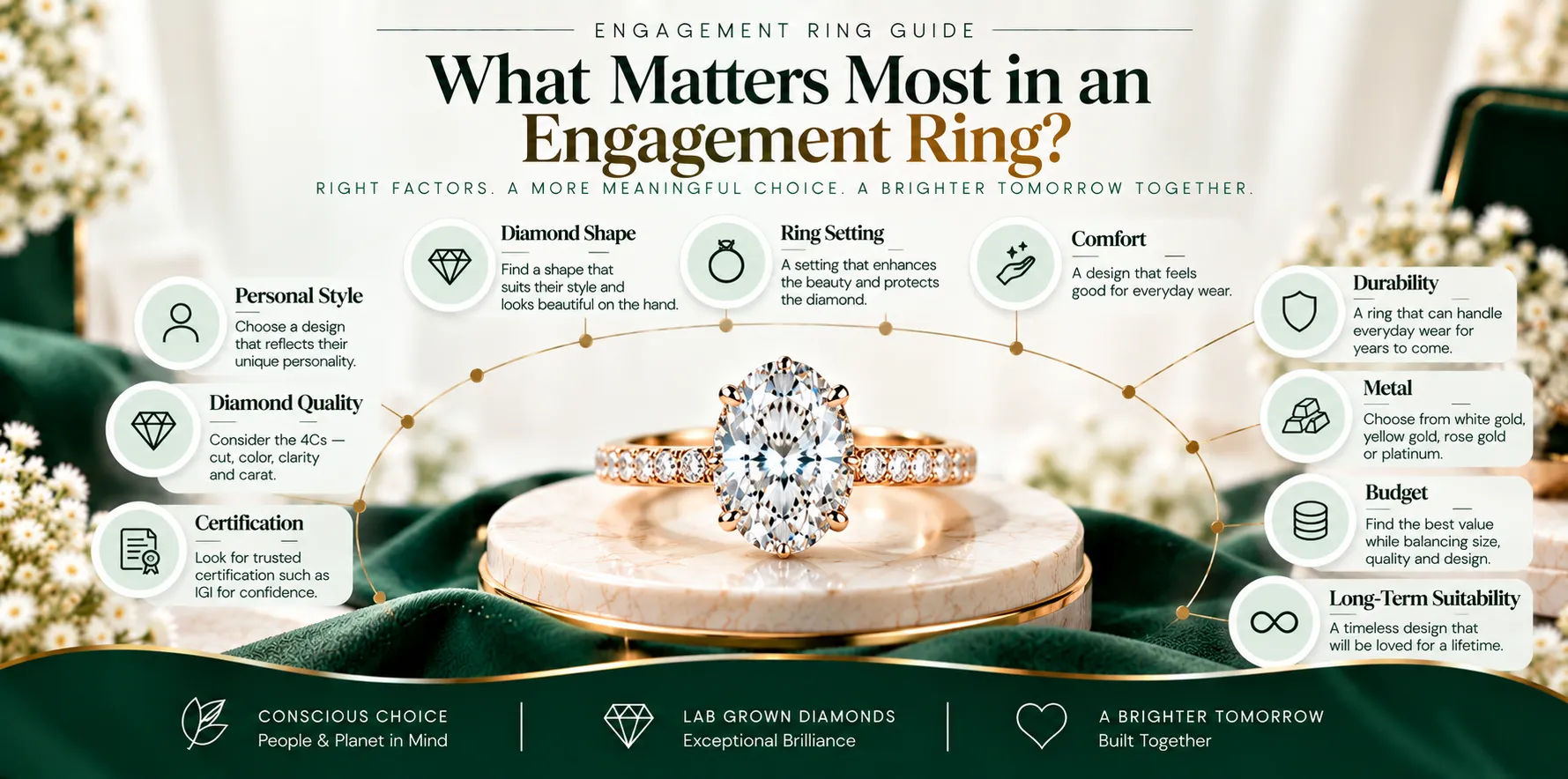
The most important considerations are:
- The wearer’s personal style
- Diamond quality
- Diamond shape
- Ring setting
- Comfort
- Durability
- Metal
- Certification
- Budget
- Long-term suitability
None of these factors exists completely on its own. A beautiful diamond needs a setting that complements it, while a stunning design should still be comfortable enough for everyday wear.
The goal is to find the right balance rather than focusing on only one specification.
The Person Wearing the Ring Matters Most
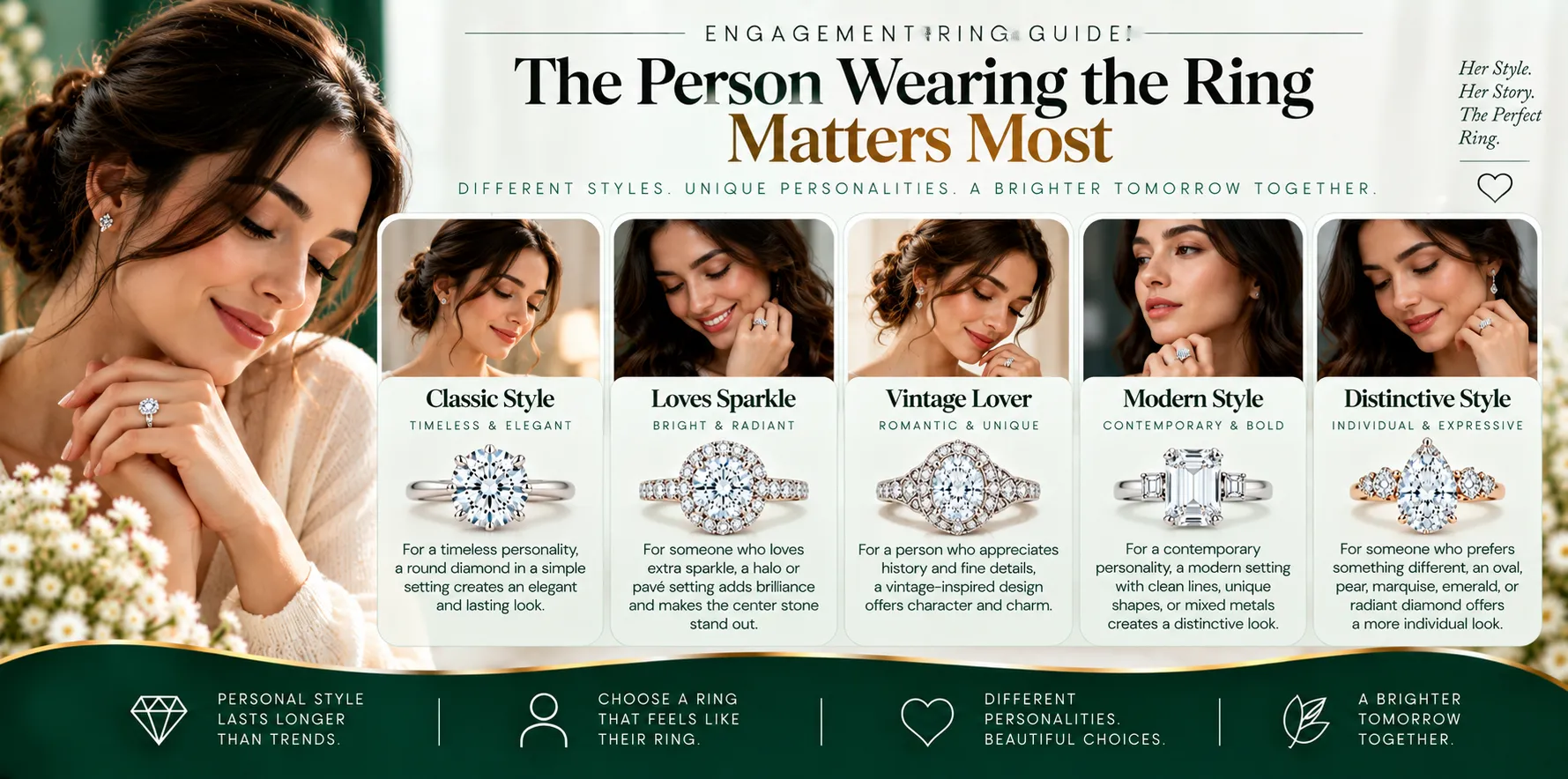
One of the easiest mistakes is choosing an engagement ring based entirely on current trends. Trends can be inspiring, but personal style usually lasts much longer.
Think about the jewelry the wearer already enjoys.
Someone who prefers timeless and understated jewelry may naturally appreciate a solitaire design. Someone who loves sparkle may be drawn toward a halo or pave setting. A person who enjoys historical details may prefer a vintage-inspired design, while someone with a contemporary style may prefer a modern setting.
For a classic personality, a round diamond in a simple setting can create an elegant and timeless appearance. For someone who prefers something more distinctive, an oval, pear, marquise, emerald, or radiant diamond may provide a more individual look.
The ring should feel like their ring, not simply a popular ring.
Diamond Cut: One of the Most Important Factors
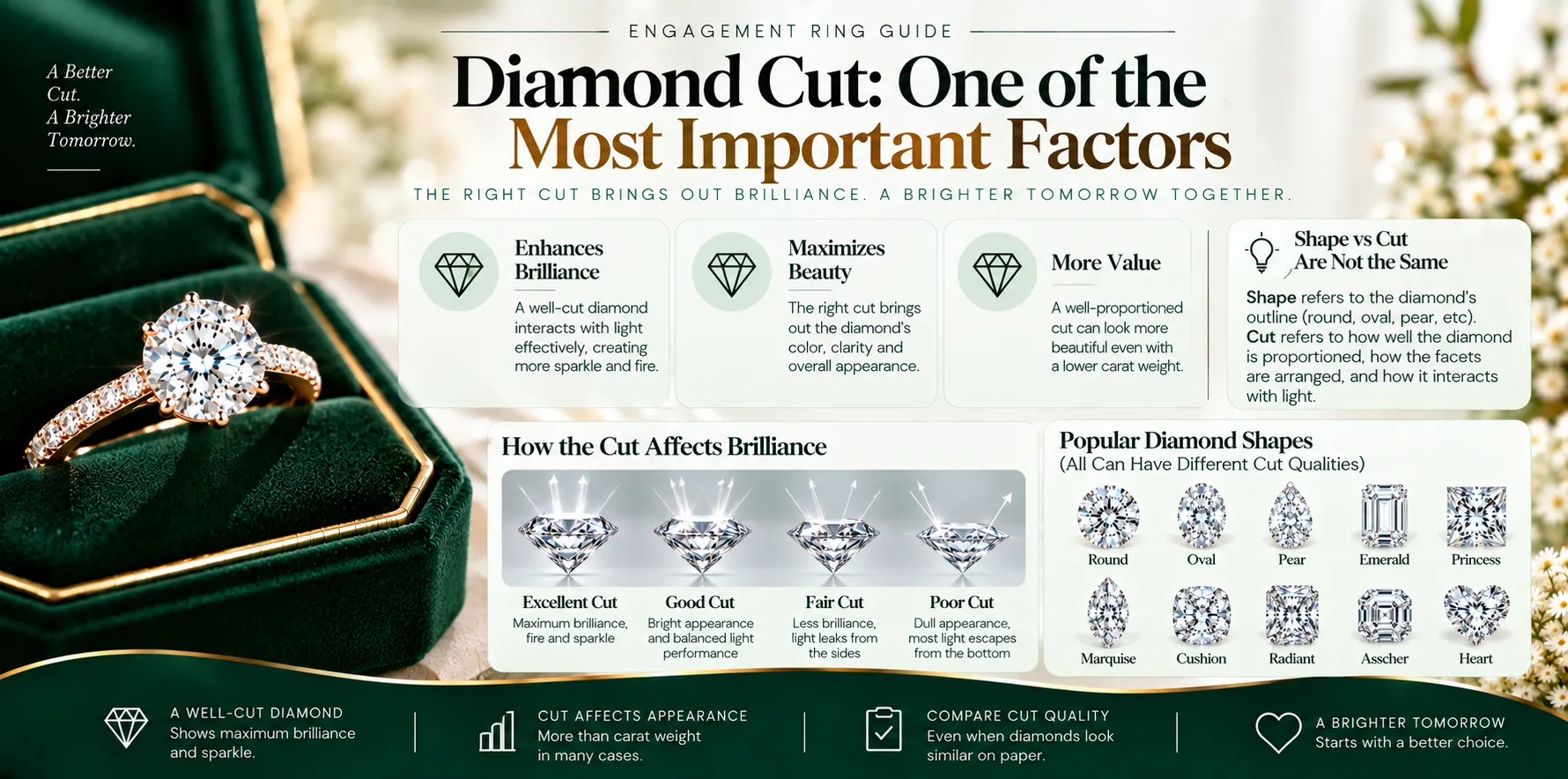
When discussing diamond quality, cut deserves special attention because it has a major influence on how a diamond interacts with light.
A well-cut diamond can display attractive brilliance and sparkle, while a poorly proportioned diamond may not perform as beautifully even if it has a higher carat weight.
It is also important to understand that diamond shape and diamond cut are not the same thing.
Round, oval, pear, emerald, princess, marquise, cushion, radiant, Asscher, and heart are diamond shapes. Cut describes how the diamond’s proportions, facets, symmetry, and finish influence its interaction with light.
This distinction is especially important when comparing diamonds that appear similar on paper.
ENGAGEMENT RING
-
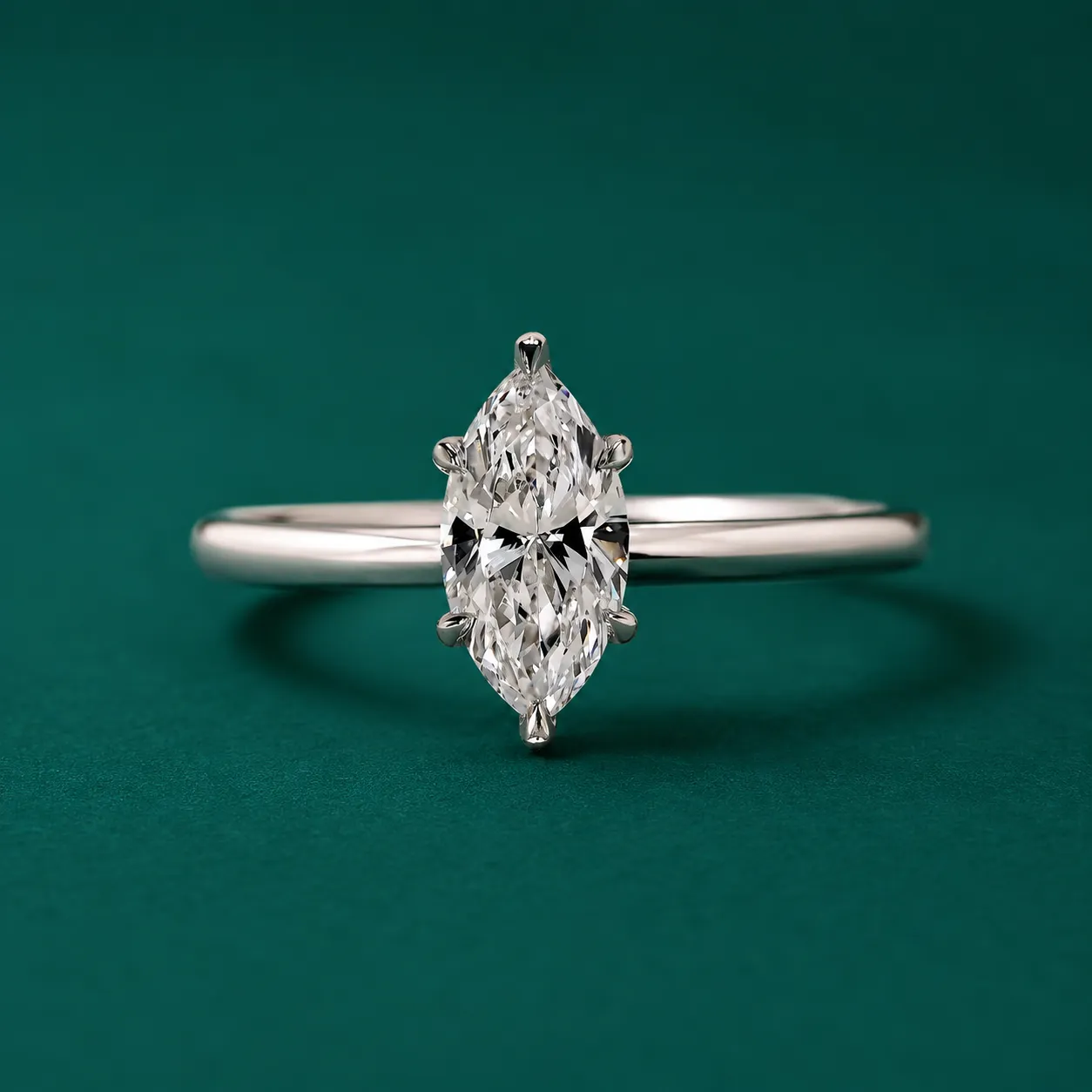
Marquise Lab Grown Diamond Engagement Ring Real Lab Diamond Solitaire Ring Anniversary Ring Gift Simple Marquise Diamond Ring for Proposal
Price range: $350.00 through $3,010.00 Select options This product has multiple variants. The options may be chosen on the product page -
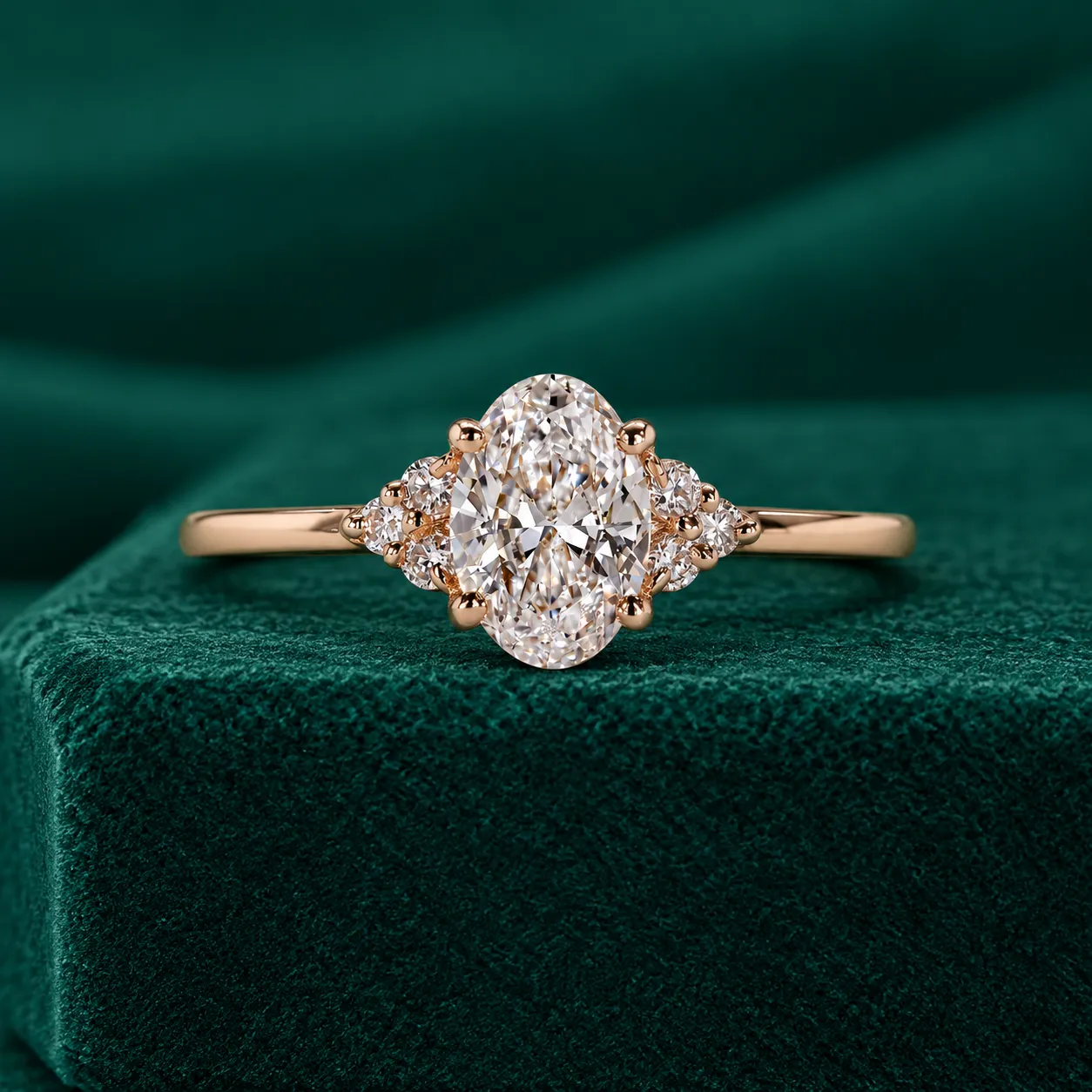
Oval Lab Grown Diamond Engagement Ring Oval Diamond Ring Solid Gold Ring for Her 3 Stone Diamond Anniversary Ring Gift Unique Promise Ring
Price range: $345.00 through $2,795.00 Select options This product has multiple variants. The options may be chosen on the product page -
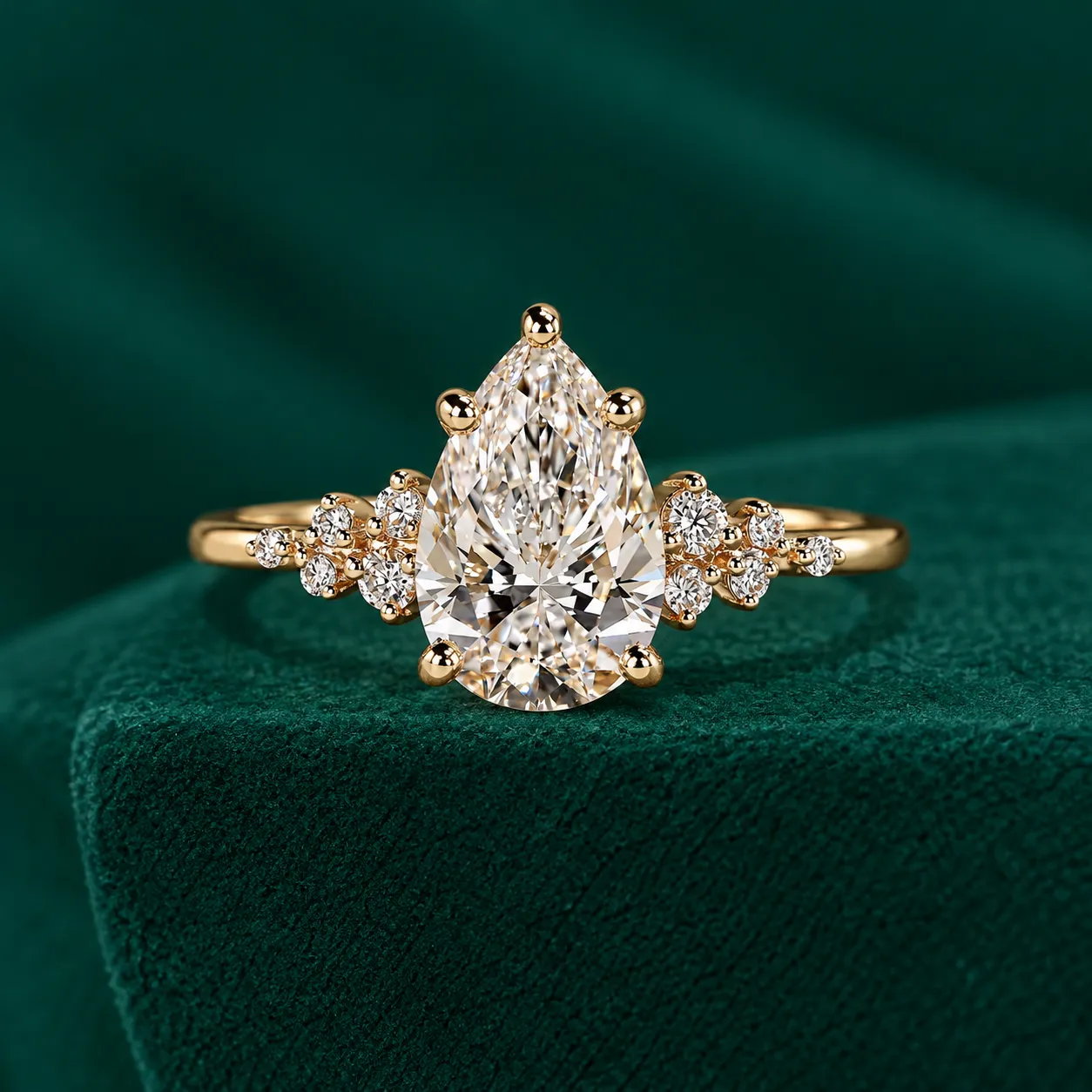
Pear Engagement Ring Lab Diamond Anniversary Ring 10K 14K 18K Solid Gold Rings for Women Teardrop Diamond Ring Real 1 CT Pear Diamond Ring
Price range: $395.00 through $3,078.00 Select options This product has multiple variants. The options may be chosen on the product page -
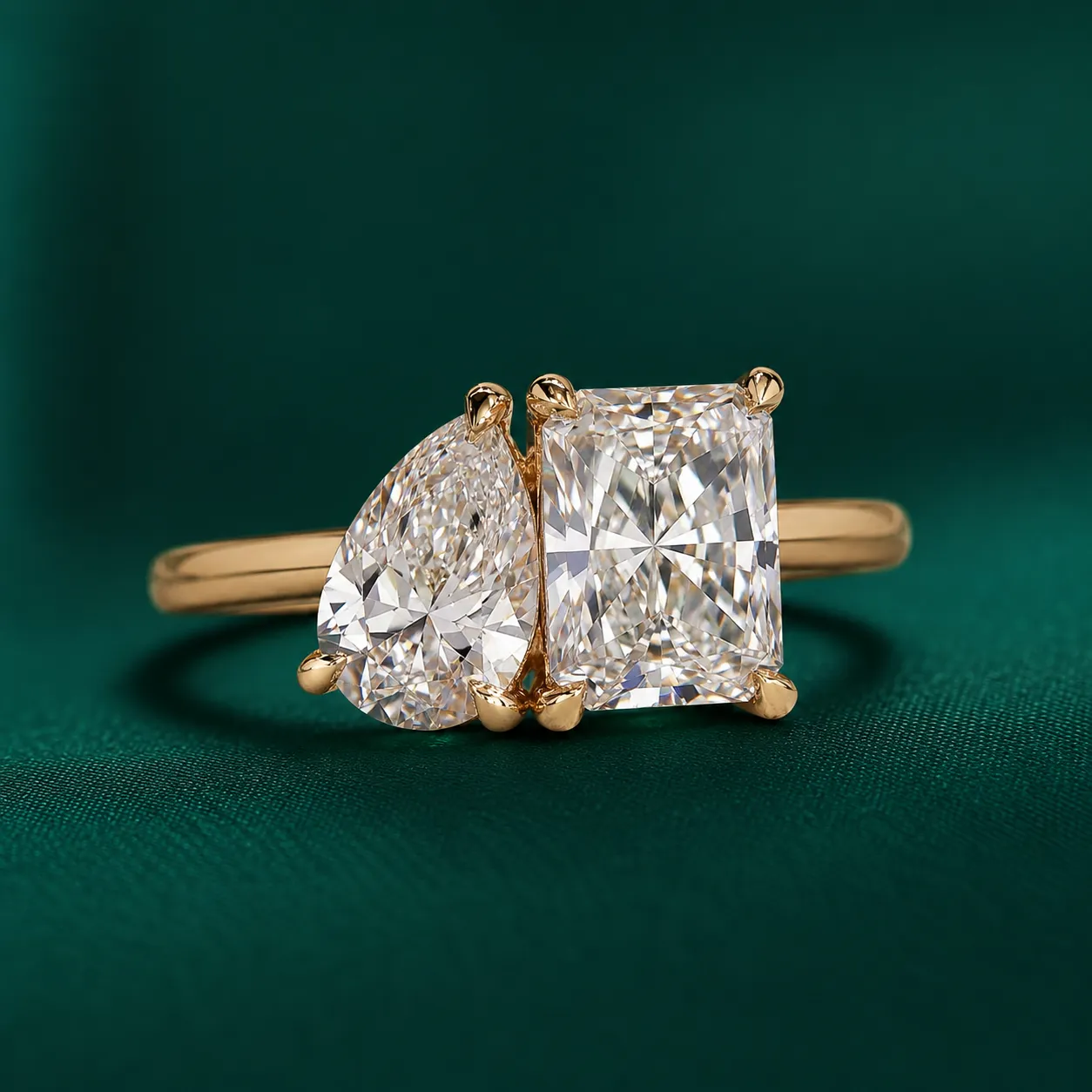
Toi Et Moi Engagement Ring Radiant and Pear Brilliant Diamond Proposal Ring Lab Grown Diamond Anniversary Gift Ring You and Me Wedding Ring
Price range: $1,040.00 through $1,790.00 Select options This product has multiple variants. The options may be chosen on the product page
Diamond Shape: What Look Feels Right?
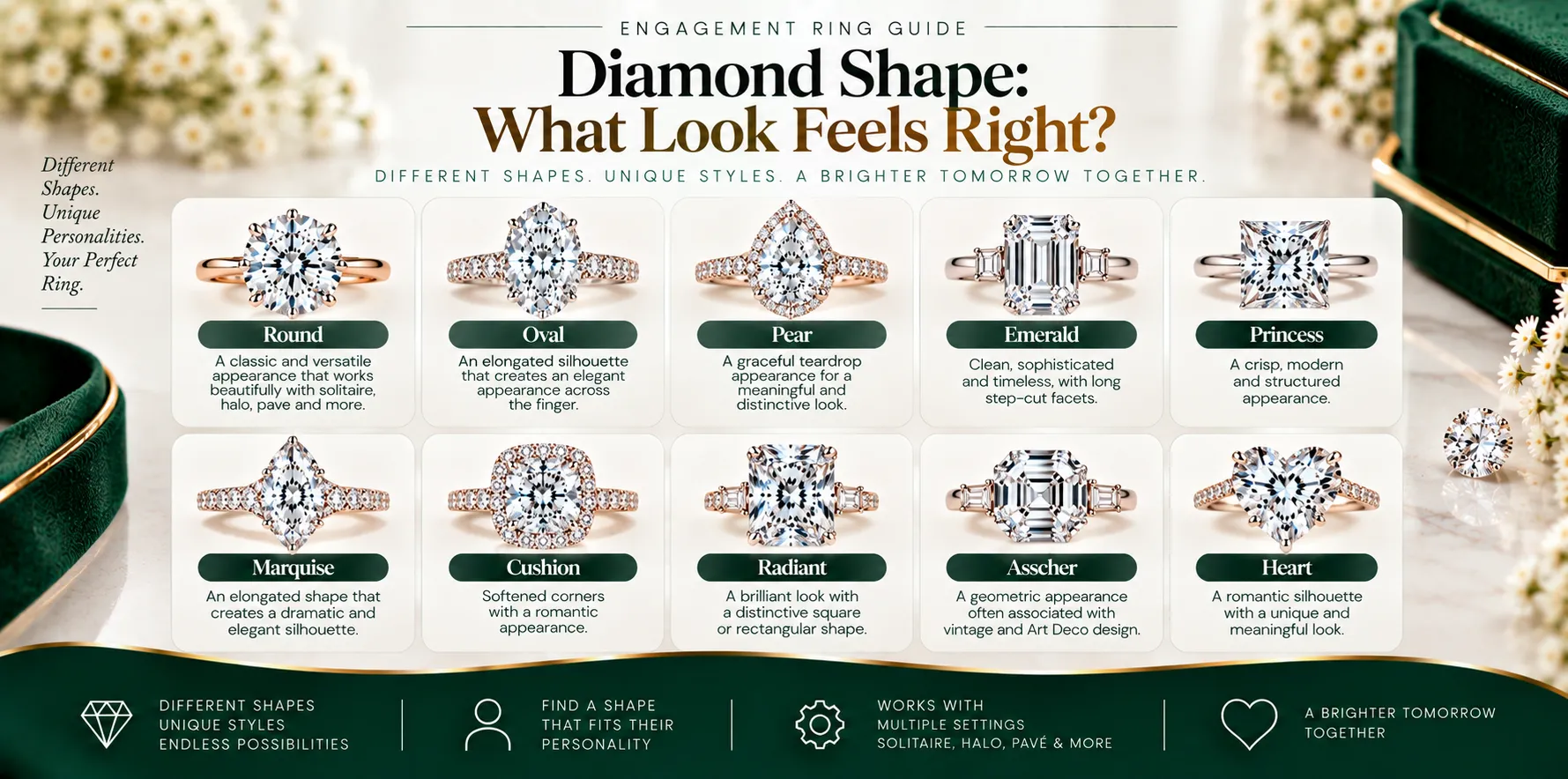
The shape of the diamond strongly influences the personality of an engagement ring.
Round
Round diamonds offer a classic and versatile appearance. They can work beautifully with solitaire, halo, pave, and many other settings.
Oval
Oval diamonds create an elongated silhouette and can provide an elegant appearance across the finger. They work particularly well in both classic and contemporary designs.
Pear
Pear-shaped diamonds combine a rounded end with a pointed tip, creating a graceful teardrop appearance. Their distinctive shape makes them a meaningful choice for someone who wants something less conventional.
Emerald
Emerald-cut diamonds have long step-cut facets that create a clean, sophisticated appearance. Because the facets can make inclusions more visible, clarity deserves careful attention.
Princess
Princess-cut diamonds have a crisp square or rectangular outline and can create a modern, structured appearance.
Marquise
Marquise diamonds have an elongated shape with pointed ends, creating a dramatic and elegant silhouette.
Cushion
Cushion diamonds combine softened corners with a romantic appearance and can suit both traditional and modern engagement ring designs.
Radiant
Radiant diamonds combine a rectangular or square outline with brilliant-style faceting, making them suitable for someone who wants strong sparkle with a distinctive shape.
Asscher
Asscher diamonds feature step-cut faceting and a geometric appearance often associated with vintage and Art Deco-inspired jewelry.
Heart
Heart-shaped diamonds have an unmistakably romantic silhouette. Symmetry is especially important when evaluating this shape.
The question is not which shape is universally best. It is which shape fits the wearer’s personality and the overall design.
Do the 4Cs Matter?
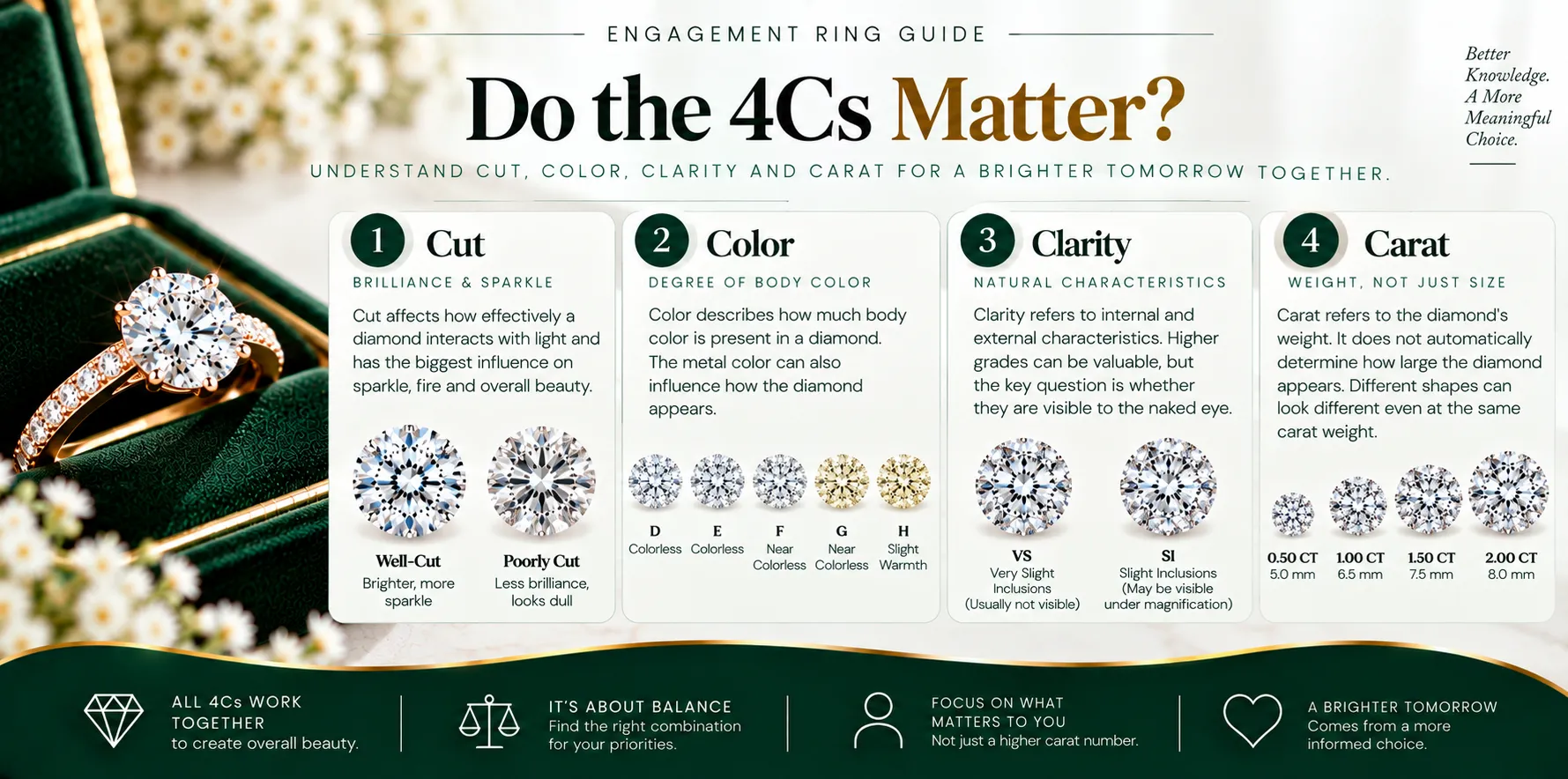
Yes. The four Cs cut, color, clarity, and carat provide an important framework for understanding diamond quality.
Cut influences brilliance and light performance.
Color describes the degree of body color visible in the diamond. The appearance can also be influenced by the color of the metal surrounding it.
Clarity refers to internal and external characteristics. Higher clarity grades can be valuable, but the practical question is also whether characteristics are visible to the naked eye.
Carat refers to diamond weight. It does not automatically determine how large the diamond appears from the top.
This is why choosing an engagement ring should not become a race for the highest carat number.
Read This Blog: Beginner’s Guide to Engagement Rings→Does Carat Size Matter Most?
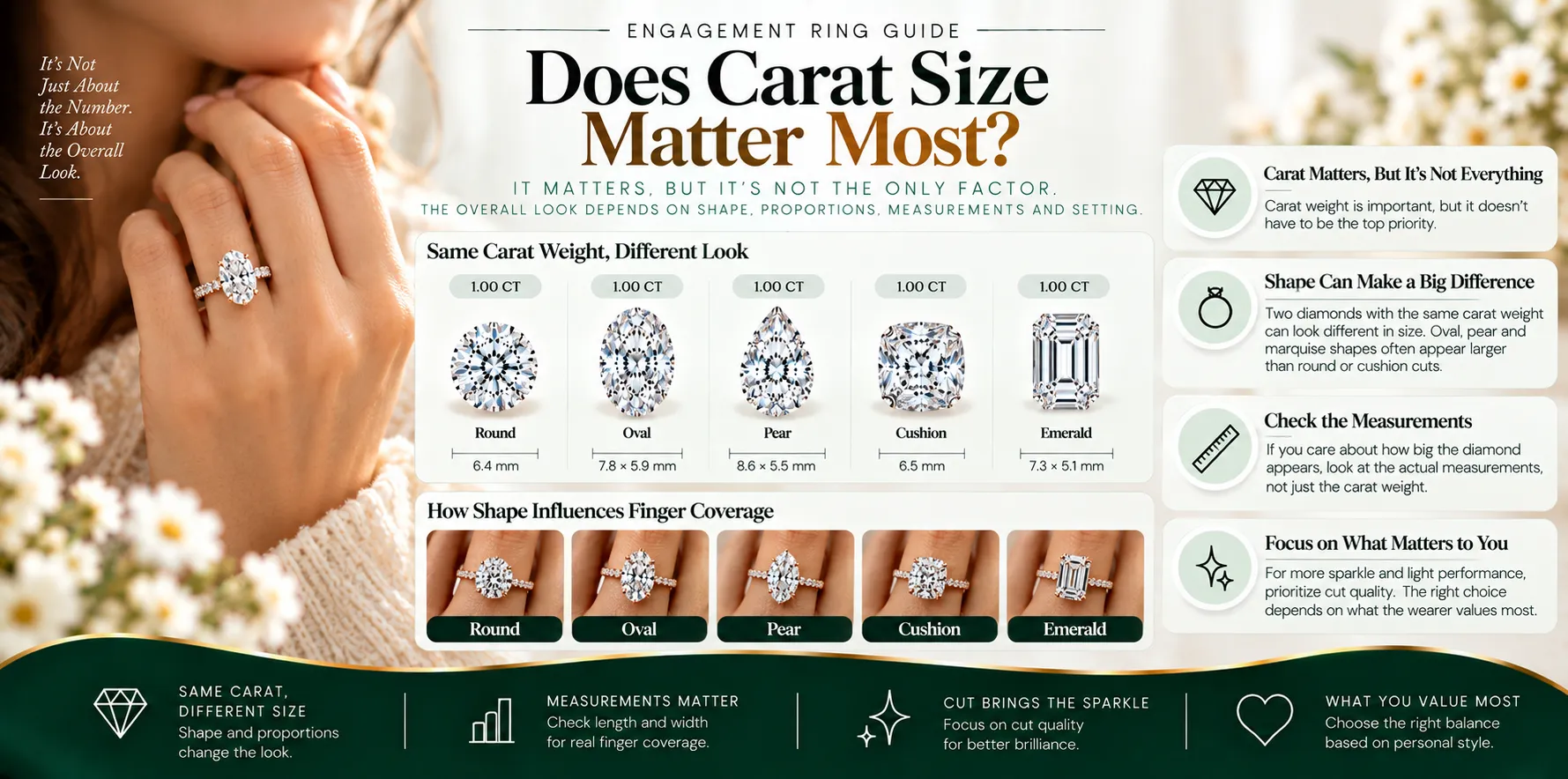
Carat weight does matter to buyers but it doesn’t have to be the top priority.
The way a diamond looks on a finger depends on its shape, proportions, measurements and how it’s set.
Two diamonds that weigh the same can actually look very different, in size when you look at them.
For instance a long or oval-shaped diamond might cover space on the finger than a round or cushion cut even if they have the same carat weight.
If you care most about how big the diamond appears check its measurements and not just the carat weight.
If you care more about sparkle and light performance then the cut quality should be your main focus.
Ultimately what matters most depends on what the person wearing the ring values the most.
The Ring Setting Matters More Than Many Buyers Realize
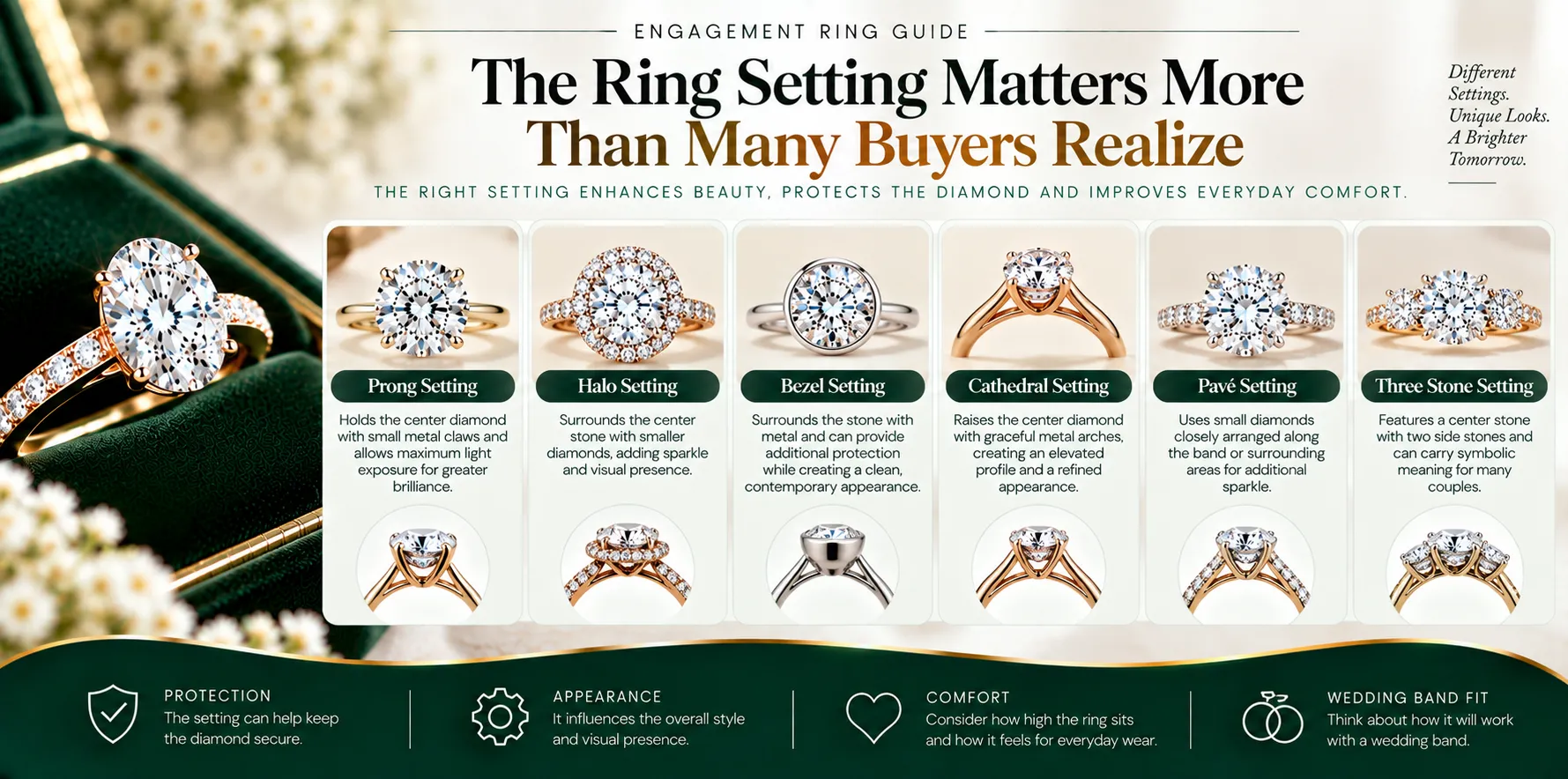
The setting influences the ring’s appearance, protection, comfort, and maintenance.
Prong settings hold the center diamond with small metal claws and can allow significant light exposure.
Halo settings surround the center stone with smaller diamonds, adding sparkle and visual presence.
Bezel settings surround the stone with metal and can provide additional protection while creating a clean, contemporary appearance.
Cathedral settings raise the center diamond with graceful metal arches, creating an elevated profile.
Pave settings use small diamonds closely arranged along the band or surrounding areas for additional sparkle.
Three stone settings feature a center stone with two side stones and can carry symbolic meaning for many couples.
When comparing settings, think beyond appearance. Ask how secure the stone is, how high the ring sits, how comfortable it feels, and how it will work with a wedding band.
Comfort and Everyday Wear Matter
An engagement ring may become one of the frequently worn pieces of jewelry that a person owns.
I think that comfort becomes very important.
Consider the rings height, the width of its band its weight, the design of its prongs and its overall profile. A person who leads a lifestyle may prefer a lower‑profile or more protective setting. A person who works with their hands may appreciate a design that has exposed elements.
A beautiful ring that feels uncomfortable will not likely become an everyday piece.
The best ring design is one that looks beautiful and feels natural to wear.
Durability Should Be Part of the Decision
Engagement rings are meant to last for years so durability is very important.
Look at how safe the setting’s how strong the prongs are, what kind of metal is used and how much maintenance the ring needs.
Intricate designs can be beautiful. Delicate parts may need more care. Protective settings can give benefits for some lifestyles.
The right choice depends on how the ring will be used, not just on how it looks in a picture.
Which Metal Should You Choose?
The metal affects the ring’s appearance, durability, feel, and maintenance.
Platinum offers a naturally white appearance and a substantial feel.
18K gold contains a higher proportion of pure gold and offers a rich appearance.
14K gold provides a balance between gold content and everyday durability.
10K gold contains a lower proportion of pure gold and can be a practical choice for buyers prioritizing durability and accessibility.
White gold provides a bright, contemporary appearance, while yellow gold creates a classic warm tone. Rose gold offers a softer pink-toned appearance.
The best metal is ultimately the one that complements the wearer’s style and practical needs.
Natural or Lab-Grown Diamond: Does It Matter?
Diamond origin is another thing to think about.
Natural diamonds are made by changes in the earth over a very long time. Lab-grown diamonds are made by people using technology and they have the same basic shape, as diamonds that are made by nature.
Lab-grown diamond engagement rings come in different shapes, sizes, colors and levels of clarity.
When you are looking at diamonds check the details of each diamond of just thinking about where it came from. Cut, color, clarity, carat, size, papers that prove it is real and how it looks all matter a lot.
Certification Gives You Important Information
A diamond grading report provides documented information about characteristics such as the diamond’s measurements and the 4Cs.
Certification can help buyers understand what they are purchasing and make comparisons between diamonds more straightforward.
Before purchasing an engagement ring, review the available certification and ensure that the information corresponds to the diamond being offered.
Budget Matters But It Should Be Personal
There is no amount that every person should spend on an engagement ring.
A sensible engagement ring budget should be based on what you can afford, not on a fixed rule.
Within that engagement ring budget think about what matters to you.
If sparkle is your priority you may put more of the engagement ring budget toward cut quality. If visual size is important you may look at shapes and proportions that give face‑up coverage. If design matters most you may choose to invest in a setting for the engagement ring.
The important thing is to understand the trade‑offs, not to assume that a higher price, for an engagement ring automatically means a choice.
What Should You Never Compromise On?
Some factors deserve particular attention.
Do not overlook diamond cut, because it can significantly influence appearance.
Do not ignore comfort, because the ring is meant to be worn.
Do not overlook stone security, especially for everyday wear.
Do not purchase without understanding the diamond’s documented characteristics.
And perhaps most importantly, do not choose a design that does not suit the person simply because it is currently fashionable.
What Matters Most: Size, Sparkle, Design, or Meaning?
The answer depends on the wearer.
If sparkle matters most look carefully at cut and faceting.
If visual size matters most consider diamond shape, measurements, proportions and setting.
If design matters most focus on the relationship between diamond, setting, metal and overall silhouette.
If practicality matters most prioritize comfort, durability, protection and everyday wear.
If meaning matters most choose something that reflects the persons personality and the relationship, behind the ring.
Final Thoughts
Choosing the right engagement ring comes down to personal style, diamond quality, and budget. From solitaire and halo to vintage and minimalist designs, every style offers something unique.
Explore our Complete Engagement Ring FAQ and Engagement Ring Glossary: Terms You Should Know for helpful buying tips and diamond terminology.
At FineImperial, discover lab-grown diamond engagement rings that celebrate your love with timeless elegance.