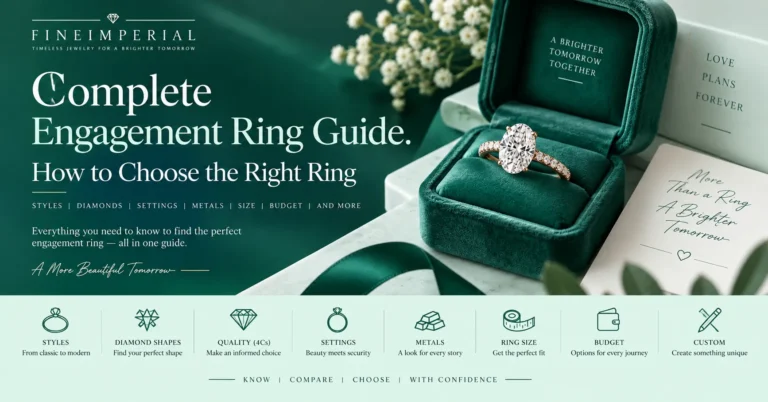
Choosing an engagement ring is about more than finding a piece of jewelry that looks nice. It is about finding something that feels real and meaningful for the person, the relationship and the future that you are getting ready to build. There are many choices when it comes to designs, diamond shapes, settings, metals and stones. Comparing all of them can feel very confusing quickly.
The good news is that you do not have to look at every ring there. You just need to know what differences are most important to you.
From a solitaire engagement ring to a dazzling halo style from a simple round diamond, to a graceful emerald cut each option gives a different style and feeling. This guide covers the important engagement ring choices so you can compare them in a thoughtful way and find a design that feels just right.
What Should You Compare When Choosing an Engagement Ring?
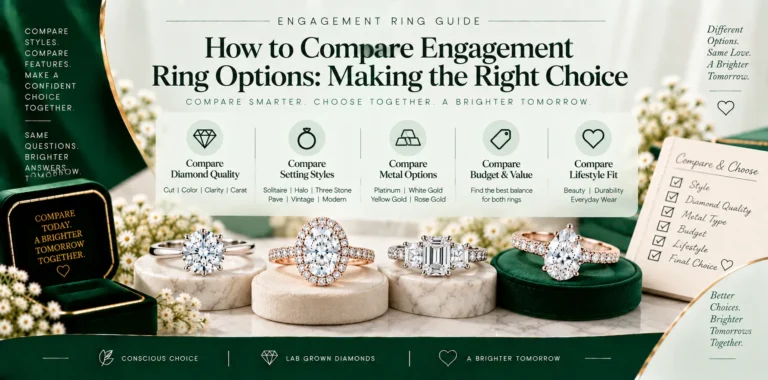
Before comparing designs it helps to break an engagement ring into a few essential elements. Those essential elements include style, diamond shape, setting, diamond quality, metal, lifestyle, comfort and budget.
Two engagement rings can have the carat weight but look completely different because of their shape and setting. Likewise two looking engagement rings can differ significantly in price because of diamond quality, metal, craftsmanship or certification.
The goal is not to find an engagement ring that looks impressive on paper. The goal is to find a combination of elements that matches the person who will wear the engagement ring.
Compare Engagement Ring Styles
Solitaire Engagement Rings
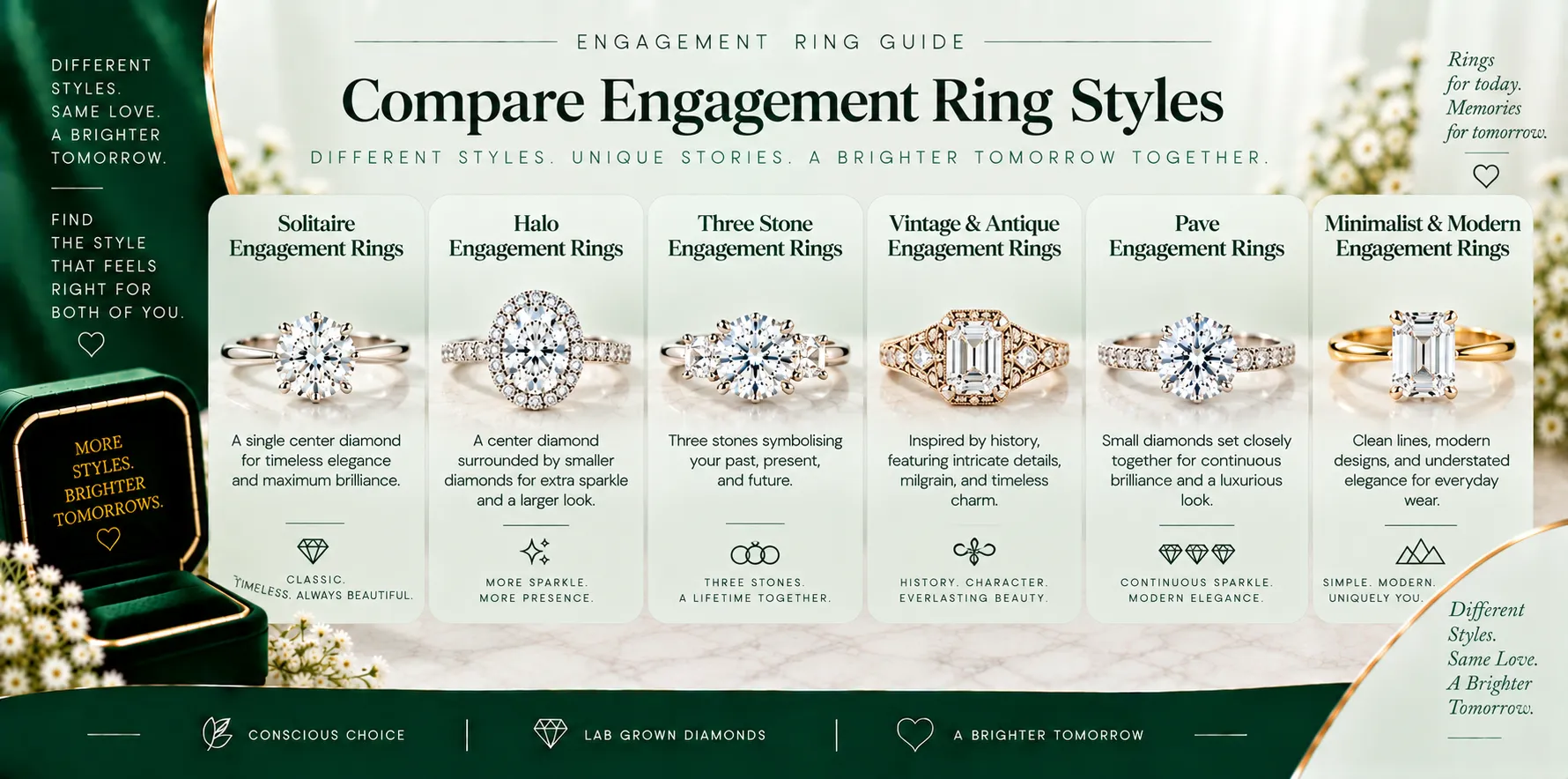
A solitaire engagement ring features one primary center diamond without a surrounding halo of smaller stones. Its simplicity allows the center diamond to become the main focus.
This style is particularly appealing if you appreciate classic jewelry that remains elegant without excessive detailing. A solitaire can also be paired with different diamond shapes, including round, oval, pear, emerald, and princess.
When comparing solitaire engagement rings, consider the center stone carefully because there are fewer additional diamonds to contribute visual sparkle.
Halo Engagement Rings
I notice that a halo engagement ring surrounds the center diamond with diamonds adding extra sparkle and making it stand out.
I find that halo designs can make the center stone look bigger and add detail around its edge. Halo engagement rings come in round halos oval halos, hidden halos and more intricate styles.
When I compare halo engagement rings I look at how the center stone and the surrounding diamonds balance. The halo should enhance the center stone not overpower it.
Three Stone Engagement Rings
A three stone engagement ring has three stones, usually a larger center diamond and two matching side stones.
Many couples appreciate the symbolism of a three stone engagement rings, where the three stones represent the past, present and future. Beyond symbolism a three stone engagement ring creates a look and offers more visible diamond coverage across the finger.
When comparing a three stone engagement rings pay attention to the proportions of the three stones. How naturally the stones work together.
Vintage and Antique Engagement Rings
A vintage engagement ring is generally inspired by design elements from earlier periods, while an antique engagement ring typically refers to a genuinely old piece with historical age.
Vintage-inspired designs may feature intricate metalwork, milgrain detailing, filigree, engraving, or Art Deco-inspired geometry.
When comparing vintage engagement rings and antique engagement rings, consider whether you prefer the appearance of historical design or the authenticity and character of an older piece.
Pave Engagement Rings
A pave engagement ring uses numerous small diamonds set closely together along the band or surrounding areas.
The result is a continuous-looking line of sparkle that can make the ring appear highly detailed without necessarily using a large number of prominent stones.
When comparing pave engagement rings, examine how securely the small diamonds are set and consider the maintenance involved with intricate designs.
Minimalist and Modern Engagement Rings
A minimalist engagement ring focuses on clean lines, restrained detailing, and simplicity. It can be especially appealing to someone who prefers jewelry that is easy to wear every day.
Modern engagement rings can take a more contemporary approach, using unusual proportions, geometric details, mixed metals, asymmetrical elements, or unconventional settings.
A minimalist engagement ring is not necessarily plain. Thoughtful proportions and a beautifully selected diamond can create an understated but memorable design.
Compare Engagement Rings by Diamond Shape
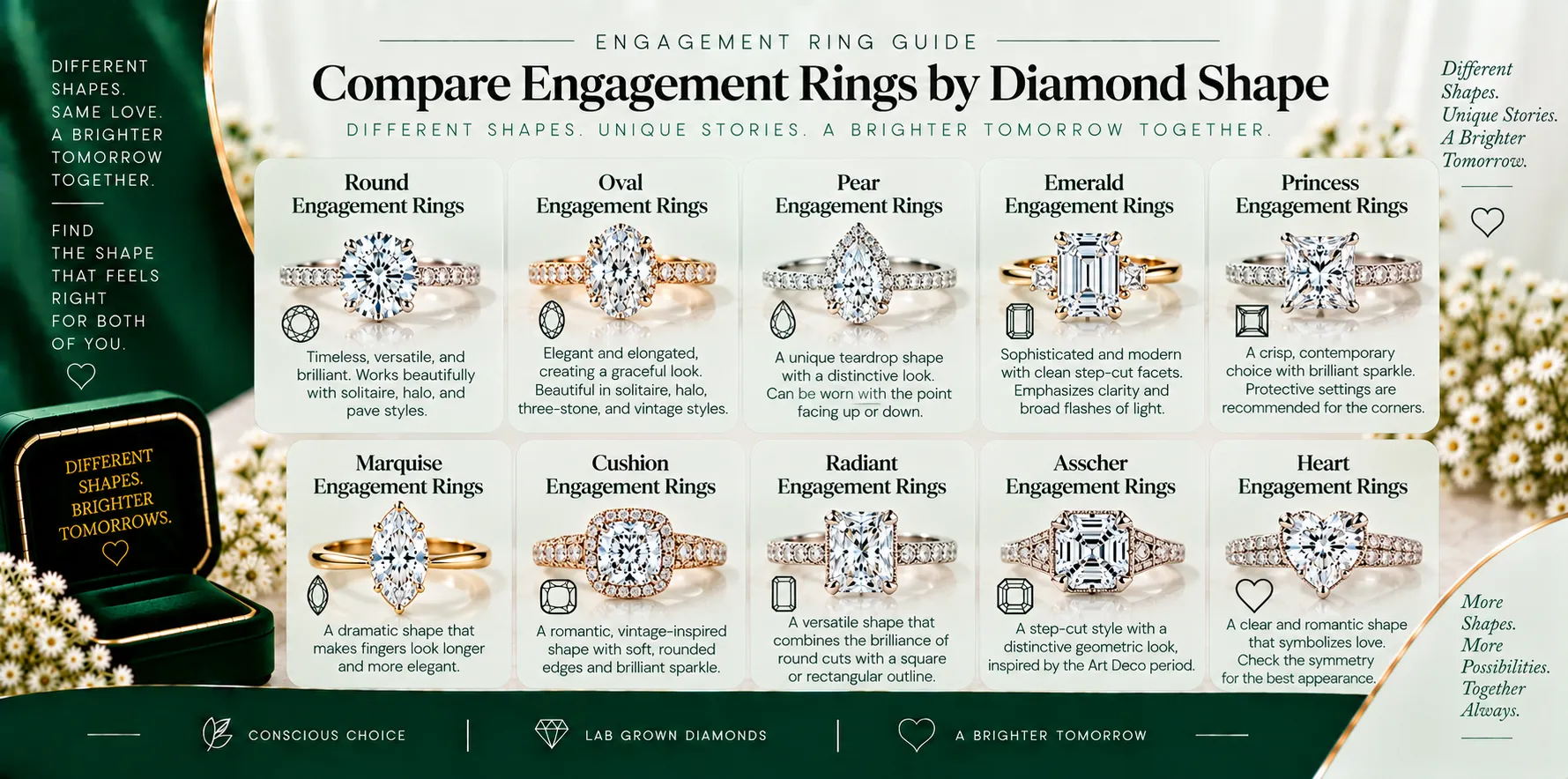
The diamond shape has a major influence on how an engagement ring looks on the hand.
Round Engagement Rings
Round diamonds are among the most recognizable diamond shapes and work with almost every major ring style.
A round engagement ring can look traditional in a solitaire setting, glamorous in a halo, or sophisticated with pave detailing. Its versatility makes it easy to pair with different bands and jewelry styles.
Oval Engagement Rings
Oval diamonds have an elongated outline that can create an elegant appearance across the finger.
An oval engagement ring can combine traditional diamond brilliance with a more elongated silhouette. Oval diamonds also work beautifully in solitaire, halo, three-stone, and vintage-inspired designs.
When comparing oval diamonds, look carefully at their proportions and the possibility of a visible bow-tie effect.
Buy Engagement Ring
-
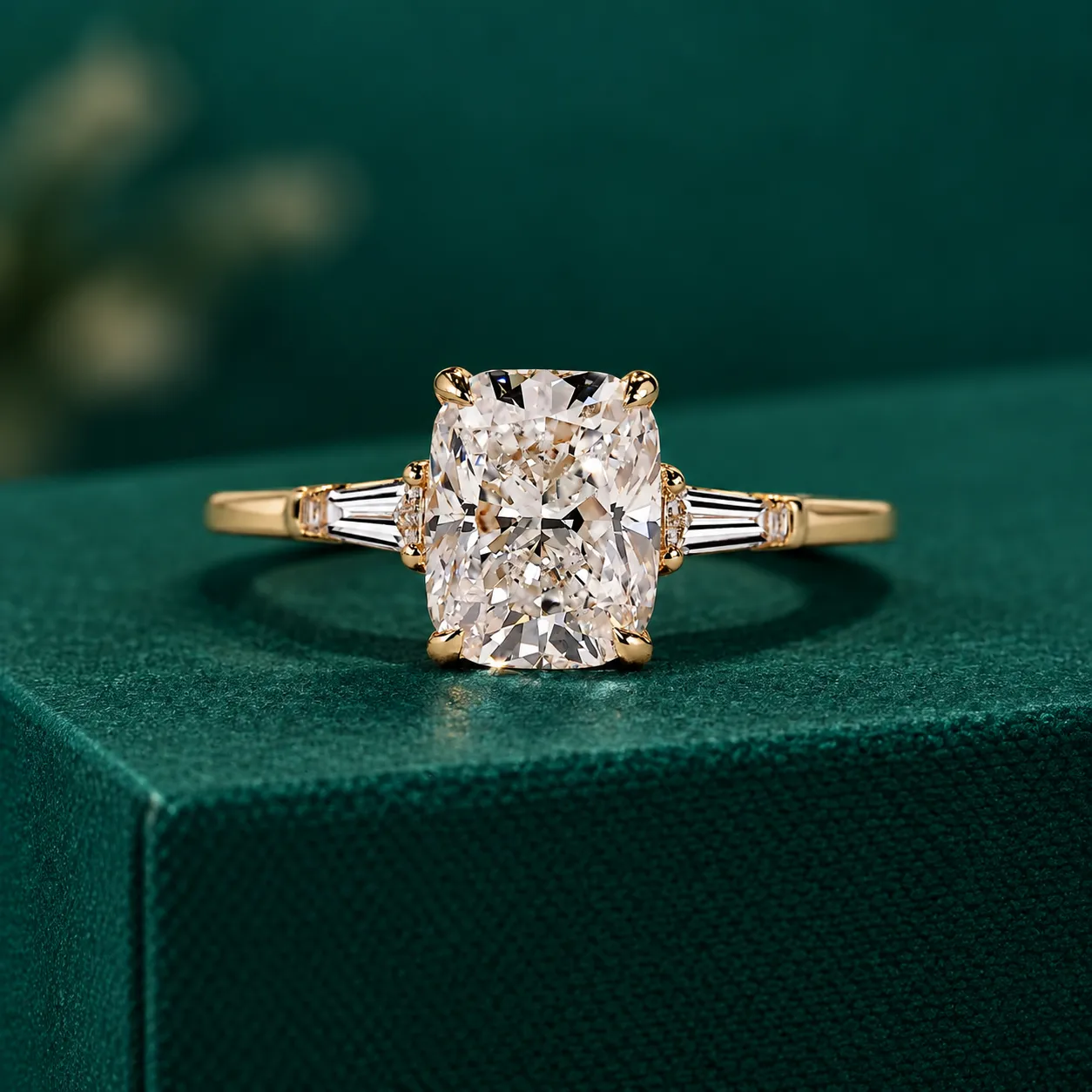
Diamond Engagement Ring Cushion Diamond Ring Unique 3 Diamond Wedding Ring Genuine Lab Grown Diamond Ring Anniversary Ring for Wife Gift
Price range: $378.00 through $2,905.00 Select options This product has multiple variants. The options may be chosen on the product page -
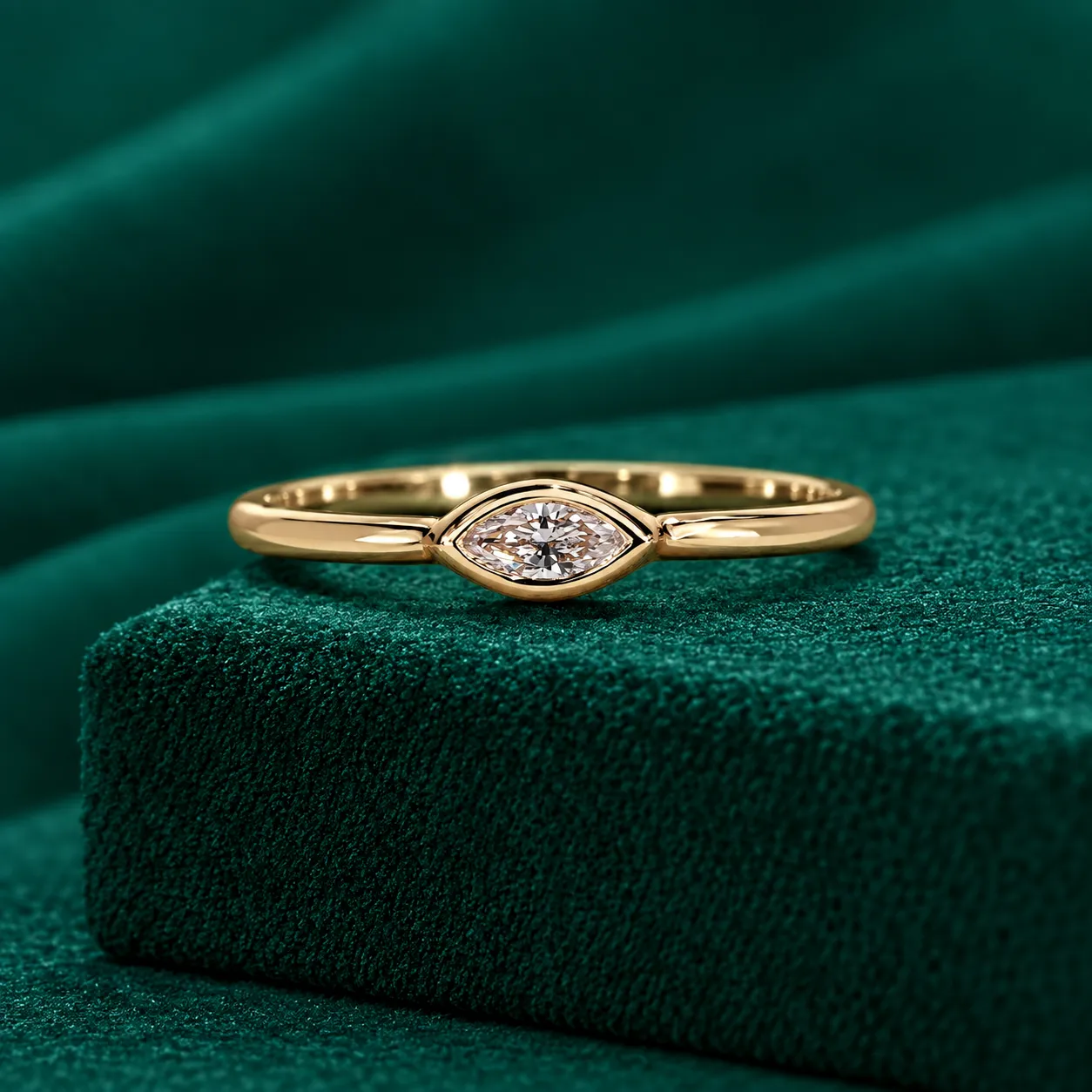
Marquise Diamond Ring Minimalist Promise Ring for Her Genuine Lab-Grown Diamond Ring Solitaire Ring for Wife Best Birthday Anniversary Gift
Price range: $225.00 through $655.00 Select options This product has multiple variants. The options may be chosen on the product page -
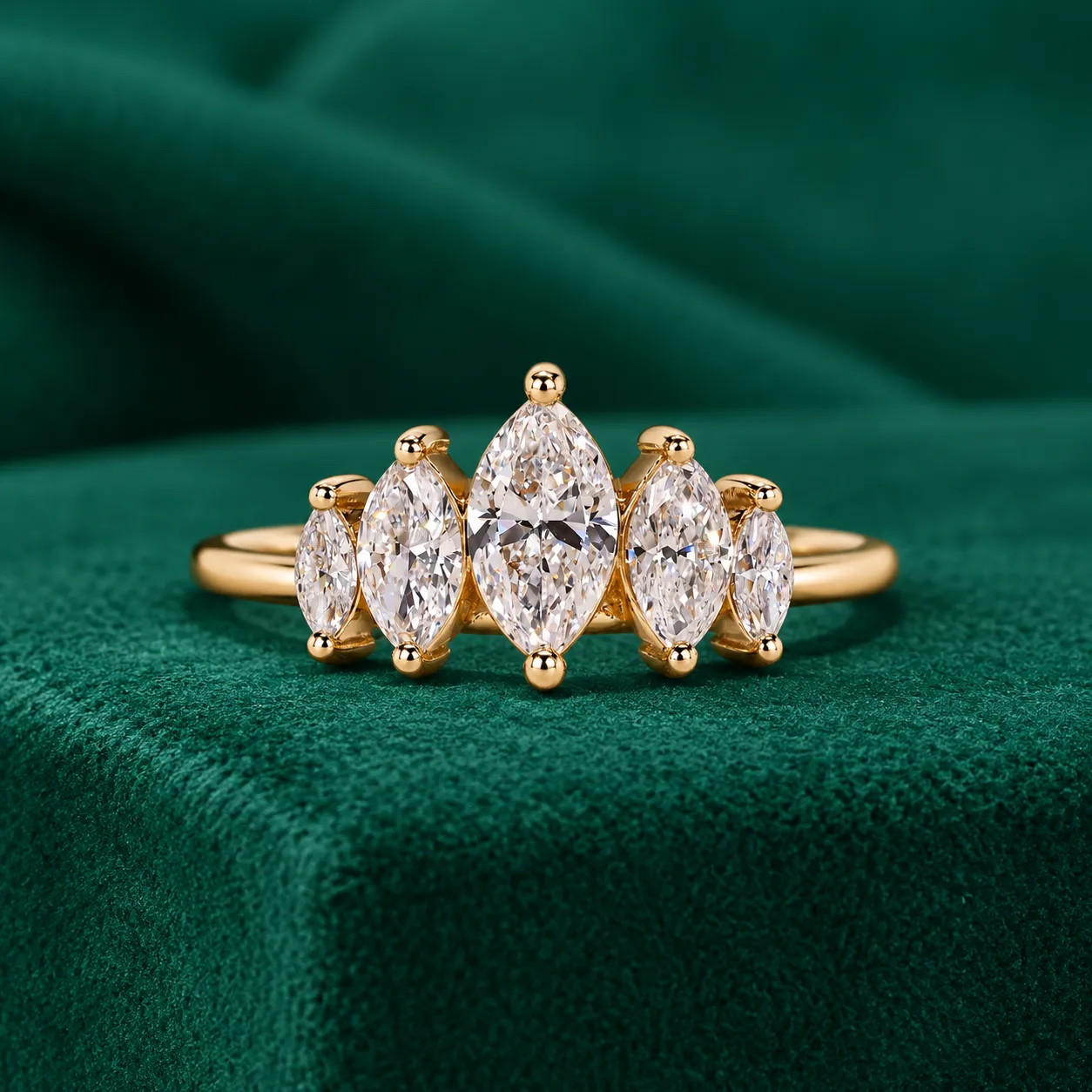
Marquise Diamond Wedding Ring 5 Stone Ring Genuine Lab Grown Diamond Stacking Ring Graduating Diamond Ring Unique Anniversary Gifts for Wife
Price range: $557.00 through $1,256.00 Select options This product has multiple variants. The options may be chosen on the product page -
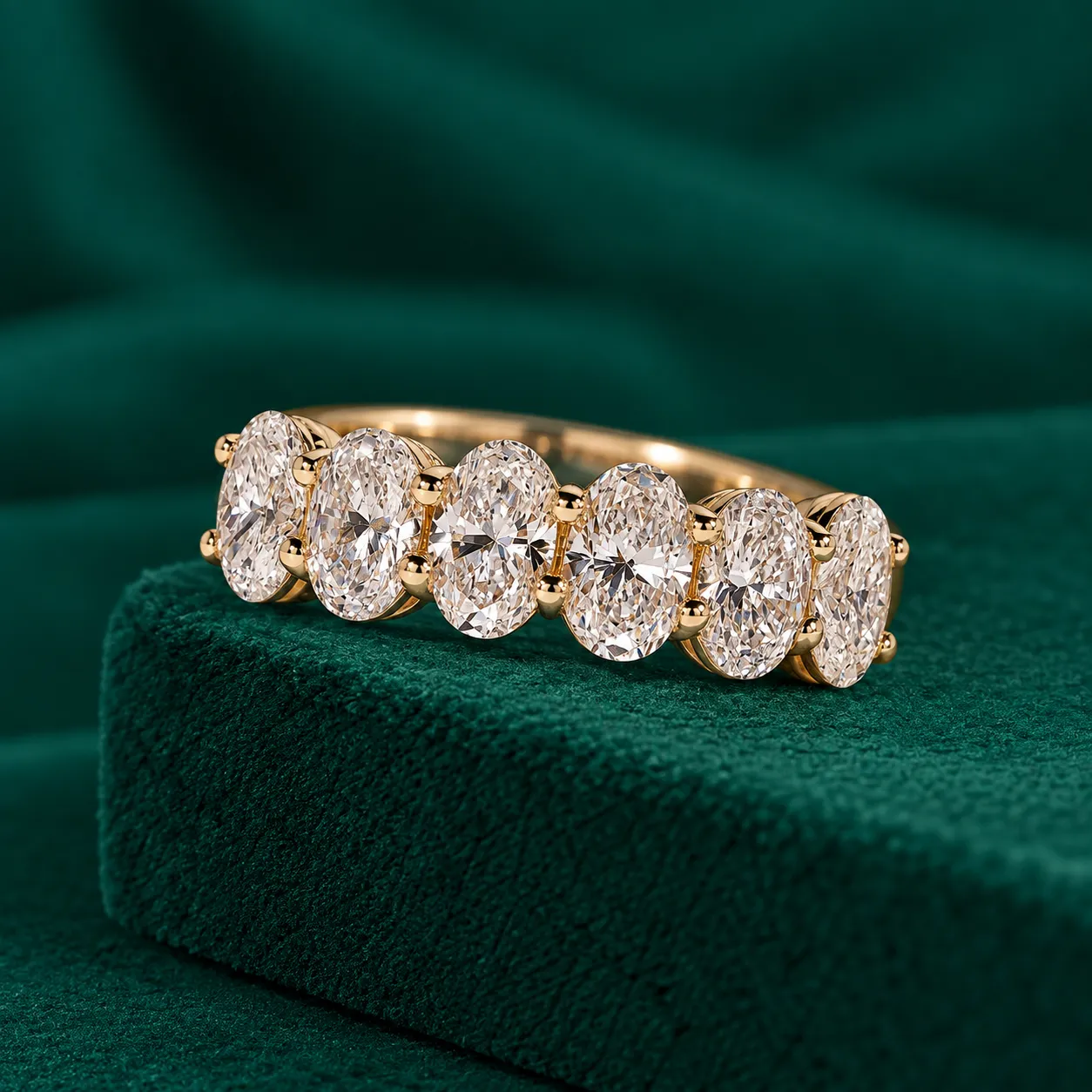
Oval Lab Grown Diamond Wedding Band 6 Stone Ring for Her Brilliant Diamond Anniversary Ring Women Handmade Stacking Ring Bridal Ring Gift
Price range: $737.00 through $1,509.00 Select options This product has multiple variants. The options may be chosen on the product page
Pear Engagement Rings
Pear-shaped diamonds combine a rounded end with a pointed tip, creating a distinctive teardrop silhouette.
A pear engagement ring can be worn with the point facing toward or away from the hand, depending on personal preference. Because of the pointed tip, protective setting design is particularly important.
Emerald Engagement Rings
An emerald engagement ring offers a sophisticated appearance through its long, clean step-cut facets.
Unlike highly brilliant cuts, emerald-cut diamonds emphasize clarity, transparency, and broad flashes of light. This makes clarity an especially important consideration when comparing emerald diamonds.
Princess Engagement Rings
Princess-cut diamonds feature a square or rectangular outline with brilliant faceting.
A princess engagement ring can create a crisp, contemporary appearance while still feeling traditional enough for everyday wear. Because the corners can be more vulnerable, the setting should provide appropriate protection.
Marquise, Cushion, Radiant, Asscher, and Heart Shapes
Marquise diamonds give a dramatic look and can make fingers look longer and more elegant.
Cushion cuts have edges and a romantic old-fashioned style. Radiant cuts have a rectangle or square shape with cuts, which makes them perfect for people who like both style and shine.
Asscher cuts use a step-cut style. Often have a special geometric look that is inspired by the Art Deco period. Heart-shaped diamonds have a clear and romantic shape but its very important to check the symmetry when looking at them.
These other shapes can be options if you want something different, from the usual round engagement rings or oval engagement rings.
Compare Engagement Ring Settings
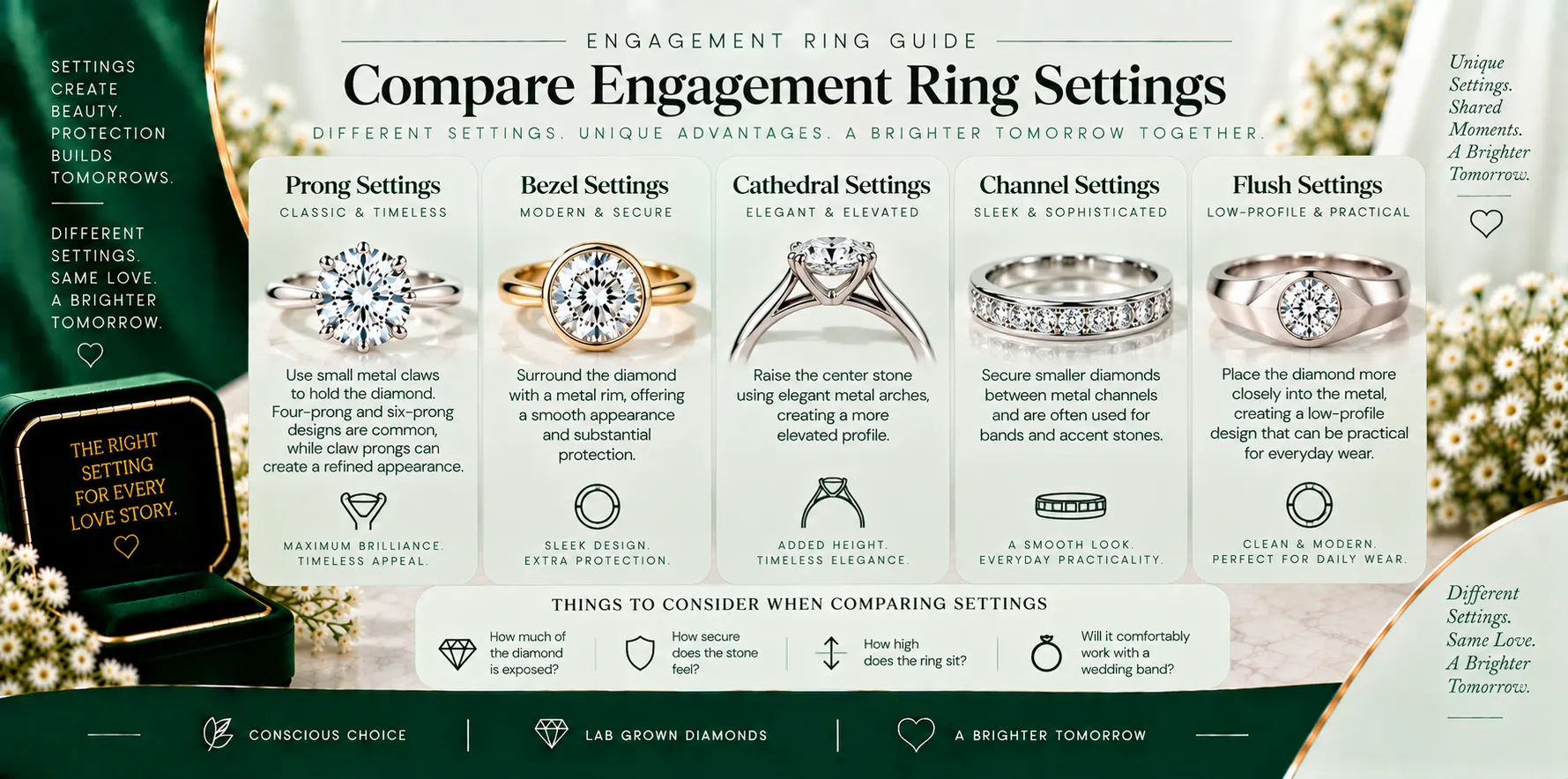
The setting is the part of the ring that holds and protects the diamond, so it affects both appearance and everyday practicality.
Prong settings: use small metal claws to hold the diamond. Four-prong and six-prong designs are common, while claw prongs can create a refined appearance.
Bezel settings: surround the diamond with a metal rim, offering a smooth appearance and substantial protection.
Cathedral settings: raise the center stone using elegant metal arches, creating a more elevated profile.
Channel settings: secure smaller diamonds between metal channels and are often used for bands and accent stones.
Flush settings: place the diamond more closely into the metal, creating a low-profile design that can be practical for everyday wear.
When comparing settings, consider how much of the diamond is exposed, how secure the stone feels, how high the ring sits, and whether it will comfortably work with a wedding band.
Compare Diamond Quality Using the 4Cs
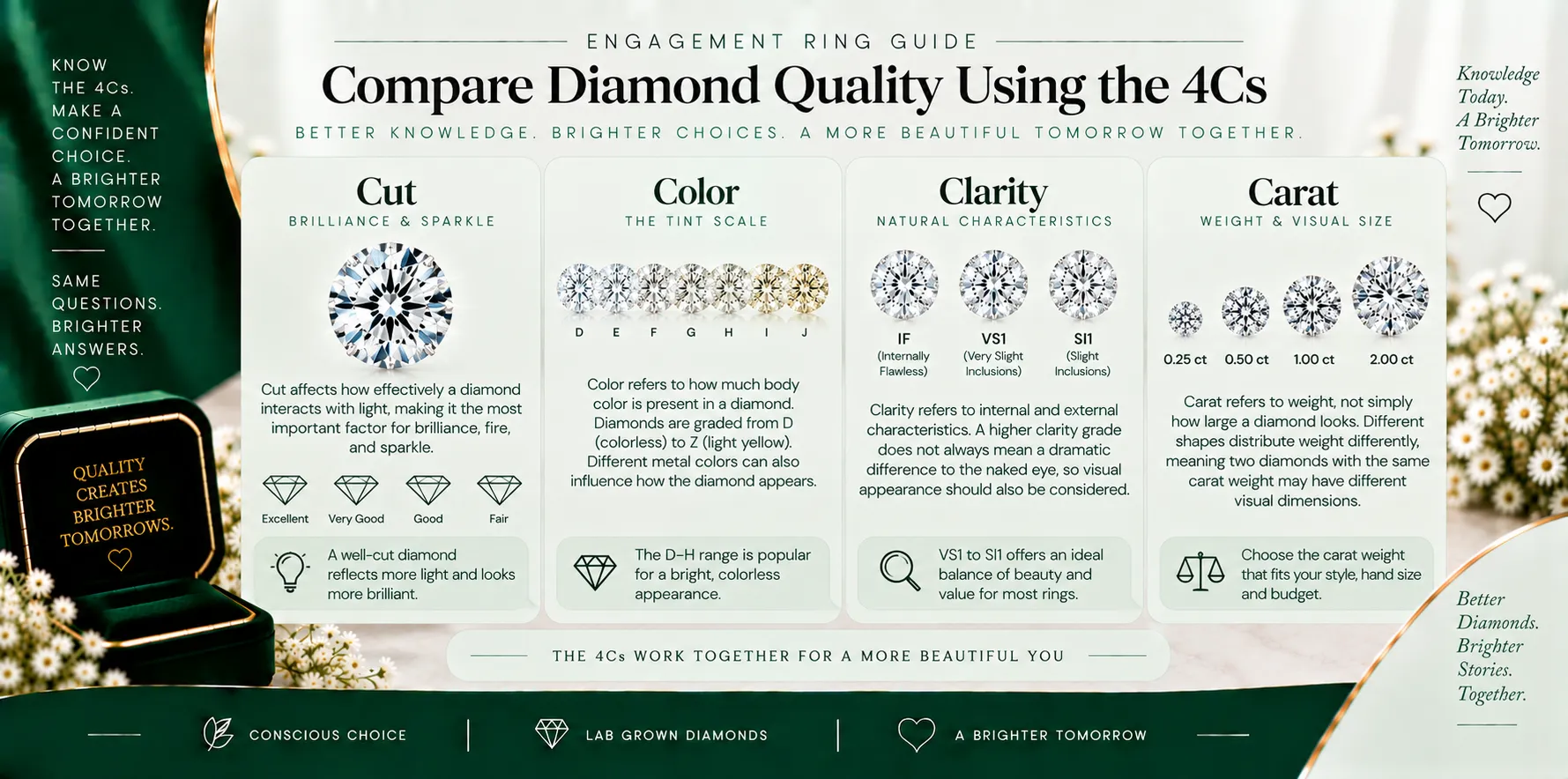
A ring’s appearance is also influenced by the diamond’s cut, color, clarity, and carat weight.
Cut: affects how effectively a diamond interacts with light and therefore has a major influence on sparkle.
Color: describes how much body color is present in a diamond. Different metal colors can also influence how the diamond appears.
Clarity: refers to internal and external characteristics. A higher clarity grade does not automatically mean a diamond will look dramatically different to the naked eye, so visual appearance should also be considered.
Carat: refers to weight, not simply how large a diamond looks. Different shapes distribute weight differently, meaning two diamonds with the same carat weight may have different visual dimensions.
Natural vs Lab-Grown Diamond Engagement Rings
When comparing engagement rings the origin of the diamond is another factor that you should look at. I think the diamond’s origin matters when you decide on a ring.
Natural diamonds are made by nature forming over long times. Lab‑grown diamonds are made in a lab using controlled technology. Both kinds of diamond have the crystal structure and the same chemical makeup.
A lab‑grown diamond engagement ring can let you pick an better diamond for the same price. A natural diamond may attract buyers who like the idea that the diamond came from the earth and has a history.
No matter the origin, compare each diamond’s cut, color, clarity, carat weight, certification and how it looks overall.
Compare Engagement Ring Metals
The metal influences the ring’s color, character, durability, and maintenance.
10K gold: contains a higher proportion of alloy metals and is commonly selected for affordability and everyday durability.
14K gold: provides a balance between gold content, durability, and appearance.
18K gold: contains more pure gold and offers a richer gold content.
White gold: creates a bright, contemporary appearance, while yellow gold provides a traditional warm tone. Rose gold adds a softer pinkish warmth.
Platinum: offers a naturally white appearance and is valued for its durability and substantial feel.
When comparing metals, think beyond color. Consider how the ring will be worn every day, how it will coordinate with other jewelry, and what type of maintenance it may require.
How Lifestyle Should Affect Your Engagement Ring Choice
An engagement ring is usually worn during life not just on special occasions.
If the person wearing it lives a lifestyle, a low-profile setting or a protective bezel design might be a good choice.
Someone who works with their hands often may want a design that has exposed parts.
For someone who enjoys eye-catching jewelry halo styles, three-stone rings or detailed pave settings can give a more elaborate look.
For someone who likes simple designs, solitaire rings or minimalist styles might feel more right.
The beautiful ring is the one that feels comfortable enough to become part of daily life.
How to Compare Two Engagement Rings Side by Side
When two rings seem difficult to distinguish, compare them using the same criteria.
Look at:
- Diamond shape
- Cut quality
- Carat weight
- Color
- Clarity
- Setting
- Metal
- Overall dimensions
- Comfort and durability
- Certification and total price
For example, an oval solitaire and a round halo may both be beautiful, but they create completely different visual impressions.
The oval solitaire places attention almost entirely on the center diamond, while the round halo introduces additional sparkle and a larger surrounding visual footprint.
Neither approach needs to be treated as universally better. The important question is which design fits the wearer’s taste, lifestyle, and expectations.
Common Mistakes When Comparing Engagement Rings
One common mistake is focusing on carat weight. A larger carat number does not automatically mean a beautiful diamond.
Another mistake is choosing a ring based on photographs. Proportions, finger shape setting height and actual dimensions can look different in person.
It is also easy to overlook maintenance. Intricate pave, prongs and elaborate details may require more attention, than a simple low-profile design.
Finally do not forget the wedding band. The engagement ring should ideally work comfortably with the band you expect to wear alongside it.
How to Choose an Engagement Ring That Feels Personal
Think about the person of just going along with whats popular.
A person who likes jewelry might really like a solitaire or round engagement ring. A person who likes shine might like something with a halo or pave style. A person who likes fashioned looks might like something that looks like it came from the past or an antique.
A person who likes modern styles might like an oval, emerald, radiant or princess diamond in a clean and simple setting.
Sometimes the most special choice is something that isn’t common. A pear, marquise, heart or Asscher diamond that shows who the person is of following what’s, in style.
An engagement ring becomes special because of what it stands for. The design is the beautiful thing that holds that meaning.
Engagement Ring Comparison Checklist
Before making your final decision, consider:
- Diamond shape
- Diamond cut
- Carat weight
- Color
- Clarity
- Setting style
- Metal type
- Ring dimensions
- Daily lifestyle
- Comfort
- Stone security
- Wedding-band compatibility
- Certification
- Maintenance
- Total budget
Taking a little time to compare these factors can make the buying process much more confident and meaningful.
Final Thoughts
Choosing the right engagement ring comes down to personal style, diamond quality, and budget. From solitaire and halo to vintage and minimalist designs, every style offers something unique.
Explore our Complete Engagement Ring FAQ and Engagement Ring Glossary: Terms You Should Know for helpful buying tips and diamond terminology.
At FineImperial, discover lab-grown diamond engagement rings that celebrate your love with timeless elegance.