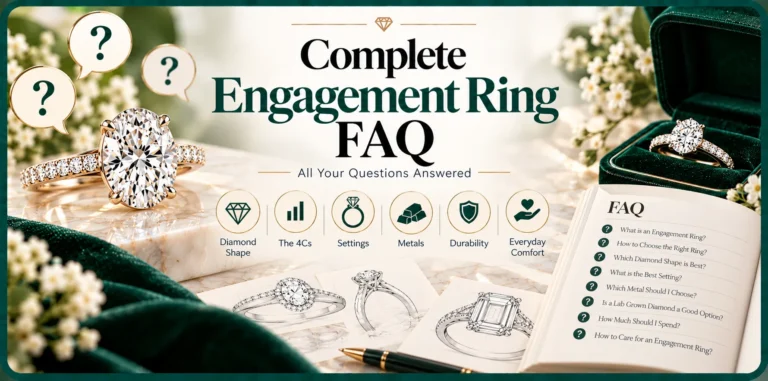
Buying an engagement ring can bring a lot of questions. How much should you spend? Which diamond shape should you choose? Is a lab-grown diamond a real diamond? Which setting is secure? How do you find the right ring size? And what should you know before making the final purchase?
This complete engagement ring FAQ brings together the most common questions buyers may have, from the first stages of ring shopping to caring for the ring after the proposal.
Engagement Ring Basics
What is an engagement ring?
An engagement ring is a piece of jewelry traditionally given when a couple becomes engaged. It commonly features a center diamond or gemstone and is worn as a symbol of the commitment to marry.
Which finger does an engagement ring go on?
In the United States, Canada, and many other countries, an engagement ring is commonly worn on the ring finger of the left hand. Customs can vary by country and culture.
What does an engagement ring symbolize?
An engagement ring generally represents commitment, love, and the intention to marry. For many couples, it also becomes a lasting reminder of the proposal and the beginning of their next chapter together.
What is the difference between an engagement ring and a wedding ring?
An engagement ring is traditionally given at the time of engagement, while a wedding ring or wedding band is exchanged during the wedding ceremony. Many people wear both together after marriage.
Is an engagement ring necessary?
No. Whether to exchange engagement rings is a personal decision. Couples can choose a traditional ring, a different type of jewelry, or no engagement ring at all.
Engagement Ring Budget FAQs
How much should you spend on an engagement ring?
There is no universal amount that everyone should spend. A sensible budget should fit your financial circumstances and reflect the features that matter most to you.
Is the three-month salary rule still necessary?
The three-month salary rule is an old marketing-related guideline rather than a requirement. Your engagement ring budget should be based on what you can comfortably afford.
What affects the price of an engagement ring?
Price can be influenced by:
- Diamond carat weight
- Cut
- Color
- Clarity
- Diamond shape
- Setting
- Metal
- Craftsmanship
- Certification
- Additional diamonds
- Customization
Is a more expensive engagement ring always better?
Not necessarily. Price and quality are influenced by many factors. A higher price does not automatically mean a ring will better match your style, lifestyle, or priorities.
How can I buy an engagement ring on a budget?
Start with a realistic budget and decide which features matter most. You can then balance diamond size, cut, clarity, setting, and metal to create a ring that fits your priorities.
Diamond 4Cs FAQs
What are the 4Cs of a diamond?
The 4Cs are cut, color, clarity, and carat weight. They provide a standard framework for describing important characteristics of a diamond.
Why is diamond cut important?
Cut affects how a diamond interacts with light and can have a major influence on brilliance and sparkle.
Is diamond shape the same as diamond cut?
No. Shape describes the diamond’s outline, such as round, oval, pear, or emerald. Cut describes the diamond’s proportions, faceting, symmetry, and finish.
Does diamond color matter?
Yes. Color describes the amount of body color visible in a diamond. The importance of color can depend on the diamond shape, setting, metal, and personal preference.
Does diamond clarity matter?
Clarity describes internal and external characteristics in a diamond. The appropriate clarity level depends on the diamond’s appearance, shape, size, and your priorities.
Does carat mean diamond size?
Carat refers to diamond weight, not simply its visible size. Two diamonds with the same carat weight can have different face-up dimensions depending on their shape and proportions.
Is a bigger diamond always better?
No. Diamond cut, proportions, shape, clarity, and overall appearance can be just as important as carat weight.
Diamond Shape FAQs
What is the most popular diamond shape for an engagement ring?
Round is one of the most widely recognized and versatile diamond shapes, although preferences vary. Oval, pear, emerald, princess, cushion, radiant, marquise, and other shapes are also popular choices.
What diamond shape looks the largest?
The apparent size of a diamond depends on its shape, measurements, proportions, and setting. Elongated shapes can sometimes provide significant face-up coverage relative to their carat weight.
Are oval diamonds good for engagement rings?
Yes. Oval diamonds offer an elongated appearance and can work with many settings, including solitaire, halo, and three-stone designs.
Are pear-shaped diamonds practical?
Pear diamonds can be excellent engagement ring choices, but their pointed tip should be appropriately protected by the setting.
Are emerald-cut diamonds suitable for engagement rings?
Yes. Emerald-cut diamonds offer a clean, sophisticated appearance with step-cut facets. Because of their open appearance, clarity and proportions deserve particular attention.
Are princess-cut diamonds durable?
Princess-cut diamonds have a square or rectangular outline with corners that can benefit from protective setting designs.
What should I know about marquise diamonds?
Marquise diamonds have an elongated shape with pointed ends. The tips should be properly protected, and symmetry and proportions are important when selecting one.
What is a cushion-cut diamond?
A cushion-cut diamond generally has a square or rectangular outline with softened corners. It can create a romantic and classic appearance.
What is a radiant-cut diamond?
A radiant-cut diamond combines a square or rectangular outline with brilliant-style faceting, offering both distinctive shape and strong sparkle potential.
What is an Asscher-cut diamond?
An Asscher cut is a step-cut diamond with a geometric appearance and clipped corners. It is often associated with Art Deco-inspired jewelry.
Are heart-shaped diamonds good for engagement rings?
Heart-shaped diamonds offer a strongly symbolic appearance. Symmetry and the definition of the heart shape are particularly important when choosing one.
Engagement Ring Style FAQs
What is a solitaire engagement ring?
A solitaire engagement ring features one primary center stone without a surrounding halo of smaller diamonds. It offers a classic and focused appearance.
What is a halo engagement ring?
A halo engagement ring surrounds the center stone with smaller diamonds. The surrounding stones can add sparkle and visual presence.
What is a three-stone engagement ring?
A three-stone engagement ring features a center stone with two additional stones on either side. The three stones are often associated with the past, present, and future.
What is a vintage engagement ring?
A vintage engagement ring may refer to a design inspired by earlier jewelry periods or, depending on context, an older ring with historical characteristics.
What is a pave engagement ring?
A pave engagement ring features small diamonds set closely together, usually along the band or around other parts of the design, creating a continuous-looking sparkle.
What is a minimalist engagement ring?
A minimalist engagement ring focuses on clean lines, simple proportions, and limited decorative details.
How do I choose an engagement ring that fits my style?
Consider the jewelry the wearer already enjoys, their clothing style, preferred metals, lifestyle, and whether they naturally prefer classic, modern, minimalist, vintage, or statement designs.
Engagement Ring Setting FAQs
What is an engagement ring setting?
The setting is the part of the ring that holds the diamond or other gemstones in place. It also contributes significantly to the ring’s overall appearance.
What is a prong setting?
A prong setting uses small metal claws to hold the center stone. Four- and six-prong designs are common.
What is a bezel setting?
A bezel setting surrounds the edge of the stone with metal. It can provide additional protection and create a smooth, modern appearance.
What is a cathedral setting?
A cathedral setting uses raised metal arches to support and elevate the center stone above the band.
Which engagement ring setting is best for everyday wear?
There is no single setting that is best for everyone. Lifestyle, stone shape, desired appearance, comfort, and protection should all be considered.
Which setting provides the most diamond protection?
Settings such as bezels can provide substantial edge protection, while appropriately designed prong settings can also securely hold a diamond. The specific construction matters.
Engagement Ring Metal FAQs
Is platinum good for an engagement ring?
Platinum is naturally white and known for its durability and substantial feel, making it a common choice for engagement rings.
What is the difference between 14K and 18K gold?
The karat indicates the proportion of pure gold in the alloy. 18K gold contains more pure gold than 14K gold, while 14K gold contains a greater proportion of other alloy metals.
Is white gold good for engagement rings?
White gold offers a bright, contemporary appearance and is widely used for engagement rings. It may require maintenance over time depending on its finish.
Is yellow gold timeless?
Yellow gold has a traditional appearance and has remained a popular choice across many jewelry styles.
What is rose gold?
Rose gold is a gold alloy with a warm pink or reddish tone created by the metals used in the alloy.
Which engagement ring metal is most durable?
Durability depends on the specific alloy, construction, lifestyle, and use. Platinum and different gold alloys each have their own characteristics and maintenance considerations.
Engagement Ring Size FAQs
How do I find the correct engagement ring size?
You can measure an existing well-fitting ring, have the finger professionally measured, or use other discreet methods if the proposal is intended to be a surprise.
How can I find my partner’s ring size without asking?
You might discreetly use a ring they already wear on the same finger, ask a trusted friend or family member, or arrange a subtle measurement when appropriate.
What if I do not know the ring size?
If the proposal needs to remain a surprise, choosing a design that can reasonably be resized may provide additional flexibility.
Can an engagement ring be resized?
Many engagement rings can be resized, but the ability to resize depends on the metal, setting, design, gemstones, and amount of adjustment required.
Should an engagement ring fit tightly?
An engagement ring should feel secure without being uncomfortably tight. Finger size can also change with temperature, activity, and other conditions.
Lab-Grown Diamond FAQs
What is a lab-grown diamond?
A lab-grown diamond is a diamond produced using controlled technological processes rather than formed naturally underground.
Are lab-grown diamonds real diamonds?
Yes. Lab-grown diamonds have the fundamental crystal structure and chemical composition of diamond. Their origin is different from that of naturally formed diamonds.
Are lab-grown diamonds suitable for engagement rings?
Yes. Lab-grown diamonds are available in many shapes, carat weights, colors, and clarity grades and can be used in engagement rings.
Are lab-grown diamonds cheaper than natural diamonds?
Lab-grown diamonds are generally offered at different price points from comparable natural diamonds, although pricing varies according to the individual stone and market conditions.
Are lab-grown diamonds certified?
Lab-grown diamonds can be independently graded and accompanied by grading reports that document their characteristics.
How should I compare lab-grown diamonds?
Compare the same characteristics you would evaluate for any diamond, including cut, color, clarity, carat weight, measurements, proportions, certification, and overall appearance.
Engagement Ring Shopping FAQs
When should I buy an engagement ring?
Give yourself enough time to research, compare options, arrange sizing, and account for shipping or customization. Custom designs may require additional time.
Should I buy an engagement ring online or in a store?
Both options can work. Online shopping can provide a broad selection and detailed product information, while in-person shopping allows you to see and try rings directly.
What should I check before buying an engagement ring?
Review:
- Diamond characteristics
- Certification
- Metal
- Setting
- Ring size
- Return policy
- Warranty
- Shipping information
- Customization terms
How do I compare two engagement rings?
Compare the diamonds, shapes, settings, metals, measurements, comfort, durability, certification, and total price using the same criteria.
What questions should I ask a jeweler?
Ask about diamond grading, certification, metal composition, setting construction, sizing, resizing, warranty, returns, maintenance, and customization.
How do I avoid engagement ring buying mistakes?
Avoid focusing only on carat weight. Consider cut, setting, comfort, durability, certification, personal style, budget, and long-term wear together.
Diamond Certification FAQs
What is a diamond grading report?
A diamond grading report documents characteristics such as carat weight, color, clarity, measurements, and other relevant grading information.
Why is diamond certification important?
A grading report provides documented information that can help buyers understand and compare diamonds.
Does every engagement ring need a certified diamond?
Certification requirements and buyer preferences vary. For significant diamond purchases, an independent grading report can provide useful documented information.
How can I verify a diamond grading report?
Use the grading laboratory’s official verification system when available and compare the report information with the diamond and product details.
Engagement Ring Lifestyle & Durability FAQs
How do I choose an engagement ring for everyday wear?
Consider the setting, metal, diamond protection, ring height, comfort, and the wearer’s daily activities.
Which diamond shapes need extra protection?
Shapes with pointed or vulnerable corners, such as pear, marquise, princess, and some emerald-cut designs, can benefit from appropriate protective settings.
Can I wear my engagement ring every day?
Many engagement rings are designed for everyday wear, but activities that involve impact, chemicals, heavy work, or other risks may require removing the ring.
Should I remove my engagement ring while sleeping?
Removing it can reduce exposure to accidental impact, snagging, or pressure. The best approach depends on the ring’s design and personal routine.
Can I wear my engagement ring while exercising?
It is generally sensible to remove a ring during activities that may expose it to impact, pressure, chemicals, or excessive moisture.
Engagement Ring Care FAQs
How do I clean an engagement ring?
Cleaning methods depend on the diamond, gemstones, metal, and setting. Follow the care guidance appropriate for the specific ring.
How often should an engagement ring be professionally inspected?
Periodic professional inspection can help identify loose stones, worn prongs, or other issues before they become more serious.
How do I know if a diamond is loose?
If the stone moves, makes a clicking sound, or appears different in its setting, stop wearing the ring and have it inspected by a professional.
How should I store an engagement ring?
Store it separately in a secure, soft-lined location to reduce scratching and accidental contact with other jewelry.
Wedding Band FAQs
Should an engagement ring and wedding band match?
They do not have to match exactly. They can coordinate through metal, shape, proportions, or design details.
Can any wedding band fit with an engagement ring?
Not always. The height and shape of the engagement ring setting can affect whether a straight band sits flush beside it.
Should I think about the wedding band before buying the engagement ring?
Yes. Considering the future combination can help you choose a setting and band profile that work comfortably together.
Proposal FAQs
When should you give an engagement ring?
Traditionally, an engagement ring is given when a couple becomes engaged. The timing and proposal style are personal decisions.
Should an engagement ring be a surprise?
Some couples prefer a completely surprising proposal, while others choose the ring together. Either approach can work depending on the relationship.
Should you choose an engagement ring together?
Choosing together can make it easier to confirm preferences such as style, size, diamond shape, and budget. A surprise proposal can still be maintained while discussing general preferences beforehand.
Custom Engagement Ring FAQs
Can I customize an engagement ring?
Many engagement rings can be customized through choices such as diamond shape, metal, setting, band design, and additional stones.
Can I choose my own diamond?
Depending on the jeweler and product, buyers may be able to select a specific diamond based on its shape, carat, color, clarity, and other characteristics.
How long does a custom engagement ring take?
Production time varies depending on the design, materials, diamond availability, and level of customization.
Is a custom engagement ring more expensive?
Not necessarily. Cost depends on the design, diamond, metal, craftsmanship, and customization involved.
Return, Warranty & Insurance FAQs
Should an engagement ring have a return policy?
Understanding the return policy before purchasing is important, particularly for a significant jewelry purchase.
What does an engagement ring warranty cover?
Coverage varies by jeweler. It may address certain manufacturing defects or services, but buyers should review the specific warranty terms.
Should I insure an engagement ring?
Insurance can provide protection against certain risks such as loss, theft, or damage depending on the policy.
When should an engagement ring be insured?
Many buyers consider insurance soon after purchasing the ring. The appropriate timing and documentation depend on the insurer and policy requirements.
Ethical & Sourcing FAQs
What should I know about diamond sourcing?
Buyers may want to understand where a diamond comes from and what information is available about its origin and sourcing practices.
Are lab-grown diamonds a different sourcing option?
Yes. Lab-grown diamonds are produced in controlled laboratory environments rather than extracted through traditional mining.
Should I ask about diamond origin?
If origin matters to you, asking the jeweler for available information can help you make a purchase that aligns with your priorities.
How Do I Choose the Right Engagement Ring?
There is no single engagement ring that is right for everyone.
The right choice depends on a combination of:
- Personal style
- Diamond quality
- Diamond shape
- Setting
- Metal
- Lifestyle
- Comfort
- Budget
- Certification
- Long-term wear
A ring should not only look beautiful at the time of the proposal. It should also feel comfortable, suit the person wearing it, and remain meaningful as your relationship moves into its next chapter.
Final Thoughts
Choosing the right engagement ring comes down to personal style, diamond quality, and budget. From solitaire and halo to vintage and minimalist designs, every style offers something unique.
Explore our Complete Engagement Ring FAQ and Engagement Ring Glossary: Terms You Should Know for helpful buying tips and diamond terminology.
At FineImperial, discover lab-grown diamond engagement rings that celebrate your love with timeless elegance.