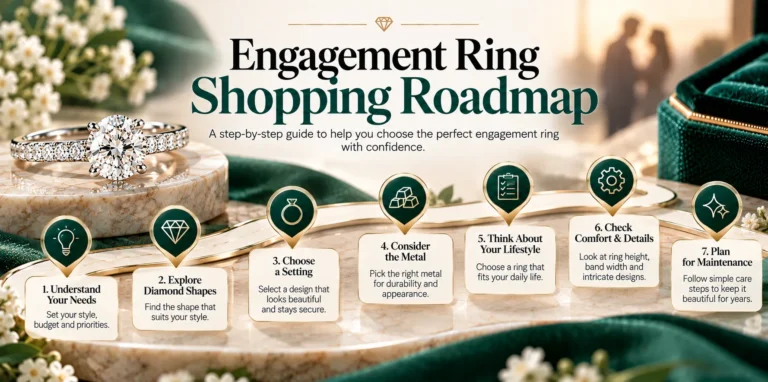
Shopping for an engagement ring can begin with excitement and quickly turn into a long list of questions. How much should you spend? Which diamond shape should you choose? Is a solitaire better than a three-stone design? What metal should you select? And how do you know whether the ring will actually be comfortable and practical to wear?
A clear shopping roadmap can make the process much easier.
Of trying to compare everything at once move through the decision step, by step. Start by setting your budget. Then focus on choosing the diamond. After that check the setting carefully. Next review the certification. Finally make the decision. Each stage helps narrow your options.
Start With Your Budget
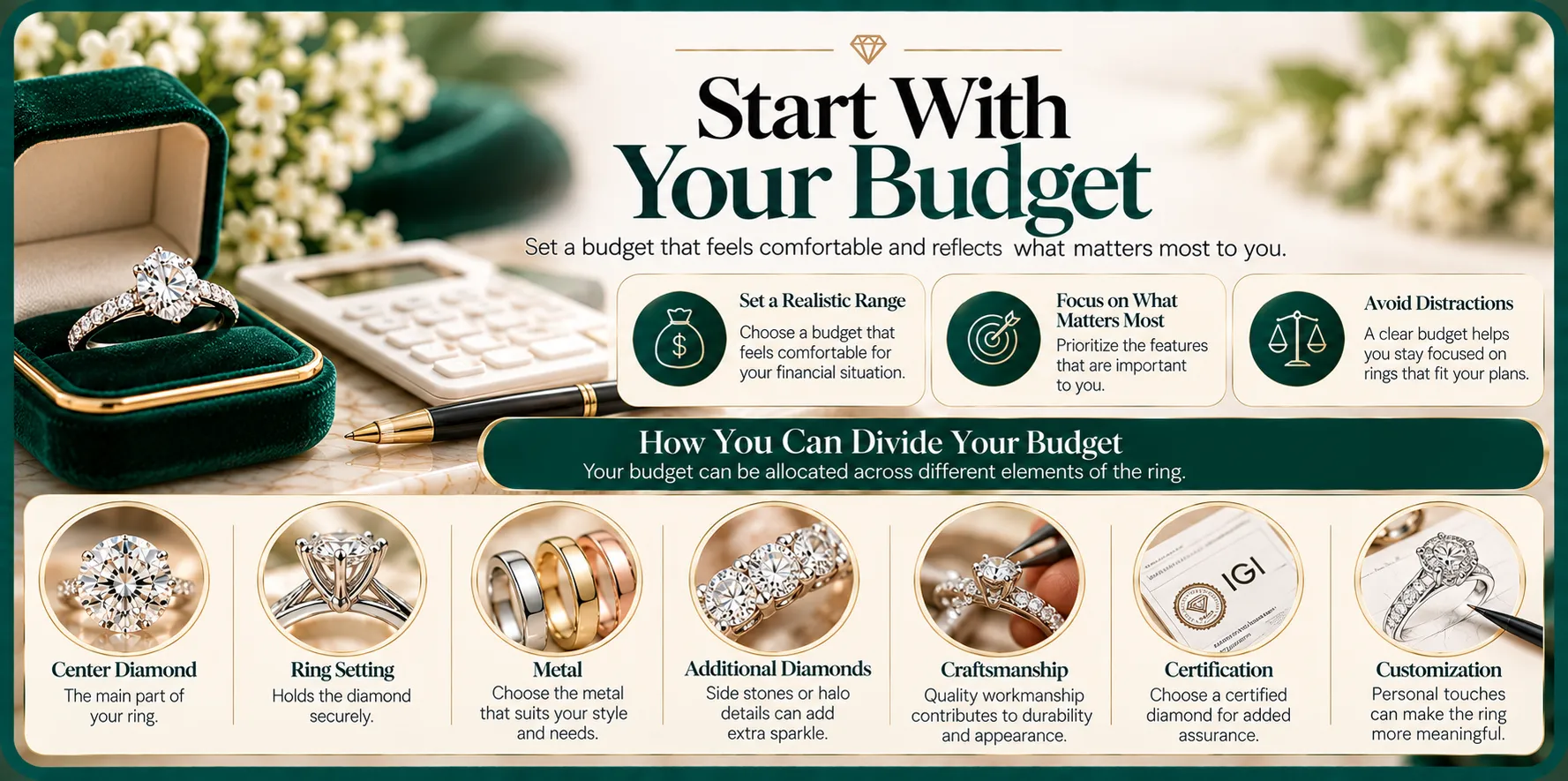
Before looking at specific rings, establish a budget that feels financially comfortable.
There is no universal amount that everyone needs to spend on an engagement ring. Your budget should reflect your own circumstances and the features you value most.
Consider how you want to divide the budget between:
- Center diamond
- Ring setting
- Metal
- Additional diamonds
- Craftsmanship
- Certification
- Customization
Having a clear range at the beginning can prevent you from becoming distracted by rings that do not fit your plans.
BUY RING
-
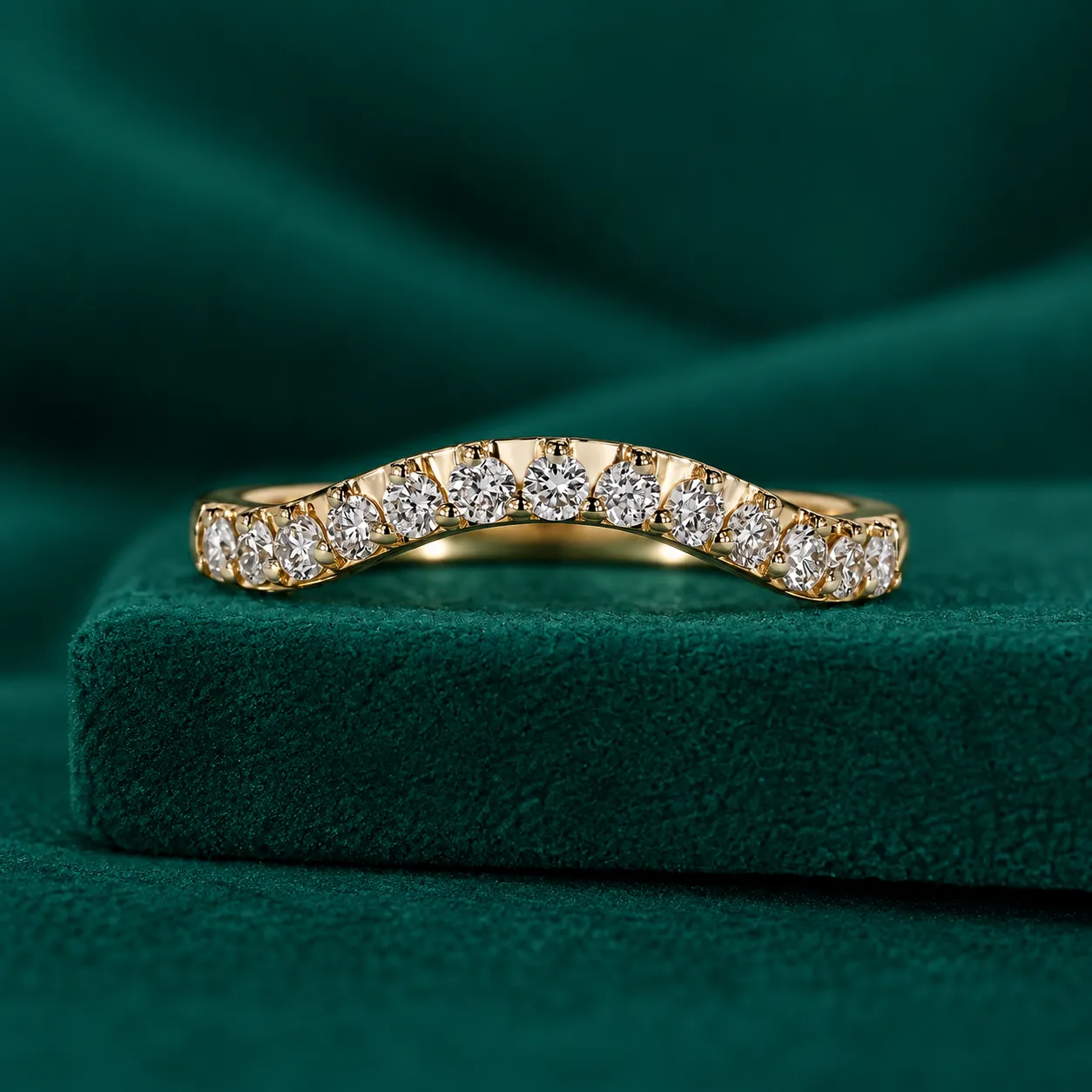
Custom Curved Gold Wedding Band Real Lab Grown Diamond Stacking Ring Chevron Ring in 10k 14k 18k Gold Birthday & Anniversary Gift for Wife
Price range: $304.00 through $967.00 Select options This product has multiple variants. The options may be chosen on the product page -
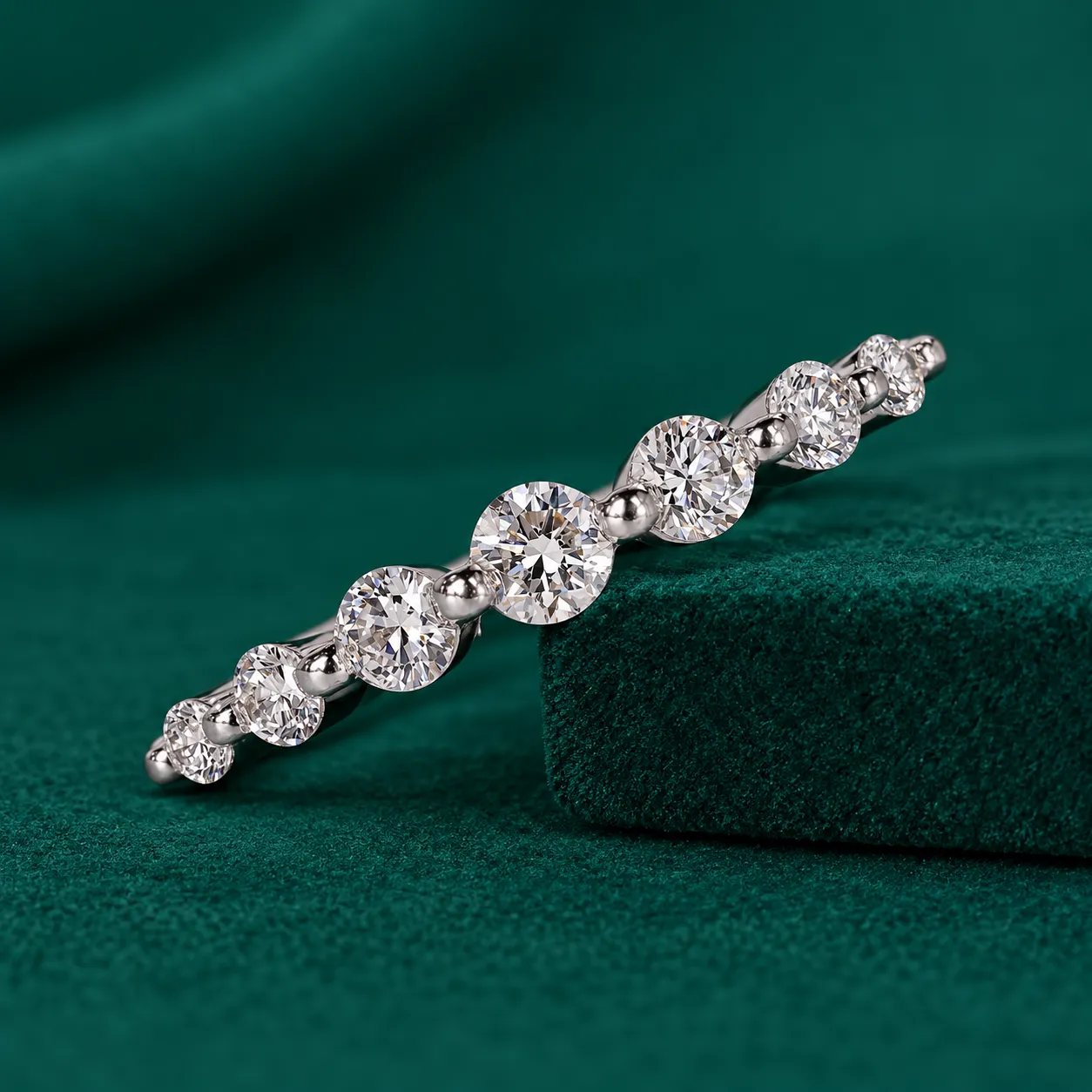
Diamond Wedding Ring Round 7 Stone Anniversary Ring Real Lab Grown Diamond Ring Minimalist Ring Gift for Her Mom Thin Stacking Rings Women
Price range: $313.00 through $834.00 Select options This product has multiple variants. The options may be chosen on the product page -
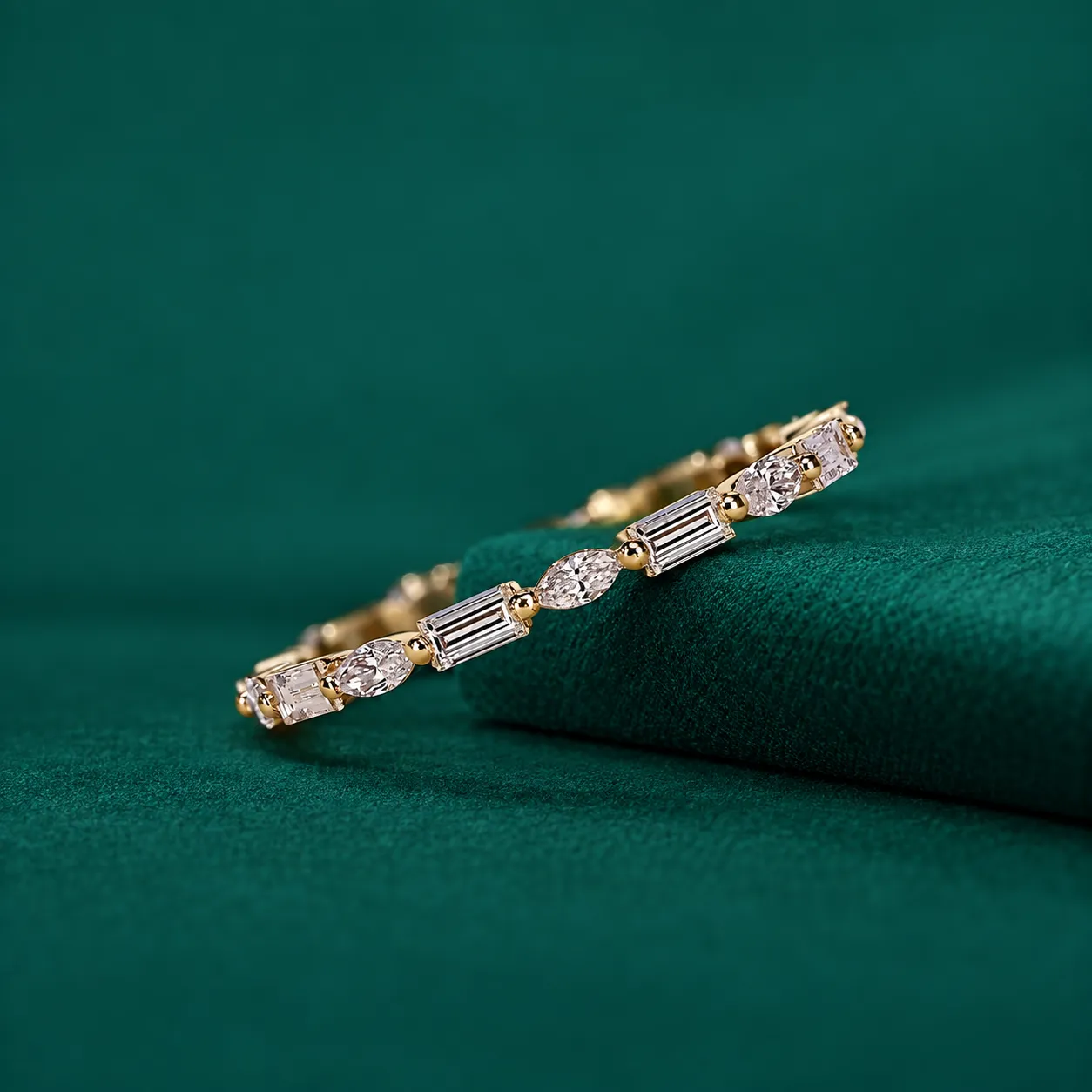
Lab Grown Diamond Full Eternity Band Marquise & Baguette Diamond Ring Dainty Matching Band for Engagement Ring Best Anniversary Gift for Her
Price range: $381.00 through $724.00 Select options This product has multiple variants. The options may be chosen on the product page -
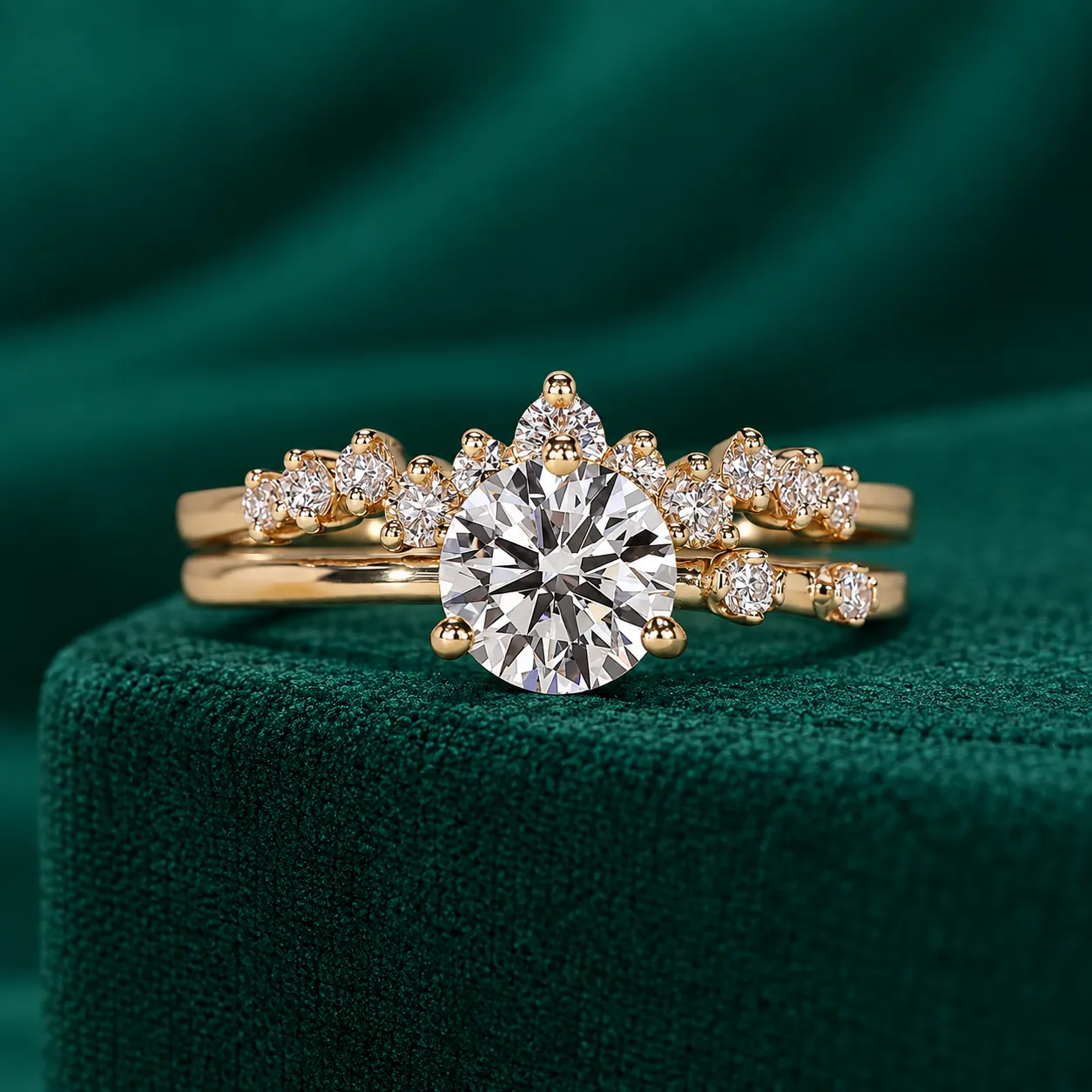
Round Lab Grown Diamond Ring Set Genuine Lab Diamond Engagement Ring for Her Diamond Stacked Wedding Ring Set Best Anniversary Gift for Wife
Price range: $515.00 through $3,610.00 Select options This product has multiple variants. The options may be chosen on the product page
Understand the Wearer’s Style
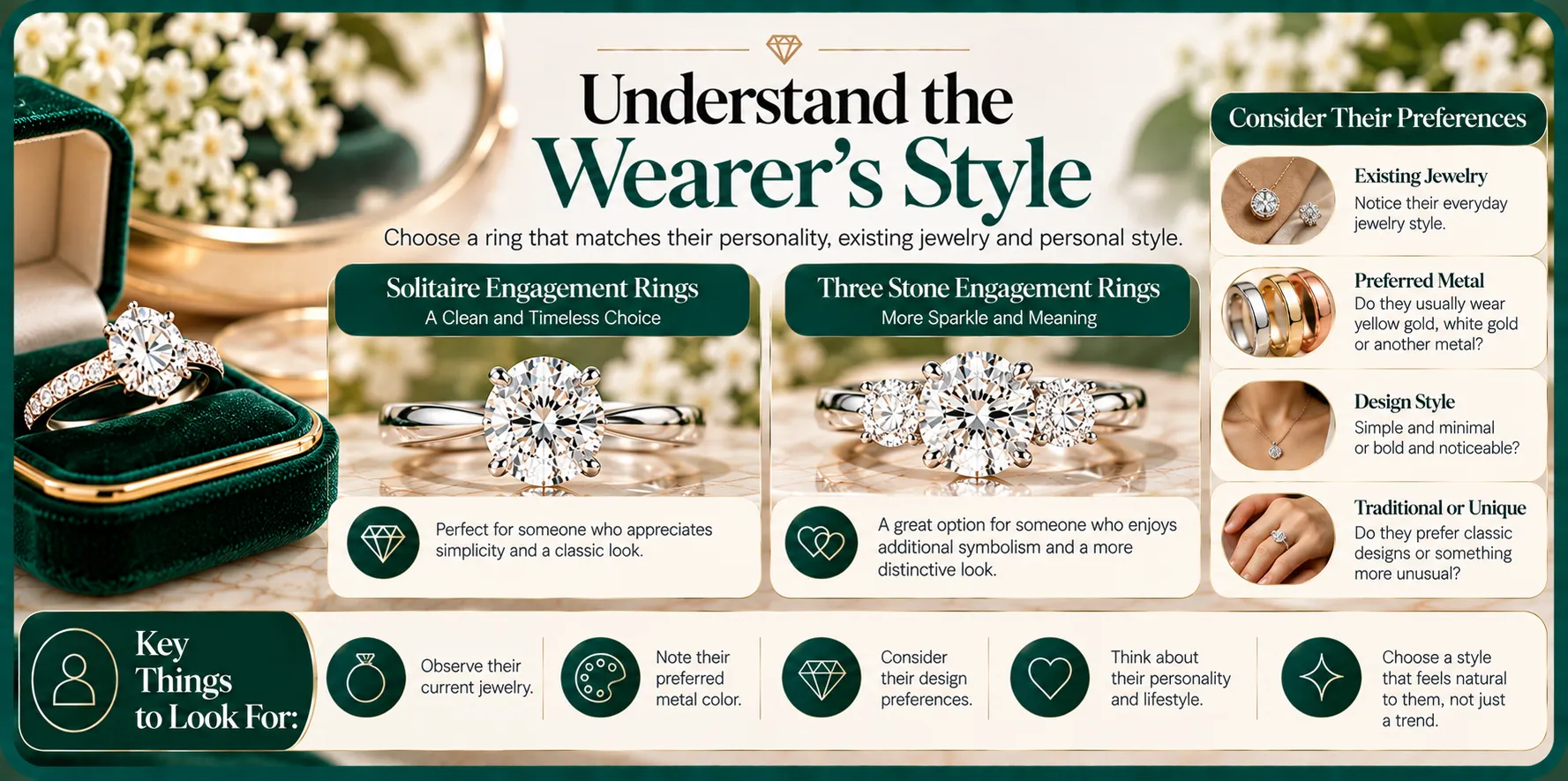
Once you know your budget, think about the person who will wear the ring.
Look at the jewelry they already own. Do they prefer simple pieces or noticeable designs? Do they usually wear yellow gold, white gold, or other metals? Do they prefer traditional designs or something unusual?
For someone who appreciates simplicity, solitaire engagement rings can offer a clean and timeless appearance.
Someone who enjoys additional symbolism and more visible diamond presence may prefer three stone engagement rings, which feature a center stone with two side stones.
The important thing is to choose according to personal style rather than simply following a trend.
Choose the Diamond Shape
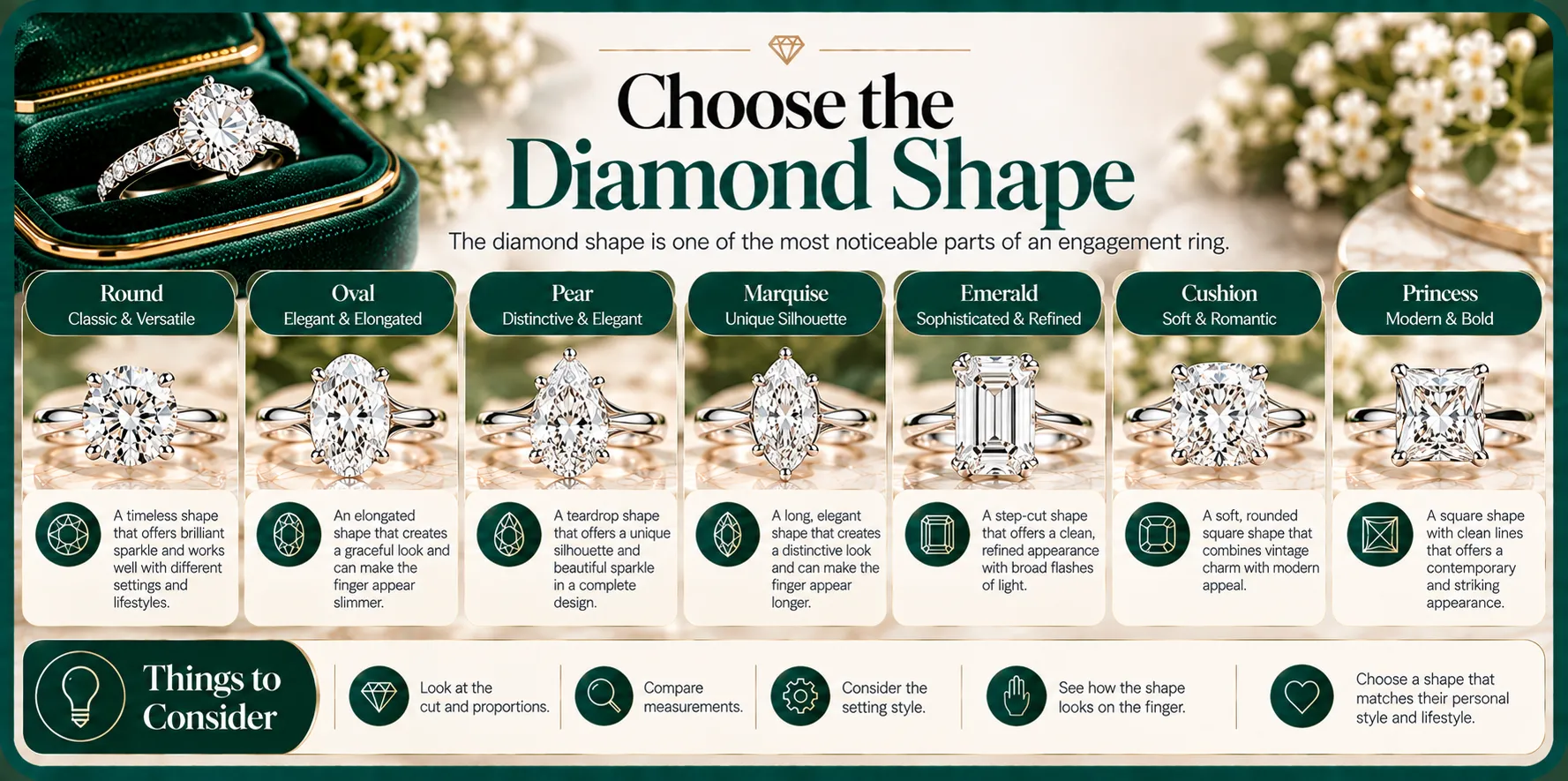
Diamond shape is one of the most noticeable parts of an engagement ring.
Round diamonds are classic and versatile, while oval diamonds offer an elongated appearance. Pear and marquise shapes create distinctive silhouettes, while emerald cuts provide a more sophisticated step-cut appearance.
If you are drawn to a teardrop-shaped diamond, exploring a Pear Diamond Engagement Ring can help you see how this distinctive shape works as the centerpiece of a complete design.
When comparing Round engagement rings, consider more than the outline. Look at the diamond’s cut, proportions, measurements, setting, and how the shape looks on the finger.
For someone who prefers a clean and sophisticated appearance, Emerald engagement rings can be an interesting option because their step-cut facets create broad flashes of light rather than the same type of sparkle associated with many brilliant cuts.
Compare the 4Cs
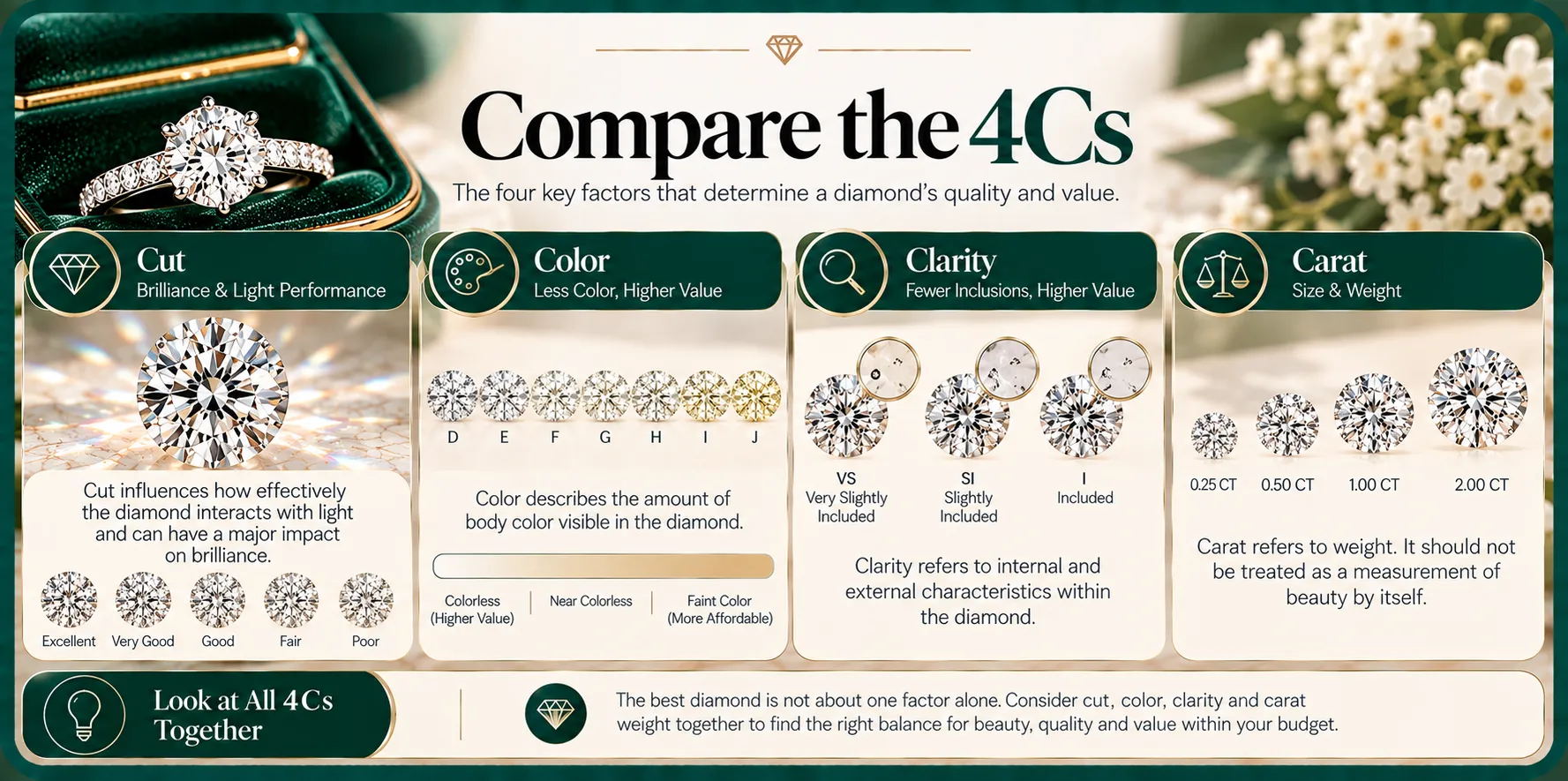
After selecting a preferred shape, learn about the diamond’s four primary quality characteristics:
Cut
Cut influences how effectively the diamond interacts with light and can have a major impact on brilliance.
Color
Color describes the amount of body color visible in the diamond.
Clarity
Clarity refers to internal and external characteristics within the diamond.
Carat
Carat refers to weight. It should not be treated as a measurement of beauty by itself.
When comparing diamonds, consider the four factors together rather than focusing only on carat weight.
BUY RING
-
Custom Curved Gold Wedding Band Real Lab Grown Diamond Stacking Ring Chevron Ring in 10k 14k 18k Gold Birthday & Anniversary Gift for Wife
Price range: $304.00 through $967.00 Select options This product has multiple variants. The options may be chosen on the product page -
Diamond Wedding Ring Round 7 Stone Anniversary Ring Real Lab Grown Diamond Ring Minimalist Ring Gift for Her Mom Thin Stacking Rings Women
Price range: $313.00 through $834.00 Select options This product has multiple variants. The options may be chosen on the product page -
Lab Grown Diamond Full Eternity Band Marquise & Baguette Diamond Ring Dainty Matching Band for Engagement Ring Best Anniversary Gift for Her
Price range: $381.00 through $724.00 Select options This product has multiple variants. The options may be chosen on the product page -
Round Lab Grown Diamond Ring Set Genuine Lab Diamond Engagement Ring for Her Diamond Stacked Wedding Ring Set Best Anniversary Gift for Wife
Price range: $515.00 through $3,610.00 Select options This product has multiple variants. The options may be chosen on the product page
Choose the Right Setting
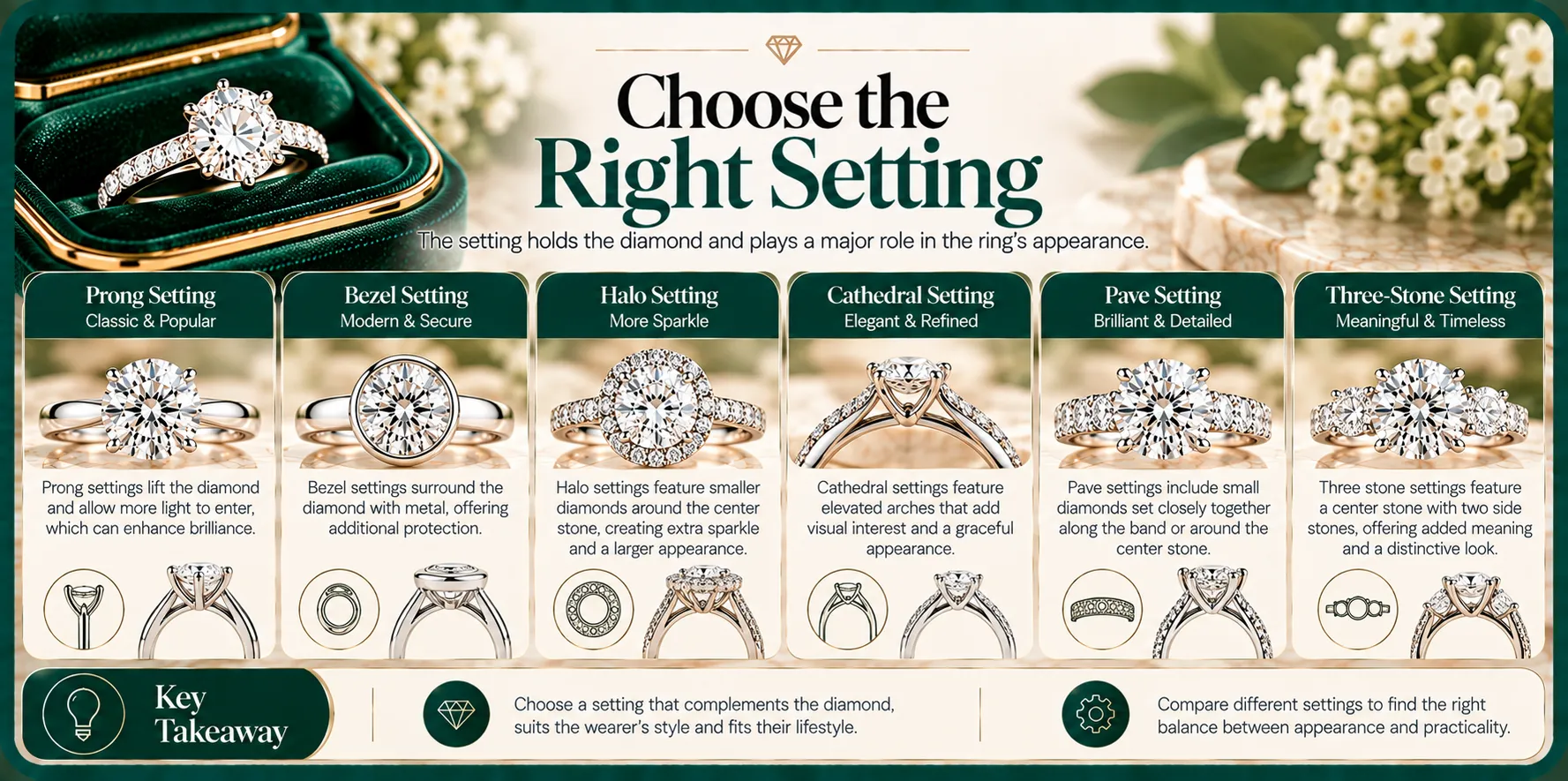
The setting determines how the diamond is held and contributes significantly to the ring’s appearance.
Common options include:
- Prong
- Bezel
- Halo
- Cathedral
- Pave
- Three-stone
Prong settings can provide significant light exposure, while bezel settings surround the stone with metal and can provide additional protection.
When considering three stone engagement rings, compare the proportions of the center and side stones as well as the overall setting.
The setting should complement the diamond rather than compete with it.
Select the Metal
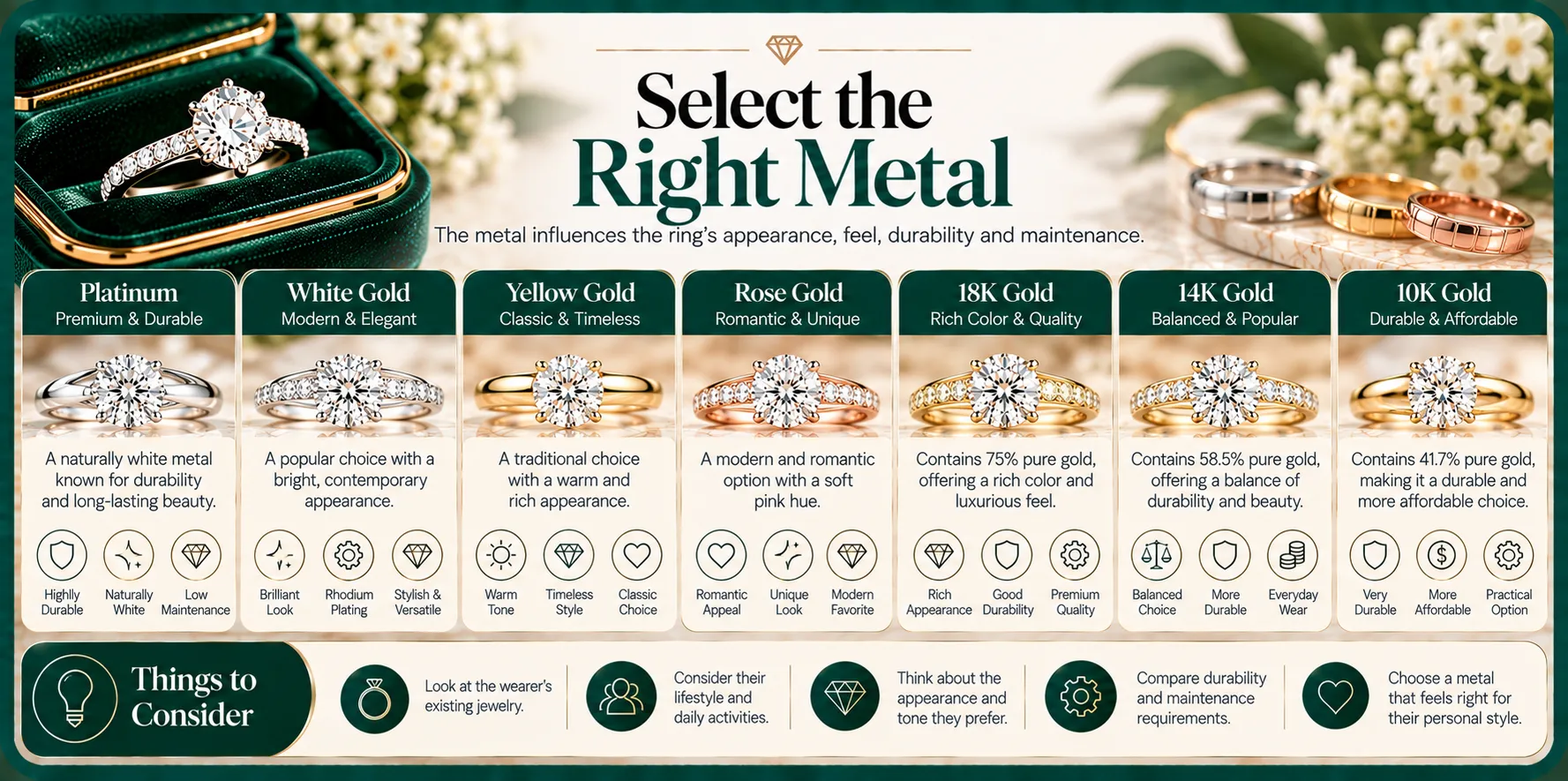
The metal influences the ring’s appearance, feel, durability, and maintenance.
Common choices include:
- Platinum
- 18K gold
- 14K gold
- 10K gold
- White gold
- Yellow gold
- Rose gold
Think about the wearer’s existing jewelry and lifestyle.
Someone who regularly wears yellow gold may naturally prefer a warm-toned ring, while someone who favors contemporary jewelry may prefer white gold or platinum.
Think About Everyday Comfort
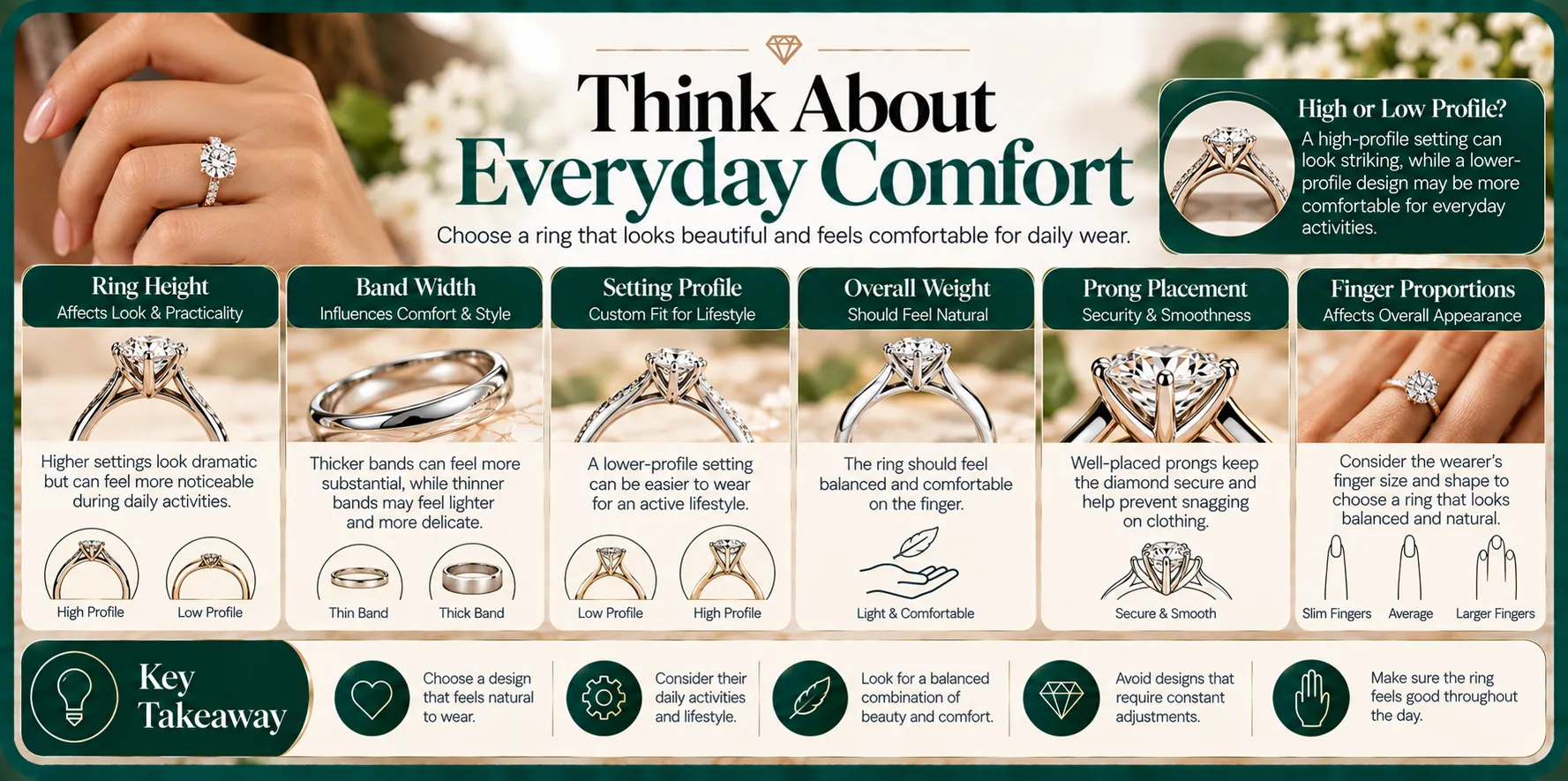
An engagement ring is not just for the proposal. It may become part of everyday life.
Consider:
- Ring height
- Band width
- Setting profile
- Overall weight
- Prong placement
- Finger proportions
A high-profile setting can look very striking. It might stand out too much in daily life. A lower-profile design could be better, for someone who works with their hands a lot.
The right ring should look beautiful without becoming inconvenient to wear.
Check Durability and Stone Security
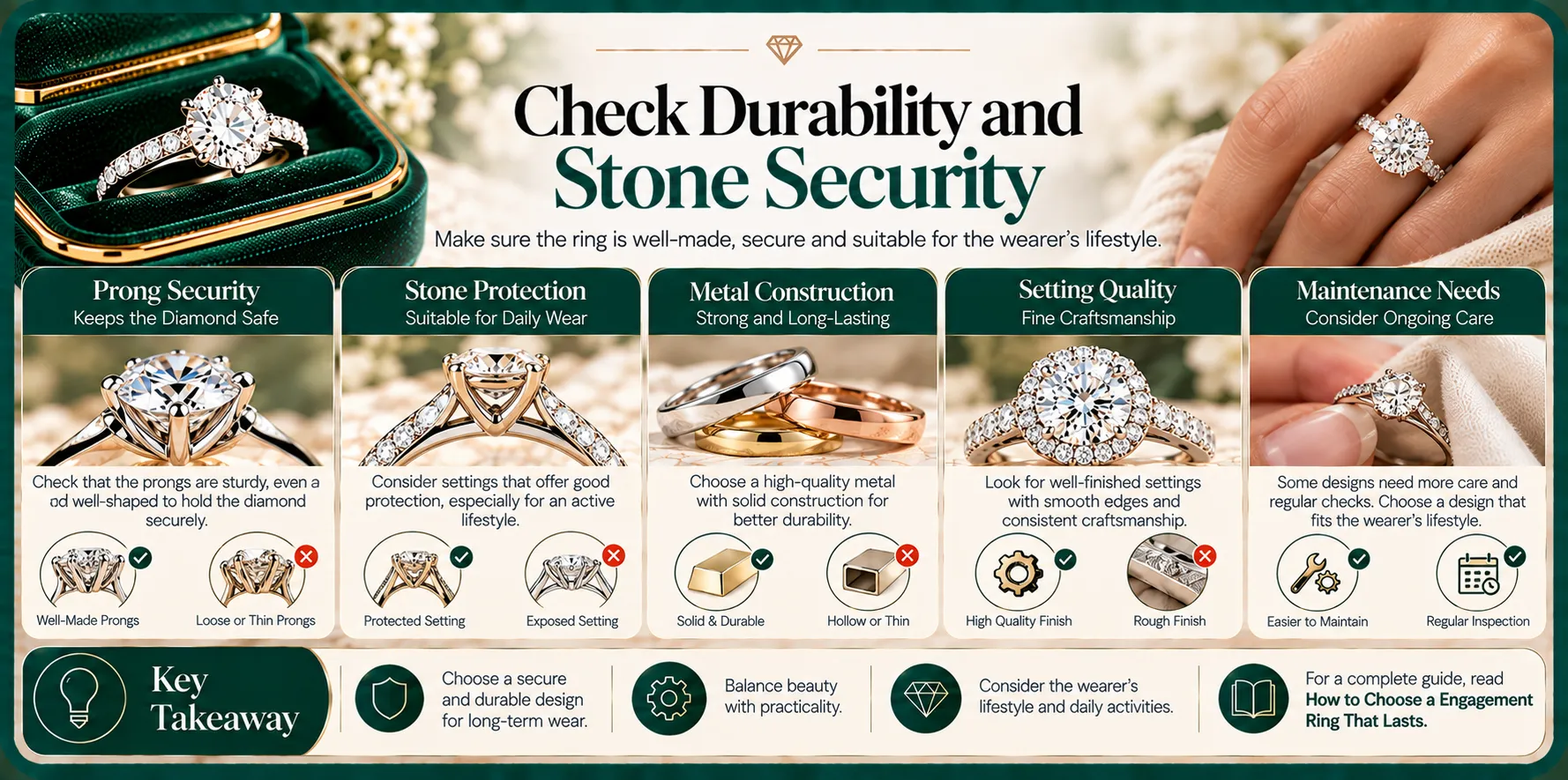
Before purchasing, examine how securely the diamond is held and whether the design suits the wearer’s lifestyle.
Pay attention to:
- Prong security
- Stone protection
- Metal construction
- Setting quality
- Maintenance requirements
A delicate design may require more care, while a protective setting can be useful for someone with an active lifestyle.
For a more detailed guide to choosing a ring for long-term wear, read How to Choose a Engagement Ring That Lasts, which covers durability, settings, metals, diamond protection, comfort, and maintenance.
Review Certification and Product Details
Before making the final decision, carefully review the diamond’s documentation and product information.
Check that:
- Certification details are available where applicable.
- The diamond characteristics match the product description.
- The listed carat, color, clarity, and measurements are clear.
- The ring’s metal and setting are accurately described.
This step helps you understand exactly what you are purchasing instead of relying only on photographs.
Compare the Final Options
At this stage, you may have narrowed your choices to two or three rings.
Instead of asking which one is simply the most impressive, compare them using the same criteria:
| Factor | What to Consider |
|---|---|
| Diamond | Cut, color, clarity, carat |
| Shape | Appearance and proportions |
| Setting | Security and design |
| Metal | Appearance and durability |
| Comfort | Everyday wear |
| Budget | Overall value within your budget |
| Style | Match with the wearer |
| Certification | Documented diamond details |
For Round engagement rings, you may find several different combinations of setting and metal, so comparing the complete ring is more useful than comparing shape alone.
Likewise, when viewing Emerald engagement rings, consider clarity, proportions, setting protection, and the overall design rather than judging the shape by itself.
Think About the Wedding Band
Before purchasing, consider how the engagement ring will eventually pair with a wedding band.
Check whether:
- A straight band can sit beside the ring
- The center stone is raised enough
- The band width works with the engagement ring
- A curved or contoured band may be needed
Thinking about this early can help create a comfortable combination later.
Final Thoughts
Choosing the right engagement ring comes down to personal style, diamond quality, and budget. From solitaire and halo to vintage and minimalist designs, every style offers something unique.
Explore our Complete Engagement Ring FAQ and Engagement Ring Glossary: Terms You Should Know for helpful buying tips and diamond terminology.
At FineImperial, discover lab-grown diamond engagement rings that celebrate your love with timeless elegance.